Congress Faces Mounting Pressure on Housing Costs Ahead of 2027
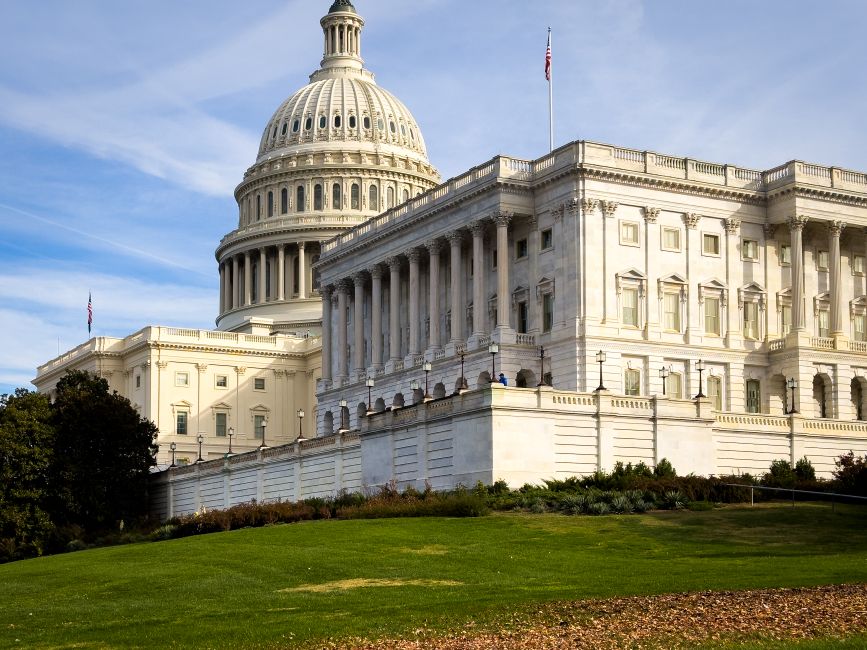
With home affordability near historic lows, bipartisan legislative proposals are taking shape, but no bill has cleared committee or secured floor time.
Bottom Line
Confirmed means supported by a primary source or strong independent sources; Disputed means credible sources conflict; Open means no solid primary source evidence either way.
- ConfirmedCBS News reports that lawmakers may face increased pressure in 2027 to advance bipartisan housing affordability proposals targeting first-time homebuyers.
- OpenNo specific bill has been identified as the vehicle for legislative action, and no floor schedule has been confirmed.
- OpenWhether Republican and Democratic leadership will coordinate on a joint housing package before the 2027 session remains unresolved.
- OpenThe specific policy mechanisms under discussion, including tax credits, supply-side deregulation, or down-payment assistance, have not been confirmed in a named legislative draft.
Congressional leaders are facing growing constituent pressure to act on housing affordability, with multiple bipartisan proposals circulating ahead of the 2027 session, according to CBS News reporting published November 20, 2026. No specific bill has cleared committee or been scheduled for a floor vote as of today's date.
This story separates documented fact from theory. Anything interpretive is marked Analysis. What is confirmed is that CBS News identified housing cost legislation as a probable congressional priority for 2027. What is open is the form, timeline, and political viability of any such legislation.
Home affordability has become a prominent issue in national polling. The National Association of Realtors has reported in its 2026 annual data that the share of first-time homebuyers reached a record low of 24 percent, the lowest in data going back to 1981 (National Association of Realtors 2026 Profile of Home Buyers and Sellers). That figure provides the factual floor for the political urgency lawmakers are responding to.
The CBS News report does not name a specific bill sponsor, a committee markup date, or an agreed policy framework. It describes the housing issue as one lawmakers "may" address, a conditional framing that the Congressional Times treats as Open rather than Confirmed in terms of legislative outcome.
Analysis: The gap between political pressure and legislative action on housing is not new. Congress passed the Housing and Economic Recovery Act in 2008 as a crisis response, but no comparable stand-alone housing affordability bill has been enacted in the years since. That historical record suggests that even elevated public pressure does not guarantee floor action without a defined legislative vehicle and leadership commitment from both chambers.
On the Senate side, no majority leader scheduling announcement has been recorded in the Congressional Record for a housing affordability bill in the current session. On the House side, the Financial Services Committee held hearings on housing supply constraints in 2025, but no bill passed out of committee, according to the committee's published legislative calendar.
Proposals that have been floated publicly in prior sessions include an expansion of the Low-Income Housing Tax Credit, construction permitting reform to reduce local zoning barriers, and direct down-payment assistance grants for first-generation homebuyers. None of these has been confirmed as the working framework for the 2027 effort described by CBS News.
Federal Reserve data published in its 2026 Survey of Consumer Finances showed that the median home price-to-income ratio has risen significantly over the past five years, reinforcing the affordability gap that lawmakers are responding to. That ratio is a commonly cited benchmark in both Republican and Democratic housing policy documents.
The political alignment on housing is uneven. Republicans have generally favored supply-side approaches such as cutting federal regulations on new construction, while Democrats have more often supported demand-side tools such as rental assistance and homebuyer grants. A bipartisan bill would require bridging those two frameworks, a task that prior Congresses attempted without reaching final passage.
The CBS News report notes that the 2026 midterm cycle, which produced competitive House races in suburban districts where housing costs are highest, may sharpen the political incentive for action. Specific district-level data on that point was not provided in the report and is treated here as Open.
No lobbying disclosure filed with the Senate Office of Public Records as of November 2026 has been identified that names a specific housing affordability bill as a registered lobbying target for the 2027 session, though the Mortgage Bankers Association and the National Association of Home Builders are standing registrants on housing-related legislation per their active Lobbying Disclosure Act filings on file with Congress.
What remains unknown is whether a lead sponsor in either chamber will introduce a bill before the 2027 session opens, what committee of jurisdiction will take it up, and whether leadership in both the House and Senate will commit floor time. The Congressional Budget Office score of any such bill, once introduced, would be the first document to provide a fiscal estimate and would sharpen the debate over its viability.
Sources Named in This Story
- CBS News, 'Americans need help affording homes. Can Congress deliver?', November 2026 (2026-11-20)
- National Association of Realtors, 2026 Profile of Home Buyers and Sellers
- Federal Reserve, 2026 Survey of Consumer Finances
- Senate Office of Public Records, Lobbying Disclosure Act filings, Mortgage Bankers Association and National Association of Home Builders
- House Financial Services Committee, published legislative calendar 2025
Still Open
- Which member of Congress, if any, will sponsor a housing affordability bill for the 2027 session
What would settle it: - Whether House and Senate leadership have agreed to schedule floor time for housing legislation in 2027
What would settle it: - What specific policy mechanisms, tax credits, deregulation, or direct assistance, are included in any working draft
What would settle it: - The CBO score of any proposed housing bill, which would determine its fiscal and political viability
What would settle it: