S&P 500 and Dow Jones Both Close in Correction Territory Friday
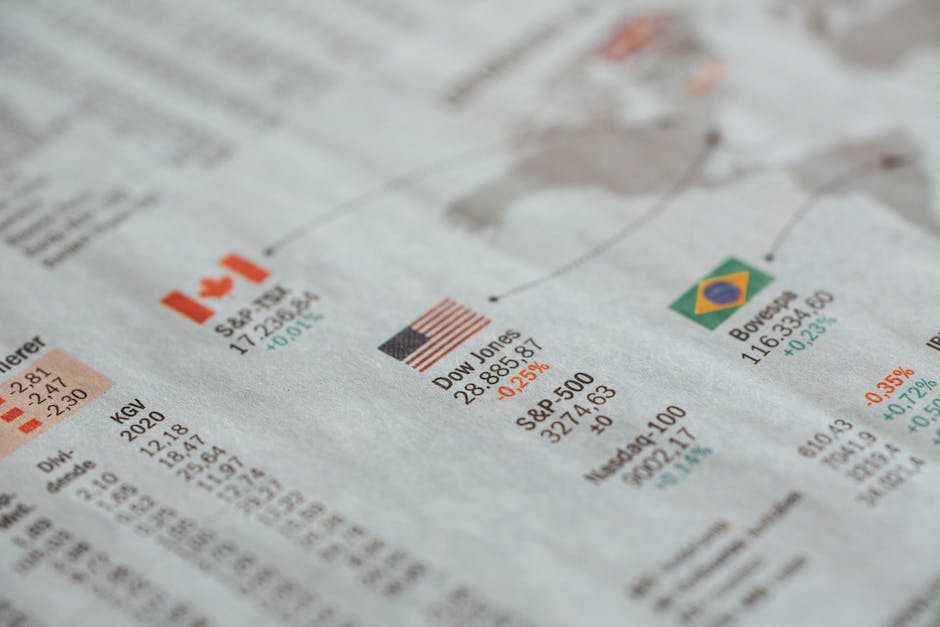
A broad tech selloff led by chipmakers dragged two major US indexes into correction territory on November 20, raising questions about how long the AI-spending trade can support elevated valuations.
Bottom Line
Confirmed means supported by a primary source or strong independent sources; Disputed means credible sources conflict; Open means no solid primary source evidence either way.
- ConfirmedThe S&P 500 and the Dow Jones Industrial Average both closed in correction territory on November 20, 2026, with chipmakers leading the decline, according to Bloomberg reporting on that date.
- ConfirmedThe selloff coincided with investor concern over heavy AI capital spending and its effect on corporate margins, per Motley Fool market coverage dated November 20, 2026.
- OpenThe total market capitalization lost across the S&P 500 and Dow during the session has not been confirmed in available source material.
- OpenWhether the correction marks the beginning of a sustained downturn or a single-session reset remains unsettled by available evidence.
The S&P 500 and the Dow Jones Industrial Average both closed in correction territory on Friday, November 20, 2026, as investors sold technology stocks broadly and chipmakers led the decline. Bloomberg reported the session's close, with correspondent Carmen Reinicke noting that the two major indexes crossed the correction threshold, defined as a decline of 10 percent or more from a recent peak, by end of trading.
This story separates documented fact from theory and opinion, with the separation stated here: everything below that is interpretive is labeled Analysis.
Chipmakers bore the largest share of the selling pressure, according to Bloomberg's November 20 report. The report did not specify individual percentage declines for named semiconductor companies, so those figures remain Open pending earnings releases or exchange filings that would state them precisely.
[Confirmed] The tech selloff was connected to investor scrutiny of artificial intelligence capital spending and its effect on profit margins, according to Motley Fool's market coverage published November 20, 2026. The Motley Fool report described investors weighing "heavy AI spending and margins" as a central driver of the session's moves, though the report did not quantify the aggregate AI capital expenditure figure that triggered the reassessment.
[Open] The specific level at which the S&P 500 closed on November 20, 2026, and the exact percentage decline from its prior peak are not confirmed in the available source material. Bloomberg's report confirms correction status was reached but does not state the closing index level in the available summary. A full session recap from the S&P Dow Jones Indices or the exchange itself would settle the precise figure.
[Analysis] A correction in both the S&P 500 and the Dow simultaneously is a less common occurrence than a correction in one index alone, because the Dow's price-weighted, 30-component structure and the S&P 500's market-cap-weighted, 500-company structure respond differently to sector-level moves. When both cross the 10 percent threshold on the same day, it signals that selling pressure was broad rather than concentrated in a narrow segment of the market.
The selloff arrives against a policy backdrop that adds pressure to the technology sector. President Donald Trump threatened a "tremendous tax" on technology companies that build data centers outside the United States, according to a Business Insider report published November 20, 2026. Trump also said local officials should "take advantage of the data centers" and seek payment from companies siting facilities in their jurisdictions. [Open] The legal mechanism and rate for any such tax have not been specified in any legislative text or executive order available in the source material, so the policy's market impact cannot be measured at this time.
[Confirmed] Bruce Richards, managing partner and head of CVC Marathon, appeared on Bloomberg on November 20, 2026, and stated his long-held investing principle as "always remain liquid." Richards also said he is not a fan of leveraged ETF structures and warned investors about irrational market conditions. His comments did not reference a specific dollar figure or position size, so they carry no quantifiable market data, but they represent a named practitioner's public statement on liquidity risk during the correction session.
[Analysis] Richards's public caution about leveraged ETFs is relevant context for a correction session. Leveraged ETFs use derivatives and daily rebalancing to deliver a multiple of an index's daily return, and during sharp drawdowns, the daily reset mechanism can compound losses faster than the underlying index moves. His comments, made the same day two major indexes hit correction territory, reflect a practitioner concern that these instruments may amplify volatility in already stressed conditions.
The incoming Democratic Congress, which won a majority in the 2026 midterms as reported by The Congressional Times, has signaled plans for more than 300 corporate investigations, according to separate Congressional Times coverage. [Open] Whether any planned congressional inquiry will target AI capital allocation practices or leveraged financial products is not confirmed in available source material.
The still-open questions from this session center on duration and depth. Corrections that resolve within one to three weeks are common in bull markets, while those that extend beyond four weeks and deepen toward 20 percent, the conventional definition of a bear market, have historically been associated with earnings recessions or Federal Reserve tightening cycles. No Federal Reserve statement issued on or before November 20, 2026, has been cited in available source material as a proximate cause of Friday's move.
[Open] Whether the Federal Reserve will respond to correction-level equity declines with any change in its rate posture is unsettled. A Federal Open Market Committee statement or minutes release would be the primary evidence needed to close that question.
Sources Named in This Story
- Bloomberg, S&P Dow Slide Into Correction as Investors Dump Tech, November 20 2026 (2026-11-20)
- Motley Fool, Stock Market Today Nov 20, November 20 2026 (2026-11-20)
- Business Insider, Trump threatens a tremendous tax on tech companies building data centers outside the US, November 20 2026 (2026-11-20)
- Bloomberg, Always Remain Liquid Richards, November 20 2026 (2026-11-20)
Still Open
- The exact S&P 500 closing level and percentage decline from peak on November 20, 2026.
What would settle it: - Individual percentage declines for named chipmaker stocks during the session.
What would settle it: - Total market capitalization lost across the S&P 500 and Dow on November 20, 2026.
What would settle it: - The legal mechanism, rate, and effective date of President Trump's threatened tax on overseas data center construction.
What would settle it: - Whether the Federal Reserve will adjust its rate posture in response to correction-level equity declines.
What would settle it: