Senate Passes Federal Bill to Regulate College Athletics Nationwide
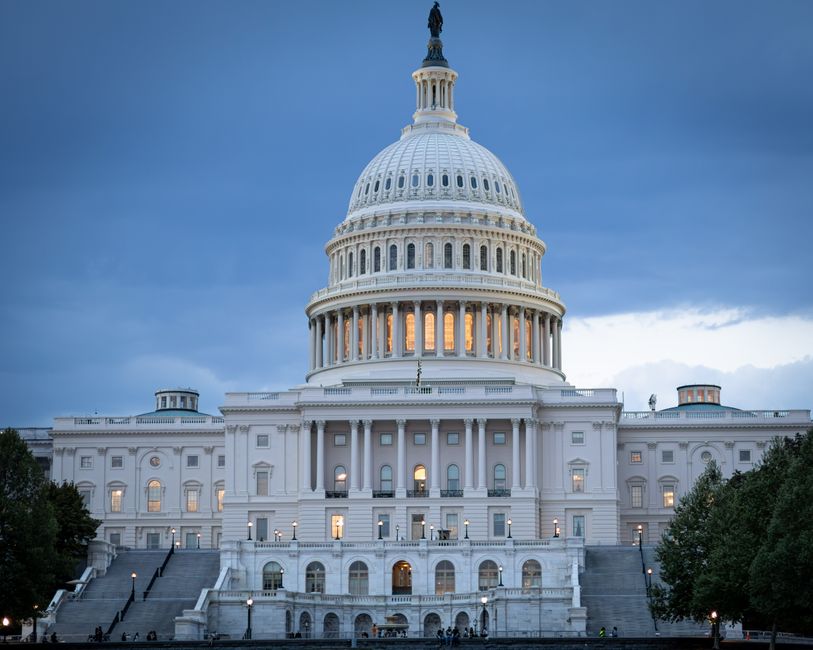
The legislation creates a federal framework for college sports governance, a role previously held by the NCAA and individual states, and its implementation will test whether Congress can resolve...
The United States Senate approved a bill Thursday establishing a federal framework to govern college athletics, according to CBS News. The legislation is intended to protect student athletes and standardize rules across all colleges and universities that field intercollegiate sports programs.
The bill passed despite opposition from a bloc of Senate Democrats who argued the legislation could weaken, rather than strengthen, protections for student athletes. The specific provisions drawing Democratic objections were not enumerated in available public reporting as of publication. The full roll call vote record is available through the Congressional Record and will reflect the precise breakdown of support and opposition by party and member.
The legislation arrives at a moment when college athletics governance has been under sustained legal and regulatory pressure. The NCAA, the primary private governing body for college sports, has faced multiple federal antitrust challenges in recent years. In 2021, the Supreme Court ruled unanimously in NCAA v. Alston that the NCAA's restrictions on education-related benefits for athletes violated federal antitrust law. That ruling opened the door to the Name, Image, and Likeness (NIL) compensation era, under which college athletes may earn money from endorsements and other commercial arrangements.
Since the NIL era began, individual states have passed differing laws governing how athletes can receive compensation, creating a patchwork of rules that varies by state. Colleges and athletic conferences have argued that a uniform federal standard would reduce compliance complexity and competitive imbalance. Athlete advocacy groups have disagreed on whether federal legislation would lock in current limits or expand athlete rights further.
The bill now moves to the House of Representatives, where its path is not yet determined. No scheduled House floor vote has been publicly announced as of September 29, 2026. The text of the Senate-passed bill, which would detail specific athlete protections, revenue-sharing mechanisms if any, and enforcement authority, is available through Congress.gov under the relevant bill number, which was not specified in available reporting.
The question of whether college athletes are employees of their institutions remains unresolved in federal law. The National Labor Relations Board issued a memo in 2021 under General Counsel Jennifer Abruzzo asserting that some college athletes could be considered employees under the National Labor Relations Act, though that position has not been codified by Congress or upheld by the Supreme Court. Whether the Senate-passed bill addresses employee classification is unknown from current public reporting. The bill text would reveal this.
College sports generate substantial revenue. According to data compiled by the U.S. Department of Education's Equity in Athletics Data Analysis system, the combined athletics revenues reported by NCAA Division I institutions exceed $10 billion annually, with the largest football and basketball programs accounting for the majority of that figure. How any federal framework would affect revenue distribution between institutions and athletes is a central point of contention.
The NCAA, conferences, and individual universities have each engaged lobbyists on college sports legislation. Lobbying Disclosure Act filings available through the Senate Office of Public Records document registered lobbying activity on this subject, though the specific amounts spent lobbying on this bill in the current Congress are not compiled in available reporting and would require a review of individual LDA filings to quantify.
Democratic senators who voted against the bill have not been identified by name in available reporting. Their specific objections, and any amendments they offered or requested, would appear in the Congressional Record for the date of the vote.
What remains unknown: the final vote tally by member, the specific text of the enrolled bill, whether the House will take up the measure before the end of the current Congress, and whether the White House has indicated whether the President would sign or veto the legislation. The Congressional Record, Congress.gov, and any White House Statement of Administration Policy would be the public documents that answer each of those questions.