Santa Barbara Protest Marks 50 Years of California Coastal Act
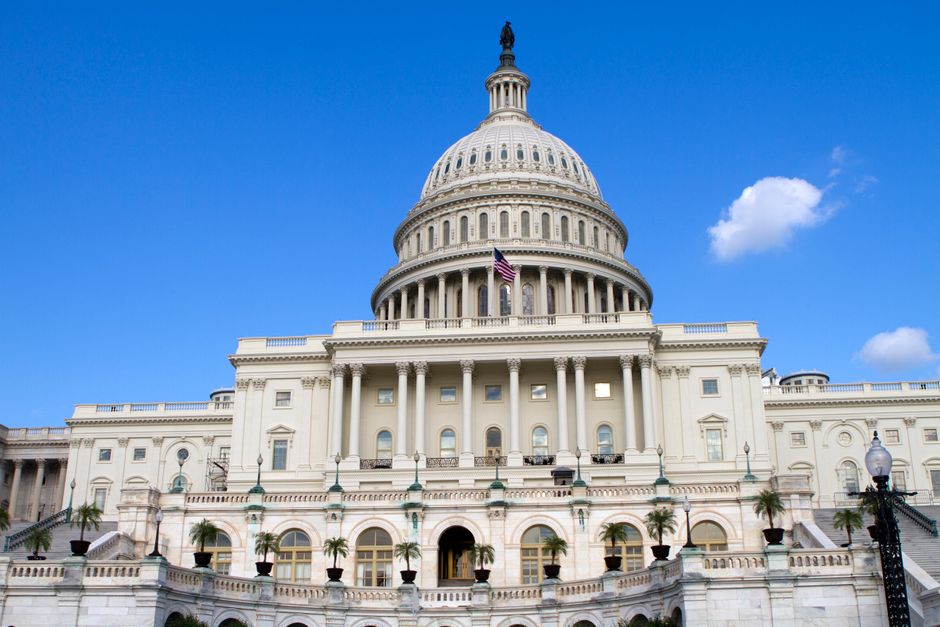
The demonstration's federal dimension centers on offshore drilling policy, which Congress and the Interior Department control, placing state advocacy directly in the path of federal permitting...
Hundreds of demonstrators formed a human chain along West Beach in Santa Barbara, California, on Saturday, September 27, 2026, to protest offshore oil drilling and mark the 50th anniversary of the California Coastal Act, according to reporting by the New York Post. The event was organized under the banner "Hands Across the Sand," a recurring national demonstration format that has targeted federal offshore drilling policy in previous cycles.
The California Coastal Act, enacted in 1976 by the California Legislature and signed by then-Governor Jerry Brown, established a state commission with authority over development along California's 1,100-mile coastline. The law does not govern federal Outer Continental Shelf leasing, which falls under the Outer Continental Shelf Lands Act of 1953 and is administered by the Bureau of Ocean Energy Management, a unit of the U.S. Department of the Interior.
Federal offshore oil and gas leasing decisions are made through a National Outer Continental Shelf Oil and Gas Leasing Program, a five-year planning document published by the Interior Department. The most recent program, covering 2024 through 2029, was finalized under the Biden administration and approved one lease sale in the Gulf of Mexico annually, while excluding the Pacific Coast, including California waters, from new lease sales during that period, according to Bureau of Ocean Energy Management records.
California waters on the Outer Continental Shelf have not been subject to new federal lease sales since a moratorium that Congress enacted annually from 1982 through 2008. After the moratorium lapsed in 2008, no administration subsequently offered new Pacific Coast leases, a continuity that spans both Republican and Democratic presidencies over the past 18 years.
The protest's policy target, new offshore drilling near California, would require action at the federal level: a revised Interior Department leasing program or a Congressional authorization. No such legislation has been introduced in the current Congress, according to a search of the Congressional Record through September 29, 2026. No active Bureau of Ocean Energy Management rulemaking proposes Pacific Coast lease sales as of the same date.
Proponents of expanded offshore drilling, including industry groups such as the American Petroleum Institute, have argued in testimony before the Senate Energy and Natural Resources Committee that domestic offshore production reduces dependence on imported oil and stabilizes domestic fuel prices. API's most recent congressional testimony on the subject, delivered in March 2026, cited Energy Information Administration projections showing offshore Gulf production accounting for approximately 15 percent of total U.S. Crude output.
Opponents, including the organizers of Saturday's event, argue that offshore drilling carries spill risk to coastal economies dependent on tourism and fishing. Their reference point is the 1969 Santa Barbara oil well blowout, which released an estimated 80,000 to 100,000 barrels of crude oil into the Santa Barbara Channel, according to U.S. Geological Survey historical records. That spill is widely cited in legislative history as a catalyst for both the National Environmental Policy Act of 1969 and the California Coastal Act of 1976.
The "Hands Across the Sand" format was first organized in 2010 following the Deepwater Horizon blowout in the Gulf of Mexico, which the National Commission on the BP Deepwater Horizon Oil Spill and Offshore Drilling documented as releasing approximately 4.9 million barrels of oil. The commission's final report, published in January 2011, led to Interior Department reorganization of offshore safety oversight.
No federal elected officials were identified by name as attending or endorsing Saturday's Santa Barbara event in available public reporting as of September 29, 2026. What remains unknown is the precise count of participants, the organizing groups' lobbying registration status under the Lobbying Disclosure Act, and whether any formal petition or legislative request was submitted to a federal office. Those details would be available through LDA filings with the Senate Office of Public Records and through any correspondence logs released by the relevant congressional offices or the Interior Department under the Freedom of Information Act.