U.S. Treasury Sanctions Tehran Bitcoin Exchange Over Revolutionary Guards Payments
The designation of BitBank as a sanctions target marks the first publicly documented case of a named Iranian bitcoin exchange alleged to have processed passage fees collected at the Strait of...
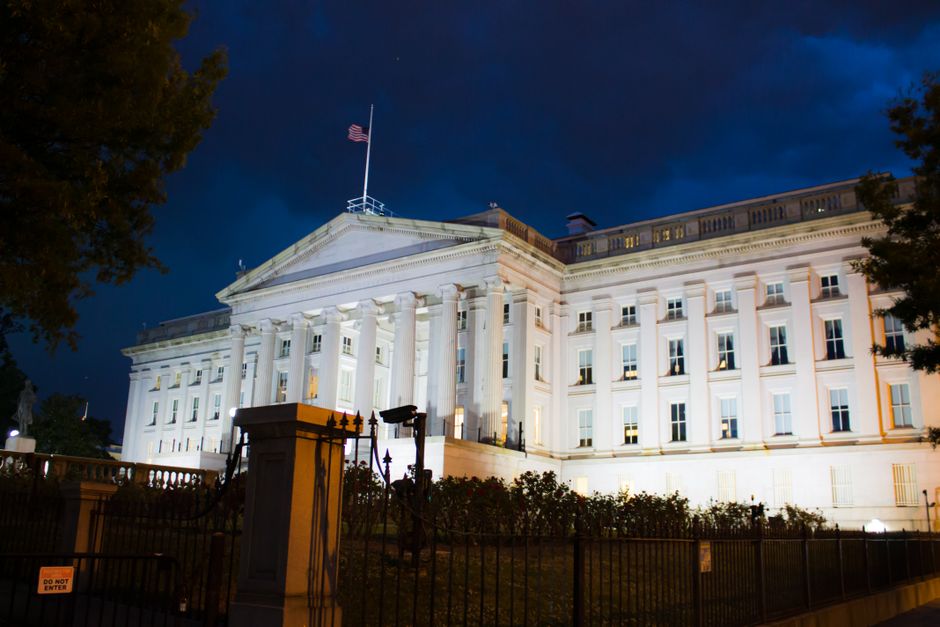
The U.S. Department of the Treasury sanctioned BitBank, a bitcoin exchange operating out of Tehran, alleging the firm moved hundreds of millions of dollars in bitcoin on behalf of Iran's Islamic Revolutionary Guard Corps (IRGC) and processed payments collected from commercial vessels purchasing transit rights through the Strait of Hormuz, according to a CoinDesk report published September 18, 2026.
The Treasury's Office of Foreign Assets Control (OFAC) is the designating authority. OFAC sanctions prohibit U.S. Persons from transacting with a designated entity and can result in secondary sanctions exposure for non-U.S. Financial institutions that continue to do business with the named party. The full OFAC designation order would detail the specific legal authorities invoked, the names of associated individuals, and the wallet addresses linked to the exchange.
The Strait of Hormuz, located between Iran and Oman, is the passage through which the U.S. Energy Information Administration estimates approximately 20 percent of global petroleum liquids transit annually. Control over access to that corridor has long been a point of geopolitical leverage for Tehran. The Treasury's allegation, if supported by the underlying evidence in the designation order, would indicate that Iran monetized that leverage through bitcoin rather than through conventional banking channels.
Bitcoin's pseudonymous ledger makes it a tool of interest for entities seeking to move value outside the reach of the dollar-denominated correspondent banking system. However, blockchain analytics firms including Chainalysis and Elliptic have developed methods to trace bitcoin flows across wallet addresses, and OFAC has increasingly included specific cryptocurrency wallet addresses in its designations to alert exchanges and custodians to block associated funds.
The IRGC was designated as a Foreign Terrorist Organization by the U.S. State Department in April 2019, a classification that carries its own set of legal consequences for anyone providing material support. Any U.S.-regulated cryptocurrency exchange that processed transactions involving BitBank-linked wallets after that designation date would potentially face regulatory exposure, depending on what blockchain records show.
For U.S. Investors and crypto market participants, the practical implication of an OFAC designation against a named exchange is that compliant U.S. Platforms are required to screen transactions against OFAC's Specially Designated Nationals list. Wallet addresses published in the BitBank designation would be added to that list, obligating exchanges registered with the Financial Crimes Enforcement Network (FinCEN) to block associated transfers.
The action is consistent with a broader pattern of Treasury using crypto-specific enforcement tools. OFAC previously sanctioned Tornado Cash, a crypto mixing service, in August 2022, and has designated multiple virtual asset service providers linked to North Korean state actors. The BitBank action extends that enforcement posture to Iranian state-affiliated entities.
The timing of the designation is notable given ongoing U.S. Diplomatic and military positioning regarding Iran. TCT has previously reported that Trump Says He Is Weighing Military Action to End Iran War, indicating elevated U.S.-Iran tensions in the current period. Financial pressure through sanctions is one instrument policymakers use alongside or in lieu of military options, though the relationship between this designation and any broader Iran strategy is not established by available public records.
What remains unknown from the public record at this stage is the total dollar volume of bitcoin transactions that Treasury attributes to BitBank, the identities of the exchange's principals, the specific wallet addresses included in the designation order, and whether any non-Iranian exchanges or over-the-counter desks are alleged to have facilitated the flows. The full OFAC designation document, once published in the Federal Register, would be the authoritative source for those details.
For the broader crypto market, enforcement actions against foreign state-linked exchanges historically have had limited direct price impact on bitcoin but carry longer-term regulatory significance. Each OFAC action that names specific wallet addresses reinforces the traceability of on-chain transactions and establishes precedent for how U.S. Authorities treat state-affiliated use of public blockchains.