Democrats Plan Impeachment Push After Trump Defense of Nvidia CEO
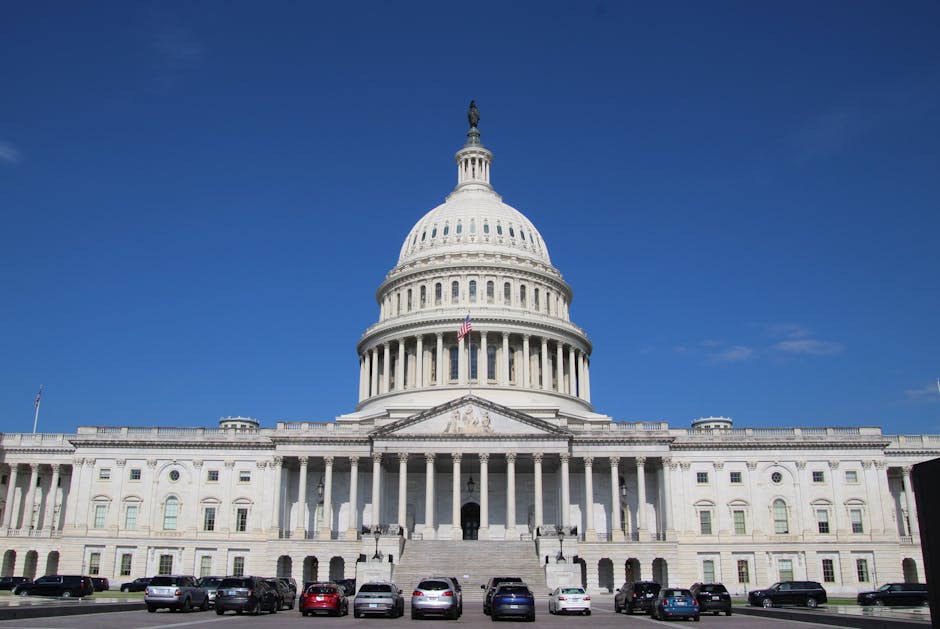
With Democrats set to control Congress in January 2027, their stated intent to use the Huang affair as impeachment grounds will test whether a midterm majority translates into constitutional action.
Bottom Line
Confirmed means supported by a primary source or strong independent sources; Disputed means credible sources conflict; Open means no solid primary source evidence either way.
- ConfirmedDemocrats gained a congressional majority in the November 2026 midterm election, giving them the institutional standing to initiate impeachment proceedings beginning in January 2027.
- ConfirmedFox News host Jesse Watters stated publicly on November 24, 2026 that Democrats would 'likely use this scandal to impeach,' citing Trump's personal intervention on behalf of Nvidia CEO Jensen Huang.
- OpenWhether any formal impeachment articles have been drafted or introduced by Democratic members of Congress is not confirmed by any primary source, committee record, or congressional filing.
- OpenThe precise nature of Trump's intervention regarding Jensen Huang and its legal basis under federal law remain unsettled pending primary source documentation.
Democrats who will control Congress beginning in January 2027 are publicly signaling they intend to pursue impeachment proceedings against President Trump, citing his reported personal role in restoring Nvidia CEO Jensen Huang to his position, according to The Hill. That signal, delivered through media commentary and intraparty debate, has moved the question of a second Trump impeachment from political speculation to stated party strategy.
This story separates documented fact from theory and opinion, with the separation stated here. What is Confirmed rests on named public sources. What is Open reflects the absence of primary source documentation such as a House Judiciary Committee filing, a formal resolution of inquiry, or a signed article of impeachment.
Confirmed: Fox News host Jesse Watters said on November 24, 2026 that Democrats are 'licking their chops over the Jensen affair' and that the party will 'likely use this scandal to impeach,' according to The Hill. Watters framed Trump's intervention as providing 'a lot of ammunition' to the opposition, even while acknowledging the action may have been 'to help the economy and the country.' No congressional Democrat is quoted by name in the same report making a formal impeachment commitment.
Confirmed: Democrats won a decisive midterm victory in November 2026, according to The Hill's reporting on intraparty legislative strategy. That majority, taking effect in January 2027, would give House Democrats the procedural standing to introduce and vote on articles of impeachment. Under Article I of the Constitution, a simple House majority is required to impeach a president. The Senate then holds a trial and requires a two-thirds vote to convict and remove.
Confirmed: The same intraparty strategic debate has exposed a division within the Democratic caucus about how to use its new majority. Senator Brian Schatz of Hawaii is cited by The Hill as arguing the party should not advance proposals that Trump will predictably veto, suggesting a faction that prefers a governance-focused agenda over confrontational tactics. The existence of that internal tension is relevant to whether a unified impeachment push is operationally feasible at the start of the new Congress.
Open: Whether any Democratic member of Congress has formally drafted, circulated, or co-sponsored articles of impeachment related to the Huang matter is not established by any primary source in this reporting. No House Judiciary Committee record, no congressional resolution number, and no member's official statement has been cited in connection with a specific impeachment filing. The claim that Democrats 'will likely' impeach is commentary from a cable news host, not a congressional record.
The Nvidia angle has prior coverage. This publication reported in Nvidia CEO Huang Faces Government Scrutiny After Board Reinstatement that Huang's reinstatement drew federal attention. What remains Confirmed from that prior reporting is that the reinstatement occurred and drew government scrutiny. What the current source material adds is the congressional political response: a stated Democratic intent to convert that scrutiny into an impeachment instrument once the new majority is seated.
Analysis: The strategic calculus Democrats face is substantive. Impeachment is a congressional act with defined procedural steps, beginning with a House resolution and referral to the Judiciary Committee. A majority that enters January 2027 divided between a veto-override strategy and an impeachment strategy will face immediate pressure to choose. The Schatz faction's concern about advancing legislation that Trump will block is not easily reconciled with the resource and political capital demands of an impeachment inquiry running in parallel.
The constitutional standard for impeachment is 'high crimes and misdemeanors,' a phrase the courts have largely left to congressional interpretation. Prior impeachment proceedings, including the two against President Trump during his first term in 2019 and 2021 as documented in the Congressional Record, turned on factual records developed through House committee investigations. Whether a similar investigative record exists or is being assembled regarding the Huang matter is Open: no committee subpoena, deposition notice, or document request has been cited in any source reviewed for this story.
Trump's threat to veto legislation passed by the new Democratic Congress, reported by The Hill, adds a second front to the institutional conflict. A president who preemptively signals maximum resistance to a new congressional majority sets the conditions for legislative gridlock, which in turn raises the political cost-benefit calculation of spending caucus energy on impeachment rather than on legislation that could be held up as a governing record for the 2028 election cycle.
The present record does not establish whether the Huang intervention, as described, meets a legal threshold for impeachment. That question requires a factual record that does not yet exist in public filings. The stated intent of some Democrats to pursue that path, combined with the structural opportunity created by their new majority, makes the January 2027 opening of the new Congress the next material evidentiary moment.
Sources Named in This Story
Still Open
- Whether any House Democrat has formally drafted or introduced articles of impeachment related to the Huang matter.
What would settle it: - The precise legal authority under which Trump acted to restore Jensen Huang as Nvidia CEO and whether that action involved any executive directive, federal agency order, or communication subject to congressional oversight.
What would settle it: - Whether the Democratic caucus leadership, including the incoming House Speaker, has endorsed an impeachment inquiry as a priority for the first legislative session beginning January 2027.
What would settle it: