UN Court Rules Myanmar Committed State-Sponsored Genocide Against Rohingya
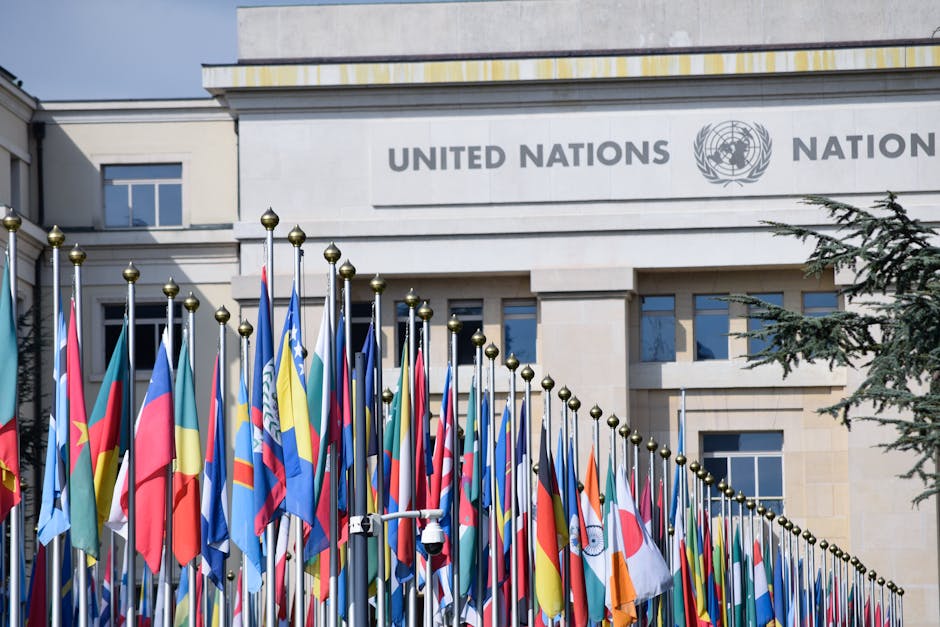
The International Court of Justice finding is only the fourth genocide ruling by an international court since the Nazi Holocaust, placing Myanmar in a narrow and grave legal category.
Bottom Line
Confirmed means supported by a primary source or strong independent sources; Disputed means credible sources conflict; Open means no solid primary source evidence either way.
- ConfirmedThe International Court of Justice ruled on November 19, 2026 that Myanmar's security forces committed state-sponsored genocide against the Rohingya Muslim minority in 2017, according to the Korea Times report citing the ICJ decision.
- ConfirmedThe case was filed by Gambia and took seven years to reach a ruling, according to the same Korea Times report.
- OpenWhether Myanmar's current government or military leadership will face enforcement action or international sanctions as a result of the ruling is not established by available evidence.
- OpenThe specific legal remedies or reparations the ICJ will order have not been detailed in the available source material.
THE HAGUE. The International Court of Justice, the top judicial body of the United Nations, ruled on Thursday, November 19, 2026, that thousands of killings and widespread sexual violence carried out by Myanmar's security forces against the Rohingya Muslim minority population in 2017 constituted state-sponsored genocide. The ruling was reported by the Korea Times and places Myanmar among only four states ever found by an international court to have committed genocide since the Nazi Holocaust.
This story separates documented fact from theory and opinion, with that separation stated here. Claims supported by the Korea Times report and the ICJ public record are labeled Confirmed. Claims without published evidentiary support are labeled Open or Disputed as the record supports.
[Confirmed] The case was filed in 2019 by Gambia, a predominantly Muslim West African nation acting on behalf of the Organisation of Islamic Cooperation. The Korea Times report states the filing came seven years before this week's ruling, making the litigation one of the longer-running dockets before the court. The ICJ, seated in The Hague, Netherlands, is the primary organ of the United Nations for resolving legal disputes between states and issuing advisory opinions.
[Confirmed] The 2017 military campaign in Myanmar's Rakhine State drove more than 700,000 Rohingya people across the border into Bangladesh, according to prior United Nations documentation. Myanmar's military, known as the Tatmadaw, conducted the operations under the government then led by State Counsellor Aung San Suu Kyi. The ICJ ruling identifies those operations as genocidal in character based on the evidence presented over seven years of proceedings.
[Confirmed] The ruling marks only the fourth time since the Nuremberg-era proceedings that an international court has used the genocide designation in a formal judgment. Prior instances, as referenced in the Korea Times account, include rulings related to events in Bosnia and Rwanda. The rarity of the designation reflects the high legal threshold required: prosecutors and petitioners must demonstrate not only mass killing but also specific intent to destroy a national, ethnic, racial, or religious group in whole or in part.
[Open] Whether the ICJ ruling will produce enforceable consequences for Myanmar's current leadership is not established by the available source material. Myanmar has been governed by its military, the Tatmadaw, since a February 2021 coup that removed the elected civilian government. The military junta has not recognized the authority of the ICJ in this proceeding in any way confirmed by the available source material. International courts have no independent enforcement mechanism and must rely on the UN Security Council to compel compliance, where veto power held by permanent members, including China, has historically blocked enforcement actions against Myanmar.
[Open] The specific remedies or reparations the ICJ intends to order have not been detailed in the available source material. The court has previously issued provisional measures in this case in January 2020, ordering Myanmar to protect the Rohingya from genocide pending a final ruling, according to prior UN and ICJ records. What binding orders accompany the final judgment has not been confirmed in the sources available for this report.
Analysis. The practical weight of an ICJ genocide ruling has historically been limited by the gap between legal findings and enforcement. Bosnia's genocide case against Serbia, decided in 2007, produced no territorial transfer and limited reparations. The ICJ finding against Myanmar is likely to intensify diplomatic pressure and may affect bilateral aid and trade relationships, but the mechanism by which the ruling translates into accountability for named individuals or the institution of the Tatmadaw is not defined by the court's jurisdiction alone.
[Open] The position of Myanmar's military government in response to the November 19 ruling has not been captured in the source material available for this report. Prior statements by Myanmar officials have rejected the genocide framing, characterizing the 2017 operations as counterterrorism measures against the Arakan Rohingya Salvation Army. Those prior statements are evidence of the speaker's position and do not constitute confirmed fact about the nature of the operations.
The Rohingya population remains largely stateless. Most of the more than one million Rohingya who fled to Bangladesh remain in camps in Cox's Bazar, the largest refugee settlement in the world by population, according to the United Nations High Commissioner for Refugees. Conditions in those camps, and the question of safe return to Myanmar, remain unresolved regardless of the ICJ ruling.
Gambia's decision to bring the case was notable because Gambia has no direct national connection to the Rohingya. Its filing rested on the legal principle that all signatories to the 1948 Genocide Convention have standing to bring cases alleging violations of that convention, a principle the ICJ accepted in a preliminary ruling in 2022.
Sources
- Korea Times, ICJ Rohingya genocide ruling report, November 19 2026 (2026-11-19)
- United Nations High Commissioner for Refugees, Cox's Bazar camp documentation
- International Court of Justice, provisional measures order, January 2020
- UN Genocide Convention, 1948
Still Open
- Whether Myanmar's military junta will comply with or formally respond to the ICJ final judgment
What would settle it: - The specific reparations or binding orders included in the ICJ final judgment text
What would settle it: - Whether the UN Security Council will take enforcement action following the ruling
What would settle it: