Trump Says Democratic Congress Will Be More Productive Than GOP One
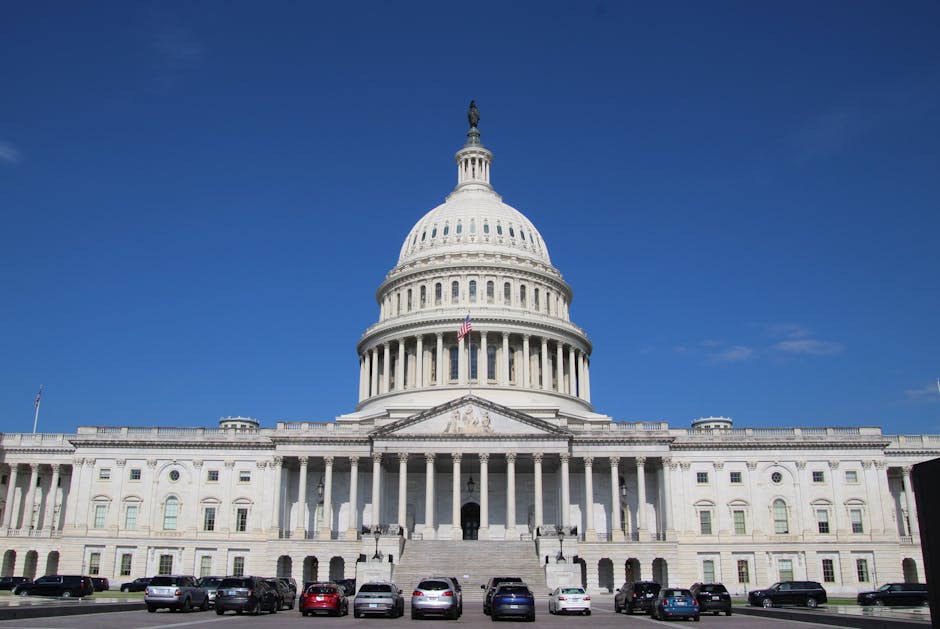
President Trump's forecast of cross-party cooperation with the incoming 120th Congress sets up an early test of whether divided government produces legislation or stalemate.
Bottom Line
Confirmed means supported by a primary source or strong independent sources; Disputed means credible sources conflict; Open means no solid primary source evidence either way.
- Confirmed: President Trump told Fox News on November 19, 2026, that he expects the incoming Democratic-controlled Congress to be more productive than the Republican-led Congress he worked with during the first two years of his second term.
- Confirmed: House Democratic Leader Hakeem Jeffries has stated a legislative agenda that includes Supreme Court reform, a congressional stock trading ban, and anti-price-gouging measures, putting him on record as the incoming majority's agenda setter.
- Open: Whether Trump and Jeffries will reach agreement on any shared legislative priorities, including a stock trading ban, is unresolved.
- Open: The specific composition and leadership structure of the incoming 120th Congress has not been fully confirmed in available source material.
President Donald Trump stated on November 19, 2026, in an interview with Fox News anchor Jacqui Heinrich, that he anticipates the incoming Democratic-controlled 120th Congress will be more productive than the Republican-led Congress that served alongside him during the first two years of his second term. That statement, reported by The Hill, is the strongest documented fact available from the sources reviewed for this story and is Confirmed.
This story separates documented fact from theory and opinion, with that separation stated here: the bottom line and labeled claims below are drawn from primary source reporting and direct quotation; interpretive material is marked Analysis.
Trump described his expected working relationship with the incoming Democratic majority in transactional terms. "And I have a feeling that this is going to be an unbelievably productive two years. They'll send me a bill on health care, and I'll say, 'No way,' and I'll veto it. And then they'll call me and they'll say, and we'll sit down. And that's what I do," Trump told Heinrich, according to The Hill. The description frames negotiation as a process of initial rejection followed by direct talks, a model Trump has described publicly in prior legislative contexts. That framing is Confirmed by the direct quotation.
On the congressional side, House Democratic Leader Hakeem Jeffries of New York has laid out the terms Democrats intend to bring to any legislative session. According to the Washington Examiner, Jeffries recently declared: "We must root out corrupt price gouging, clean up the mess at the Supreme Court and ban Members of Congress from trading stocks. Accountability begins at home." The Washington Examiner report frames this as part of a broader Democratic caucus legislative agenda. Jeffries's statement is Confirmed as a public declaration. Whether any of those items would be sent to Trump as stand-alone bills, or in combination, is Open.
Analysis: The overlap between Trump's stated openness to negotiation and Jeffries's listed priorities is narrow but not zero. A congressional stock trading ban has drawn bipartisan interest in prior Congresses. The STOCK Act of 2012, passed with broad bipartisan support and signed by President Obama, established the existing disclosure framework. Efforts to strengthen or extend it have stalled repeatedly in both Republican and Democratic-led Congresses, according to the congressional record. Whether the 120th Congress will move further is Open.
The Supreme Court reform component of Jeffries's agenda faces a higher threshold. The Washington Examiner report describes bills in the Democratic caucus that target the structure and conduct of the Court. Trump has not indicated public support for such measures. No legislation has been passed on this point, and no administration position has been confirmed in the available source material. That question is Open.
Trump's assessment of the prior Republican-led Congress as less productive is not accompanied in the available source material by a specific legislative record comparison. The claim is therefore Open pending a review of bills signed into law from the 119th Congress compared with any output from the 120th. The congressional record from the Office of the Clerk of the House and the Senate Journal would settle that comparison once the 120th Congress completes its first session.
The House Democrats' November 2026 nomination of Jeffries for Speaker by a vote of 251 to 11 established him as the presumptive Democratic floor leader heading into the new Congress, a Confirmed data point from prior TCT coverage that provides context for his role as the party's legislative agenda setter.
Analysis: Divided government in the United States historically produces both legislative gridlock and select bipartisan agreements, depending on the degree of overlap between presidential and congressional priorities. The Reagan administration's 1986 Tax Reform Act and the Clinton-era welfare reform law of 1996 both passed under divided or cross-party configurations. Neither historical parallel maps cleanly onto the current situation, but both illustrate that the outcome Trump described, negotiation leading to signed legislation, has a documented precedent.
What remains unresolved is the procedural calendar. The 120th Congress was not yet seated as of November 19, 2026, the date of Trump's interview. No committee assignments, no introduced bills, and no floor schedules are available in the source material. The scope and speed of any legislative engagement between the White House and the Democratic majority will depend on factors not yet in the public record.
The price-gouging legislation referenced by Jeffries has no confirmed bill number or committee referral in the available source material. Its contents, enforcement mechanism, and scope are Open. Trump has not taken a public position on federal price-gouging authority in the source material reviewed here.
Sources
- The Hill (2026-11-19)
- Washington Examiner
- The Congressional Times, House Democrats Nominate Jeffries for Speaker 251 to 11
- STOCK Act of 2012, Public Law 112-105
Still Open
- Whether Trump and the Democratic majority will pass any shared legislation in the 120th Congress
What would settle it: The congressional record from the Office of the Clerk of the House and the Senate Journal, once the 120th Congress completes its first session - Whether a congressional stock trading ban will be introduced as a stand-alone bill and sent to the White House
What would settle it: A bill introduction record in the Congressional Record or the House or Senate clerk's introduced bills database - Whether Trump's characterization of the 119th Republican Congress as less productive is supported by a bill-signing comparison
What would settle it: A tally of bills signed into law from the 119th Congress versus the 120th, available from the Office of the Federal Register and the congressional record - The specific contents, enforcement mechanism, and bill number of any Democratic price-gouging legislation
What would settle it: An introduced bill number and text filed with the House or Senate clerk - Trump's formal position on Supreme Court structural reform legislation
What would settle it: A White House statement of administration policy or presidential press briefing transcript