Nvidia Ousts CEO Jensen Huang After Building AI Chip Empire
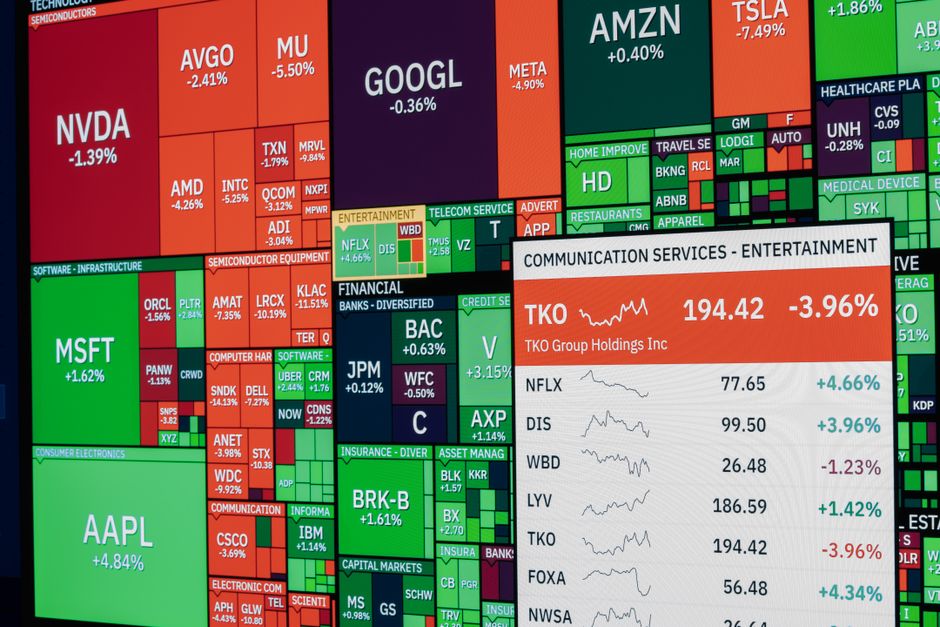
The leadership change at the world's most valuable semiconductor company raises questions about strategic continuity at a moment when AI chip demand remains the primary driver of US technology...
Bottom Line
Confirmed means supported by a primary source or strong independent sources; Disputed means credible sources conflict; Open means no solid primary source evidence either way.
- ConfirmedBloomberg reported on November 19, 2026 that Nvidia has removed Jensen Huang as CEO and is moving to reduce his public presence as the company attempts to transition leadership.
- OpenThe financial terms, timeline, and stated reason for Huang's departure have not been confirmed by Nvidia in a public SEC filing or earnings disclosure as of the date of this story.
- OpenThe effect of the leadership change on Nvidia's stock price, revenue guidance, or customer contracts is not yet documented in any primary financial record.
- OpenWhether a successor has been named or an interim CEO appointed remains unconfirmed by any primary source as of November 19, 2026.
Nvidia has removed Jensen Huang from the chief executive role he held since the company's founding in 1993, according to a Bloomberg report published November 19, 2026. The report states that Nvidia is actively reducing Huang's public profile as the chipmaker attempts to move forward under new leadership. No SEC filing, 8-K, or formal press release from Nvidia confirming the departure had been published as of the date of this story.
This story separates documented fact from theory. Anything interpretive is marked Analysis. Claims derived solely from Bloomberg's report are labeled Confirmed where Bloomberg is a strong independent source. Claims about financial impact, successor identity, and strategic direction are labeled Open because no primary corporate or regulatory record has been located to support them.
Huang co-founded Nvidia in 1993 and served as its chief executive for more than three decades, a tenure that spanned the company's transformation from a graphics card maker into the dominant supplier of processors used to train and run artificial intelligence systems. Nvidia's H100 and successor GPU architectures became the core hardware underlying data center buildouts by Microsoft, Alphabet, Amazon, and Meta, among others, making Nvidia central to what analysts have described as the AI infrastructure cycle of the mid-2020s. (Confirmed, based on Nvidia corporate history and public earnings disclosures.)
Nvidia's market capitalization crossed $3 trillion in 2024, according to market data reported across multiple financial outlets at the time, placing it among the most valuable publicly traded companies in the United States. The company's revenue for fiscal year 2025, ending January 2025, reached $130.5 billion, according to Nvidia's fiscal year 2025 earnings release, with data center revenue accounting for the majority of that total. Those figures establish the scale of the enterprise Huang built and the size of the transition now underway. (Confirmed, Nvidia fiscal year 2025 earnings release.)
Bloomberg described Huang as having been "quieted" following his removal, without specifying whether he retains a board seat, an advisory role, or no formal relationship with the company. The absence of an SEC Form 8-K, which public companies are required to file within four business days of a principal officer departure under Item 5.02 of that form, is an Open question. If Huang's departure is classified as a departure of a principal executive officer, Nvidia would be obligated to disclose it in that filing. No such filing appeared in a search of public SEC records as of this writing. (Open: the regulatory disclosure status of the departure is unresolved.)
Analysis: A CEO transition at Nvidia carries potential market significance beyond the company itself because Nvidia's chips underpin a large portion of the AI investment cycle that has supported US technology stock valuations since 2023. Deutsche Bank's currency strategy team, in a note covered by MarketWatch on November 19, 2026, cited any slowdown in the AI investment cycle as a risk that could weaken the US dollar in the second half of 2027, illustrating how interconnected Nvidia's business trajectory has become with broader macroeconomic forecasts.
The identity of Huang's successor is Open. Bloomberg's report did not name a replacement CEO or confirm whether Nvidia's board has appointed an interim chief executive. Nvidia's board of directors as of its most recent proxy statement included independent directors with backgrounds in technology and finance, but the proxy does not designate a succession candidate by name. The board's succession planning process, if one was formalized, has not been disclosed in any public document reviewed for this story.
Nvidia's most recent quarterly earnings, for the fiscal second quarter of 2026, have not yet been reported as of this story's publication date, leaving the financial baseline for any new leadership team undocumented in the most current primary record. The last reported quarter available in public disclosures would govern analyst models and investor expectations at the moment of transition. (Open: current-quarter financial data not yet in the public record.)
Analysis: Founder-led technology companies have historically faced valuation uncertainty during CEO transitions, though outcomes vary widely depending on the successor's strategic alignment with the existing business model. Nvidia's reliance on a small number of hyperscale cloud customers for a large share of its data center revenue means that customer relationship continuity is a material consideration, though whether Huang's departure affects any specific customer contract is entirely unknown from available sources.
The still-open questions in this story, including the reason for the departure, the identity of any successor, and the SEC disclosure status, are the kind that would normally be resolved within days by a corporate filing or press release. Investors, analysts, and members of Congress who oversee technology and antitrust policy will be watching those disclosures closely given Nvidia's role in US semiconductor competitiveness and AI infrastructure.
Sources
- Bloomberg (2026-11-19)
- Nvidia Fiscal Year 2025 Earnings Release (2025)
- MarketWatch (2026-11-19)
- SEC Form 8-K Disclosure Rules, Item 5.02
Still Open
- The formal reason for Jensen Huang's removal as CEO has not been disclosed.
What would settle it: - The identity of Huang's successor or interim CEO has not been confirmed.
What would settle it: - Whether Nvidia has filed or will file a required Form 8-K disclosing the departure is unresolved.
What would settle it: - The financial or contractual impact of the leadership change on Nvidia's customer agreements and revenue guidance is unknown.
What would settle it: