Deutsche Bank Reverses Dollar Forecast, Now Sees Strength Into 2027
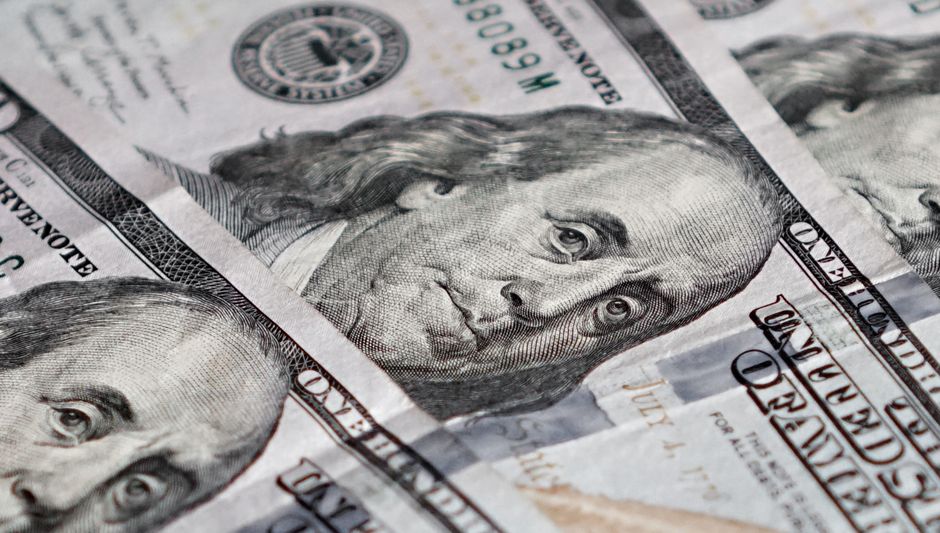
The bank's public acknowledgment that its 2026 weak-dollar call misfired signals how difficult it has become to forecast US currency direction in an AI-driven capital environment.
Bottom Line
Confirmed means supported by a primary source or strong independent sources; Disputed means credible sources conflict; Open means no solid primary source evidence either way.
- ConfirmedDeutsche Bank has publicly acknowledged its forecast for a weaker US dollar in 2026 was wrong, according to MarketWatch reporting dated November 19, 2026.
- ConfirmedDeutsche Bank now predicts the forces driving the dollar higher since February 2026 will continue into the first half of 2027, per the same MarketWatch report.
- OpenThe degree to which AI-sector capital flows are the primary driver of dollar strength has not been established by any cited primary data source.
- OpenWhether the dollar will weaken in the second half of 2027 if AI investment slows remains unresolved, with no Federal Reserve or IMF data yet available to confirm the mechanism.
Deutsche Bank has reversed its US dollar outlook for 2026, publicly acknowledging that its earlier call for a weaker dollar misfired and now projecting that dollar strength will persist into the first half of 2027, according to MarketWatch reporting published November 19, 2026.
This story separates documented fact from theory and opinion, with interpretation marked as Analysis. Confirmed claims rest on the MarketWatch report citing Deutsche Bank's own team. Open claims reflect the absence of primary data from a US regulator or central bank to confirm the causal mechanism.
[Confirmed] Deutsche Bank's currency strategists stated directly that the call for a weaker dollar in 2026 misfired, according to the MarketWatch account. The bank identified dollar appreciation as having been underway since February 2026. No specific exchange rate level or percentage gain was attributed to Deutsche Bank in the available source material, and any such figure would require the bank's original research note to confirm.
[Confirmed] Deutsche Bank now forecasts the same forces that drove dollar strength beginning in February 2026 will continue into the first half of 2027, per the MarketWatch report. The bank named AI-sector investment as a factor it expects to support the dollar, with the caveat that any slowdown in that sector could begin to undermine dollar strength.
Analysis: The revision matters for US investors because currency forecasts from major institutional banks directly shape positioning in US Treasury markets, US equity valuations for multinational companies, and the cost of dollar-denominated imports. When a large bank revises a year-long directional call, portfolio managers and corporate treasurers who relied on that call face potential mark-to-market losses on hedging positions, though the scale of any such exposure is Open without additional disclosed data.
[Open] The MarketWatch report does not name a specific Federal Reserve policy action, a US economic data release, or a verifiable capital flow figure as the documented cause of the dollar's sustained rise since February 2026. The AI investment thesis offered by Deutsche Bank is an interpretive framework, not a confirmed empirical finding from a primary source such as a Federal Reserve Board statement or a Bureau of Economic Analysis capital account report.
The US Dollar Index, which measures the dollar against a basket of six major trading-partner currencies and is published by ICE, would be the primary public data series against which Deutsche Bank's forecast accuracy could be measured. The MarketWatch report does not state the index's level at the time of the original forecast, the level at the time of the revision, or the percentage difference between the two. Those figures are Open pending Deutsche Bank's original research note or ICE data.
[Confirmed] Deutsche Bank's team stated that a slowdown in what it called the AI bonanza would start to undermine dollar strength, per the MarketWatch report. This is a conditional forecast, not a prediction that such a slowdown is imminent. The bank did not specify a threshold for what would constitute a slowdown or name a data series it would use to measure one.
Analysis: Institutional forecast revisions of this kind are not uncommon in currency markets, where variables including Federal Reserve rate decisions, US trade balances reported by the Census Bureau, and global capital allocation all interact. What is notable in the MarketWatch account is the directness of Deutsche Bank's self-correction, a posture that can itself influence how other market participants update their models.
For US-based multinational corporations reporting earnings in dollars, a stronger dollar than anticipated reduces the translated value of overseas revenues. Companies in the S and P 500 that derive significant revenue abroad, a share that FACTSET has in prior quarters estimated at roughly 40 percent of aggregate index revenue (with the S and P 500 as denominator), face a direct earnings headwind when the dollar rises against forecast. Whether that headwind materialized in third-quarter 2026 earnings is Open without a current FACTSET or Bloomberg Intelligence aggregation for that period.
[Open] No Federal Reserve statement or US Treasury Department release cited in the available source material confirms or disputes the Deutsche Bank view that AI capital inflows are the dominant force behind dollar strength since February 2026. The Federal Reserve's next scheduled policy meeting minutes, once released, would be one document that could address capital flow dynamics relevant to this question.
Sources
- MarketWatch (2026-11-19)
Still Open
- The exact US Dollar Index level at the time of Deutsche Bank's original 2026 forecast and at the time of the November 2026 revision, and the percentage change between them.
What would settle it: - Whether AI-sector capital inflows are the primary documented cause of dollar strength since February 2026, as opposed to Federal Reserve rate differentials, US trade data, or other factors.
What would settle it: - The scale of losses or hedging costs incurred by US institutional investors who positioned for a weaker dollar in 2026 based on Deutsche Bank or similar forecasts.
What would settle it: