October Jobs Report Shows AI-Linked Gains in White- and Blue-Collar Roles
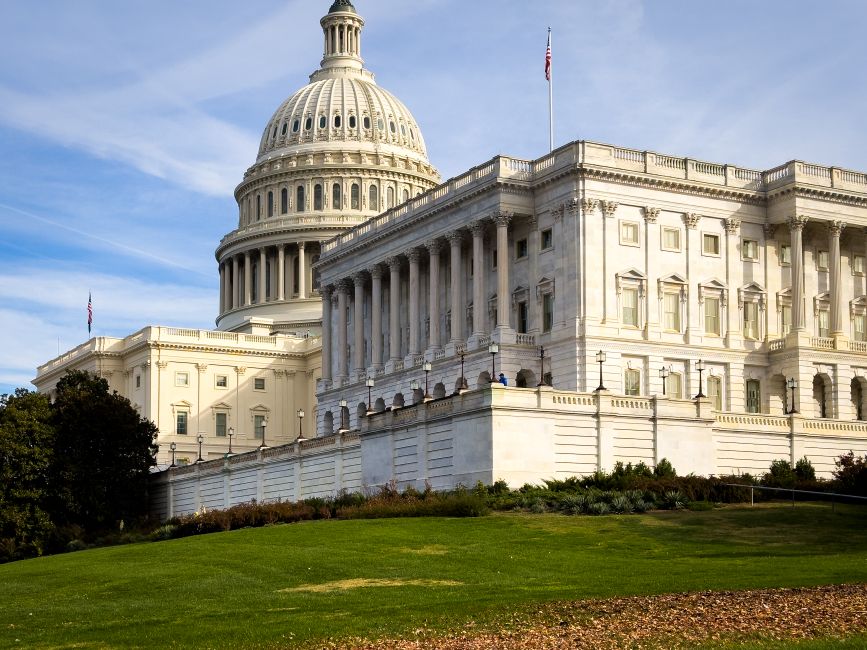
If the correlation between AI adoption and broad-based employment growth holds in subsequent months, it would complicate the prevailing assumption that automation uniformly displaces workers...
The October 2026 US jobs report showed employment gains in both white-collar and blue-collar occupations that analysts have linked to artificial intelligence adoption, according to a November 9 Bloomberg newsletter citing the report's sector-level data. The finding adds a data point to a long-running policy and economic debate over whether AI deployment reduces or reshapes the US labor force.
The Bloomberg analysis, published November 9, 2026, identified job categories tied to AI infrastructure, AI-assisted services, and AI-adjacent skilled trades as among those recording positive payroll changes in October. The newsletter did not specify the exact number of positions added in those categories, and the Bureau of Labor Statistics has not broken out an official AI-linked employment subcategory in its Current Employment Statistics series.
What the October report does show at the top line is a continuation of monthly payroll additions. The BLS releases headline nonfarm payroll counts, unemployment rates, and sector-level breakdowns, but attribution of specific job gains to any single technology driver requires supplemental analysis. Bloomberg's newsletter framed the AI connection as an observation supported by the sector composition of the gains rather than a direct BLS classification.
The midterm elections held last week have added a legislative dimension to the AI employment question. A Neuberger Berman CIO Weekly note published November 9 on Seeking Alpha stated that the midterm results may check the president's most controversial policies and that potential constraints on AI infrastructure could slow the buildout and create conditions for broader equity leadership. That framing suggests institutional investors are now pricing in a scenario where Congressional dynamics affect the pace of AI capital expenditure.
The Neuberger Berman note did not specify which legislative proposals would constitute constraints, and no bill targeting AI infrastructure spending had been voted on in Congress as of the publication date. What would clarify the investment risk would be committee markups or floor votes on any legislation directly regulating data center construction, semiconductor import rules, or federal AI procurement.
For workers, the debate over AI and employment has historically centered on displacement in routine-task occupations. Academic literature, including work published by the National Bureau of Economic Research, has documented divergent effects by task type, with non-routine cognitive and manual tasks proving more durable than routine clerical or assembly work. The October data, as interpreted by Bloomberg, suggests at least a short-term period in which both skilled and trade-level workers are finding positions associated with the technology cycle.
The AI infrastructure buildout has driven significant capital spending by major US technology companies. Alphabet, Microsoft, Amazon, and Meta have each disclosed in quarterly earnings filings in 2026 that capital expenditure guidance was raised to support data center and compute capacity expansion. Those filings are publicly available through the SEC's EDGAR database. The construction and electrical trade roles associated with that buildout would appear in BLS categories such as specialty trade contractors, a sector the BLS tracks monthly.
The Bloomberg newsletter also noted that the gains extended to white-collar roles, which would include categories such as computer and mathematical occupations and professional and business services. The BLS September 2026 release showed computer and mathematical occupations carried a median annual wage of roughly $104,000 based on the most recent Occupational Employment and Wage Statistics data, making those roles a meaningful contributor to aggregate wage growth if the count expands.
The political context matters for markets because the congressional agenda following the midterms includes budget and appropriations decisions that affect federal AI spending and research funding through agencies such as the National Science Foundation and the Department of Energy. Changes to that funding profile would affect the publicly traded contractors and technology vendors that depend on federal contracts, a universe that includes companies reporting to the SEC.
What remains unknown from public sources is the magnitude of AI-attributable job creation versus AI-attributable job displacement occurring simultaneously. The BLS does not currently publish a net displacement estimate tied to automation, and no federal agency has released a methodology for doing so. A formal BLS or Congressional Budget Office study on the net employment effect of AI adoption would be the clearest source to resolve that question.