Ghana's Mahama Defends Non-Aligned Stance Amid BRICS Bid and Russia Visit
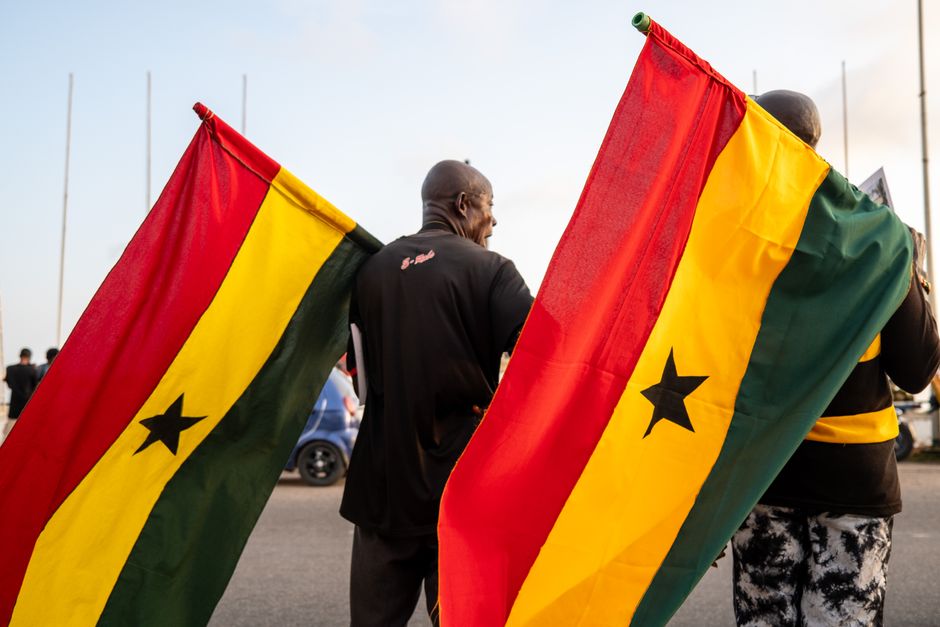
Ghana's simultaneous pursuit of BRICS partnership and stated neutrality tests how smaller economies manage relationships with competing global blocs.
Ghanaian President John Dramani Mahama has publicly reaffirmed his government's commitment to a non-aligned foreign policy, following scrutiny over a recent state visit to Russia and Ghana's formal bid for partnership status with the BRICS bloc, according to Joy Online Ghana.
Mahama stated that Ghana's engagement with Russia and its interest in BRICS do not represent a realignment toward any geopolitical camp. He characterized the outreach as consistent with the country's historical posture of engaging multiple international partners without entering into binding ideological alignments, per the same Joy Online Ghana report.
BRICS, originally comprising Brazil, Russia, India, China, and South Africa, expanded its membership in 2024 to include Egypt, Ethiopia, Iran, Saudi Arabia, and the United Arab Emirates, according to the official BRICS 2024 summit communique. The bloc has since introduced a formal partnership track for countries that wish to associate with it without full membership, a category Ghana is now pursuing.
Ghana's application for BRICS partnership status places it alongside a growing list of African and Global South nations seeking association with the bloc. As of mid-2026, more than 30 countries had expressed interest in BRICS membership or partnership, according to reporting by Reuters in June 2026.
The non-aligned movement has historical roots in Africa. Ghana's founding president Kwame Nkrumah was among the architects of the Non-Aligned Movement at its 1961 Belgrade Conference, making the concept of multi-directional diplomacy a foundational element of Ghanaian foreign policy identity, as recorded in United Nations historical archives.
Critics inside Ghana have questioned whether a BRICS partnership is compatible with non-alignment, given that the bloc is increasingly framed by its leading members, particularly Russia and China, as a counterweight to Western-led institutions such as the G7 and the International Monetary Fund. No formal Ghanaian government response to those specific criticisms was included in the Joy Online Ghana report.
Ghana currently holds a three-year Extended Credit Facility arrangement with the International Monetary Fund, approved in May 2023 and valued at approximately 3 billion US dollars, according to the IMF's official program documentation. Whether pursuing BRICS partnership affects the terms or renewal prospects of that arrangement is not addressed in available public records.
Mahama's visit to Russia, which preceded his BRICS partnership announcement, also drew comment from Western diplomatic observers. The specific content of any exchanges between Mahama and Russian officials during that visit has not been confirmed in publicly available Ghanaian government statements as of the date of this report.
Within Ghana, the opposition New Patriotic Party's 2024 presidential candidate, Dr. Mahamudu Bawumia, has taken a contrasting public posture. Bawumia is currently conducting institutional talks in Japan focused on technology, healthcare, and infrastructure cooperation, according to a separate Joy Online Ghana report published the same day. Japan is a member of the G7 and a close partner of Western-aligned institutions, placing Bawumia's diplomatic engagement in a different geopolitical orientation than Mahama's current outreach.
What would clarify the practical implications of Ghana's BRICS partnership bid is the final text of any partnership agreement, including whether it carries obligations that would constrain Ghana's relations with existing multilateral creditors or Western trading partners. No such text has been made public as of November 6, 2026.