Harris, Carville, and View Hosts Align Against Trump Impeachment If Dems Win Congress
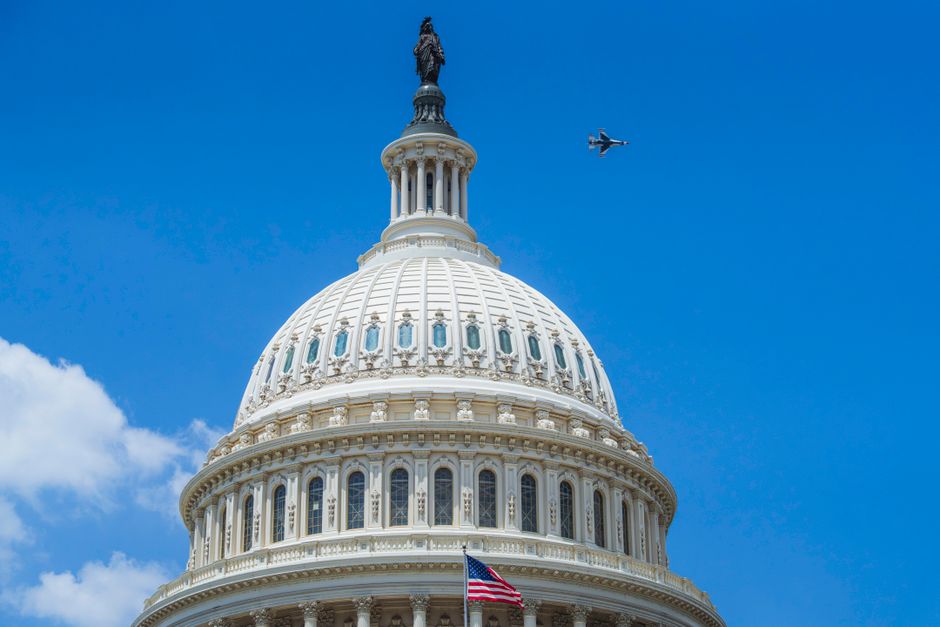
Prominent Democratic voices are converging on a shared midterm message: a House majority, if won, should not be used to pursue impeachment proceedings against President Trump.
Former Vice President Kamala Harris stated publicly that impeaching President Donald Trump would be "not a good idea" for the Democratic Party, a position echoed by political strategist James Carville and co-hosts of ABC's "The View" in remarks reported by the New York Post on October 30, 2026.
The alignment of these voices carries weight heading into the November 2026 midterm elections, in which Democrats are competing to retake one or both chambers of Congress. No Democratic caucus vote or formal party position on impeachment has been recorded in the Congressional Record as of this publication date.
Harris's statement is notable because she served as a United States Senator during Trump's first impeachment trial in 2020 and voted to convict on both articles presented by the House at that time, according to the Senate impeachment vote record of February 5, 2020. Her current public posture represents a shift in stated strategic priority, though no written policy position has been filed with any party committee.
Carville, a Democratic strategist with no formal party role, made his remarks in a separate public statement also cited by the New York Post report. Carville has served as an informal communications advisor to Democratic candidates across multiple election cycles, though he holds no registered lobbying status according to current Lobbying Disclosure Act filings available through the Senate Office of Public Records.
The co-hosts of "The View," a daytime program on ABC, agreed on air that impeachment would not represent a productive use of party resources or floor time. The program has no formal role in Democratic Party governance, but its audience reach and the frequency with which elected officials appear on the broadcast make it a relevant venue for gauging message direction.
At least one Democratic candidate seeking a House seat has also stated publicly that he would not support a Trump impeachment, according to the New York Post report. The candidate's name and district were not specified in the available source material. A review of FEC filings for all current Democratic House candidates would be required to identify the individual and any associated donor or organizational relationships.
The impeachment power is vested in the House of Representatives under Article I, Section 2 of the United States Constitution, which requires a simple majority vote to bring articles of impeachment. Conviction requires a two-thirds vote in the Senate. Trump was impeached twice by the House during his first term: once in December 2019 on charges of abuse of power and obstruction of Congress, and once in January 2021 on a charge of incitement of insurrection. The Senate voted to acquit in both proceedings, per the Senate Journal for those sessions.
Democratic strategists in prior midterm cycles have debated whether impeachment messaging energizes a party's base or risks alienating independent voters. Following the 1998 midterm elections, in which Republicans lost House seats after pursuing the impeachment of President Bill Clinton, political science literature has frequently cited that cycle as a cautionary data point. Whether the current Democratic positioning reflects internal polling data is unknown. Internal campaign polling is not a public record unless voluntarily disclosed.
No House Democratic leader, including Minority Leader Hakeem Jeffries, has issued a formal caucus statement on impeachment strategy as of October 31, 2026, according to a review of press releases posted to the House Democratic Caucus website. A formal caucus position, if one exists, would appear in caucus meeting minutes or a recorded whip communication, neither of which has been made public.
What remains unknown is whether any Democratic member has introduced, drafted, or pre-filed articles of impeachment in anticipation of a potential majority. The introduction of such articles would appear in the Congressional Record on the day of filing and would be assigned a House Resolution number by the Office of the Clerk. That document, if it exists, would answer the question of whether the current public messaging diverges from any active internal planning.