California Governor Signs Law Barring State Property Use in Federal Immigration Raids
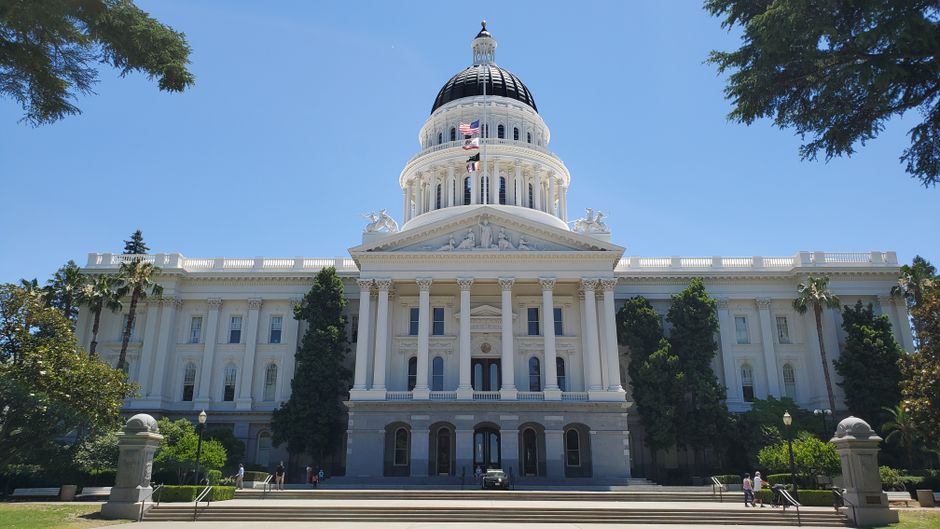
The legislation creates a structural boundary between California state resources and federal immigration enforcement, a conflict that courts may ultimately be asked to resolve.
California Governor Gavin Newsom signed Assembly Bill 1807 into law, prohibiting the use of state-owned properties and resources to prepare or carry out federal immigration enforcement operations, according to La Nacion Argentina.
The law applies to facilities and assets under state jurisdiction. It bars their use in support of operations conducted by U.S. Immigration and Customs Enforcement, commonly known as ICE, at any stage of planning or execution.
A central provision of AB 1807 requires state agencies to identify which public properties have been used, or could potentially be used, for immigration enforcement activities. That inventory requirement imposes an affirmative documentation obligation on state departments, going beyond a passive prohibition.
The bill also mandates signage, formal documentation procedures, and reporting mechanisms tied to any detected or attempted federal immigration activity on state grounds. The reporting structure would create a record trail available to state officials when evaluating compliance.
California has enacted a series of laws since 2017 designed to limit state cooperation with federal immigration authorities. The California Values Act, also known as SB 54, passed that year and restricted local law enforcement from sharing information with ICE or holding individuals solely on immigration detainer requests. AB 1807 extends that framework into the physical domain of state-owned real property.
The legal tension between such state laws and federal immigration authority has been a subject of ongoing litigation. In 2019, the U.S. Department of Justice sued California over SB 54 and related statutes. Federal courts have generally held that the anti-commandeering doctrine, rooted in the Tenth Amendment, permits states to decline active participation in federal enforcement schemes, though the precise boundaries remain subject to case-by-case adjudication.
The scope of AB 1807 is broader than prior California statutes in that it targets physical infrastructure rather than information sharing or personnel conduct. Whether federal authorities could still operate on or adjacent to state property under their independent federal jurisdiction is not addressed in the available summary of the legislation, and that ambiguity would likely require regulatory guidance or judicial clarification.
ICE has not issued a public statement regarding AB 1807 as of the date of this report. The U.S. Department of Homeland Security, ICE's parent agency, has not commented publicly on whether it intends to challenge the law.
California is home to the largest population of undocumented immigrants of any U.S. State. The Department of Homeland Security estimated in its most recent public report that approximately 1.8 million undocumented individuals resided in California, representing roughly 18 percent of the national total.
The law's implementation timeline and the specific state agencies responsible for compiling the required property inventories were not detailed in the available source material. Those details would typically appear in a formal regulatory implementation plan issued by the relevant state department following a bill's signing.