Peru Plans 18 Billion Sol Economic Package Ahead of El Nino Season
The scale of Peru's pre-emptive spending commitment signals that El Nino preparedness has become a standing fiscal obligation for Andean governments, with the size and targeting of cash transfers...
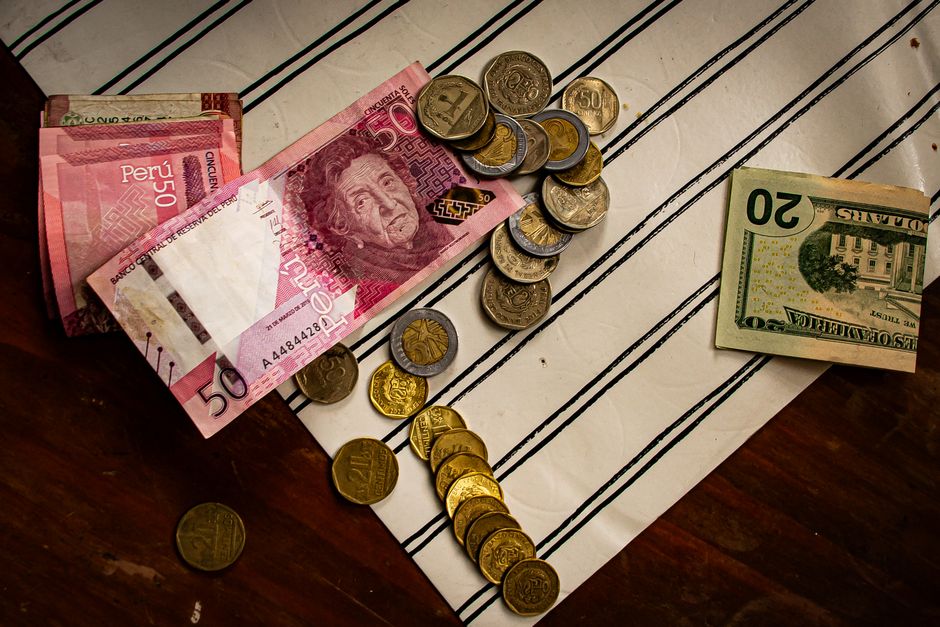
Peru's government has announced a planned economic package of 18 billion soles (approximately 4.8 billion USD at current exchange rates) for 2027, of which 2.5 billion soles are designated for direct household subsidies linked to El Nino weather disruptions, according to El Comercio Peru.
The cash transfer program would distribute payments over a period of three to five months, targeting vulnerable households whose livelihoods and infrastructure are most exposed to flooding, landslides, and agricultural losses associated with El Nino events. El Comercio reported that the government has not yet specified the individual payment amount each beneficiary will receive or the precise mechanism through which eligible residents will access funds.
El Nino is a periodic warming of Pacific Ocean surface temperatures that intensifies rainfall along the coasts of Peru and Ecuador while producing drought conditions in parts of Brazil and southern Africa. Peru's National Meteorology and Hydrology Service, Senamhi, routinely issues seasonal outlooks that inform government contingency planning, though the agency had not issued a formal alert at the time of this report.
Peru has experienced repeated cycles of El Nino damage. The 1997 to 1998 event caused an estimated 3.5 billion USD in losses in Peru, according to figures cited by the United Nations Economic Commission for Latin America and the Caribbean. A coastal El Nino event in early 2017 caused additional severe flooding in the northern departments of Piura and Tumbes, prompting emergency reconstruction spending that strained fiscal accounts for multiple subsequent years.
The 2.5 billion sol subsidy allocation represents roughly 14 percent of the total 18 billion sol package, indicating the government is weighting the broader package toward infrastructure investment and other economic measures rather than purely transfer payments. The relative proportion signals a dual strategy: stimulate the broader economy while providing a direct income cushion to the most at-risk population segments.
The identities of the beneficiary categories have not been formally published in regulatory form as of October 24, 2026. El Comercio noted that details on eligibility criteria and payment logistics remain pending, meaning the program's actual reach and equity of distribution cannot yet be independently assessed. What would reveal both the targeting methodology and administrative cost is the formal decree the government is expected to publish in the official gazette, El Peruano.
Peru's Social Development and Inclusion Ministry, known as Midis, administers existing conditional cash transfer programs including Juntos, which serves rural households in extreme poverty, and Pension 65, which targets elderly citizens without contributory pensions. Any new El Nino bond program would likely operate through or alongside those existing platforms, which already maintain beneficiary registries and payment infrastructure, though no official confirmation of that administrative route has been provided.
The Peruvian economy grew at an annual rate of 3.1 percent in 2025, according to Peru's central bank, the Banco Central de Reserva del Peru. Fiscal discipline has been a recurring area of debate in Lima, and economist Juan Jose Marthans Leon of the Universidad de Piura wrote in El Comercio that Peru's policy responses to climate and economic shocks have been reactive rather than structurally anticipatory, arguing the country must move beyond what he called firefighting solutions.
Latin American governments more broadly have faced pressure to formalize climate-linked social protection spending. The Peruvian announcement follows a pattern visible across the Andean region, where Ecuador and Bolivia have also deployed emergency transfer schemes during prior El Nino cycles, though the scale and duration of those programs varied considerably depending on each government's fiscal space at the time.
The Peruvian Congress would need to approve the full 18 billion sol package in the context of the 2027 budget process. As of this publication, no congressional vote on the budget had been scheduled, and the government's timeline for finalizing and publishing eligibility rules for the subsidy program had not been disclosed. The specific start date for payments therefore remains unknown pending that legislative and regulatory process.