Trump Administration Asks Supreme Court to Lift Border Wall Injunction
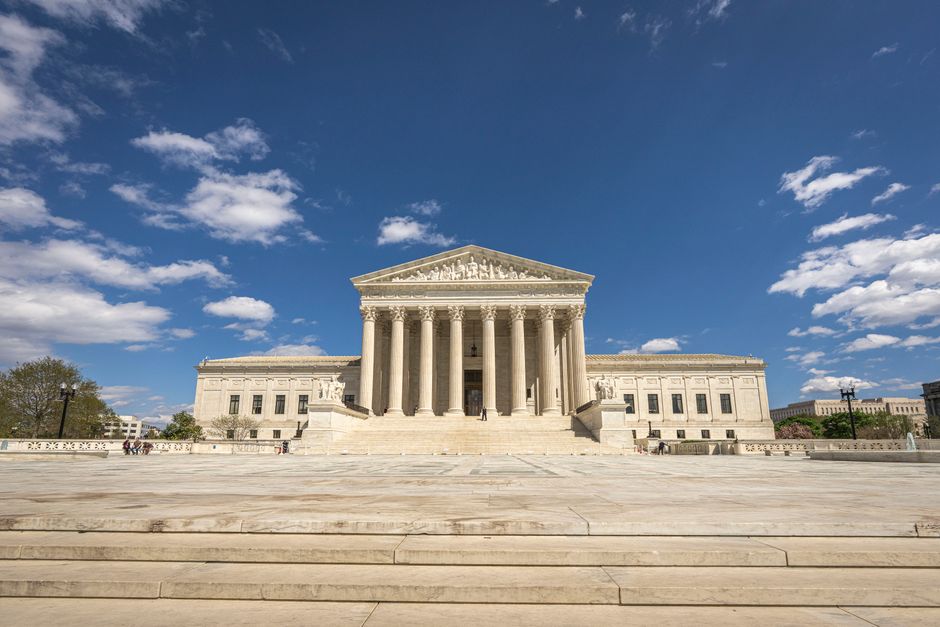
The administration's appeal places the Supreme Court at the center of a dispute over executive authority to build barriers in a protected Texas wilderness region, with the outcome likely to shape...
The Trump administration filed an application with the U.S. Supreme Court on October 21, 2026, asking the justices to allow construction of a border wall in the Big Bend region of Texas to proceed, according to reporting by The New York Times. The application comes after a lower federal court judge issued an order halting the administration's plan to erect hundreds of miles of barriers in that region.
The Big Bend area straddles the U.S.-Mexico border in southwest Texas and includes Big Bend National Park, designated by Congress as a national park in 1944 under 16 U.S.C. Chapter 1. The region is notable for its remote terrain and recognized ecological and cultural significance under federal land management statutes.
A federal district court judge blocked the construction plan before it advanced. The specific court, docket number, and the judge's written rationale were not fully detailed in available public reporting as of October 21, 2026. The full text of the injunction would be contained in the federal district court record and would specify the statutory or constitutional grounds for the halt.
The administration's Supreme Court filing is structured as an emergency application, a procedural mechanism that asks one or more justices to act quickly, sometimes before a full merits briefing. Emergency applications of this type are first referred to the Circuit Justice assigned to the relevant circuit, in this case the Fifth Circuit, before the full Court acts. The identity of the Circuit Justice assigned and any initial ruling were not confirmed in available source material as of publication.
Border wall construction authority has been a recurring point of litigation across multiple administrations. During the first Trump administration, the Supreme Court in 2019 allowed the administration to use Defense Department funds for barrier construction while legal challenges proceeded, a decision documented in Trump v. Sierra Club. That litigation ultimately became moot after President Biden halted construction in January 2021 via executive order. The current application represents a new round of litigation under the second Trump administration.
Federal land in the Big Bend corridor is managed under several statutory frameworks, including the National Park Service Organic Act (54 U.S.C. 100101) and the Federal Land Policy and Management Act. Any construction on or adjacent to federally protected land typically requires compliance with the National Environmental Policy Act (NEPA), which mandates environmental review. Whether the administration invoked a waiver authority, such as the one provided under Section 102 of the Illegal Immigration Reform and Immigrant Responsibility Act of 1996, as amended, to bypass NEPA in this instance is not confirmed in available source material. The administrative record filed with the lower court would contain that information.
The Department of Homeland Security and the Army Corps of Engineers are the agencies most commonly involved in border barrier construction logistics. Which agency is the named respondent in the Supreme Court application, and what contracting actions if any have already been obligated under USASpending records, are not confirmed as of October 21, 2026.
Congress has not passed a specific appropriation for Big Bend barrier construction in any bill text publicly available as of this date. Whether the administration is relying on reprogrammed funds, a continuing resolution allocation, or a separate authority is unknown. The relevant appropriations documents and any reprogramming notifications to the House and Senate Appropriations Committees would answer that question.
Opponents of the construction plan, including environmental organizations and potentially the State of Texas in its capacity as a landowner or stakeholder, may file responses to the Supreme Court application. The timeline for such responses and for any Court action is governed by the Court's emergency application procedures and has not been set publicly as of this writing.
What remains unknown is the specific statutory grounds the administration cited in its Supreme Court filing, the exact mileage and cost of the proposed construction segment, which contractors if any have been awarded agreements, and whether any environmental waiver was formally invoked. The Supreme Court docket, once assigned a case number, will be publicly accessible at supremecourt.gov and will contain the full application and any responses.