Trump Administration Asks Supreme Court to Permit Third-Country Deportations
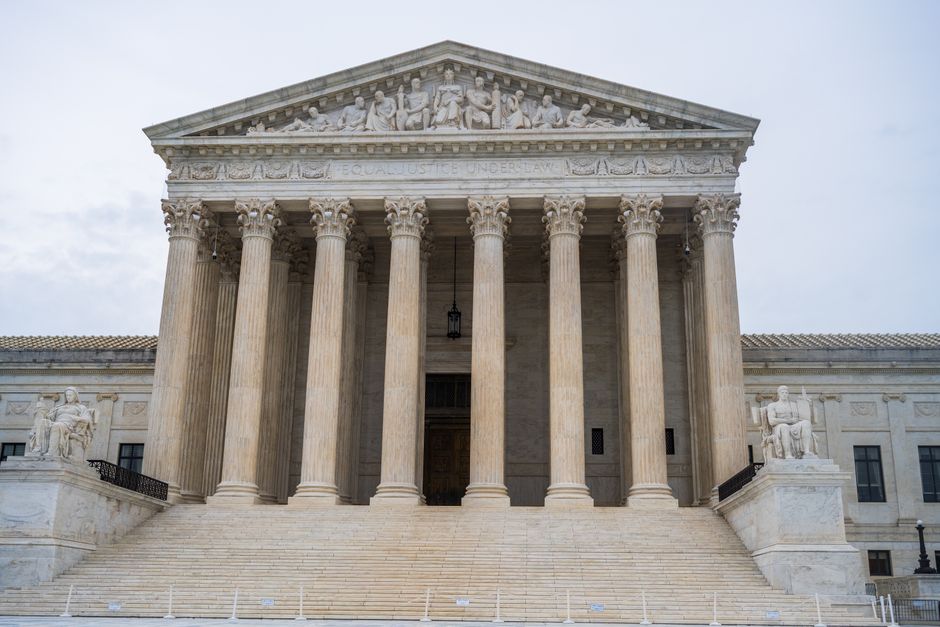
The administration's emergency appeal places the justices at the center of a legal dispute over how broadly the executive branch may remove migrants to nations other than their countries of origin.
The Trump administration filed an emergency application with the U.S. Supreme Court on September 24, 2026, asking the justices to lift a lower federal court order that restricts the government from deporting migrants to countries other than their own, according to reporting by The New York Times.
The application came one day after a federal district court imposed the restrictions on Wednesday, September 23, 2026. The identity of the presiding judge and the specific docket number of the lower court order were not confirmed in the available source material. The docket number and full text of the lower court ruling would be contained in the federal district court's public PACER filing system.
Third-country deportations refer to the removal of a migrant to a country that is not the migrant's country of origin or citizenship. The practice typically requires the receiving country's consent through a bilateral agreement. Whether the administration has secured such agreements, and with which countries, is not stated in the available source material. Those agreements, if they exist, would be disclosed in State Department communications or published treaty records.
The administration's request asks the Supreme Court to intervene before the justices have agreed to hear the underlying case on the merits. Such emergency applications, filed under the Court's shadow docket procedures, can be decided by a single justice or by the full Court and do not require full briefing or oral argument. The standard the Court applies in these circumstances is whether the applicant has shown a likelihood of success on the merits and irreparable harm in the absence of relief.
The legal basis the administration cited in its Supreme Court application was not detailed in the available source material. The full text of the application would be found in the Supreme Court's public docket, accessible through the Court's online case management system.
The lower court's restrictions, as described in the available reporting, limit deportations to countries other than a migrant's home country. The practical scope of those restrictions, including whether they apply to all migrants in removal proceedings or only to a defined class of individuals, is not specified in the available source material. That scope would be contained in the district court's written order.
The administration has pursued third-country removal arrangements as part of a broader effort to expand deportation capacity. Earlier in 2026, the administration negotiated arrangements with several countries to accept deportees who were not their nationals, though the specific terms and current status of those arrangements are not confirmed by the available source material. Relevant records would include State Department press releases and any published memoranda of understanding.
Congress has not passed legislation explicitly authorizing or prohibiting third-country deportations to date. The Immigration and Nationality Act grants the executive branch broad authority over removal orders, but courts have in separate proceedings examined the limits of that authority when migrants face potential harm in the receiving country. The specific statutory provisions at issue in this case were not identified in the available source material.
The Supreme Court's current term began in October 2025. As of September 24, 2026, it is not known which justice received the emergency application in the first instance, as emergency applications are typically routed to the justice assigned to the relevant federal circuit. That assignment would be reflected in the Court's public docket.
For broader context on the ongoing U.S.-China summit occurring simultaneously, see TCT's earlier coverage: Trump and Xi Meet at White House to Address Trade, AI, and Iran.
What remains unknown is the full text of both the district court order and the Supreme Court application, the list of plaintiffs who obtained the lower court ruling, and the timeline the Court has set for the government's response. All of those details would be available in the respective courts' public docket systems.