DOJ AI Fair Use Stance Breaks With White House Copyright Framework
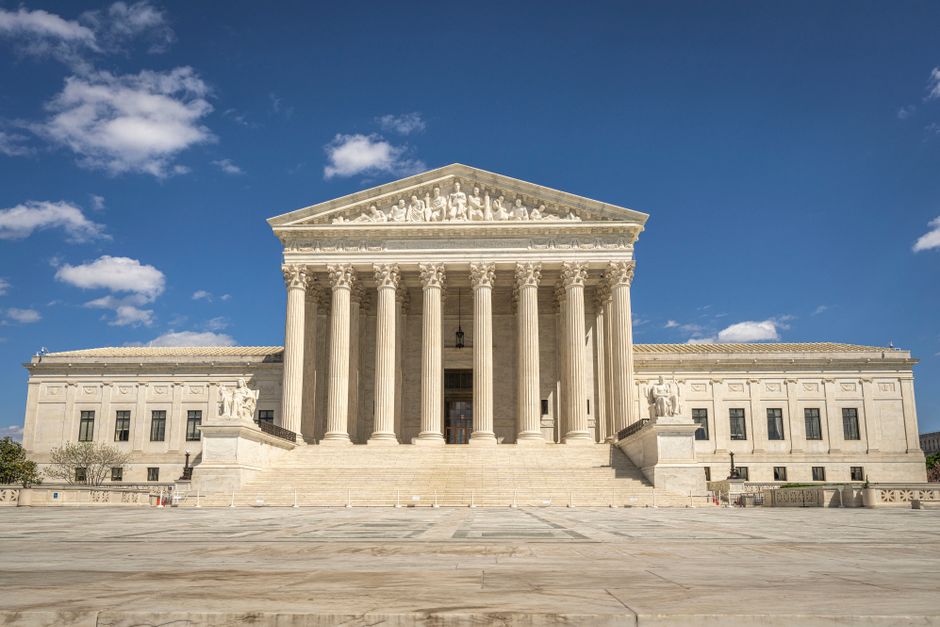
The Justice Department and the White House now hold conflicting positions on whether AI training use of copyrighted material qualifies as fair use, leaving Congress without a unified executive...
Bottom Line
Confirmed means supported by a primary source or strong independent sources; Disputed means credible sources conflict; Open means no solid primary source evidence either way.
- ConfirmedThe Department of Justice has adopted a position that AI training on copyrighted material may qualify as fair use under existing law, a stance that conflicts with the White House's own stated framework on AI and intellectual property.
- ConfirmedOpenAI, Microsoft, and multiple news organizations are actively in dispute over copyright claims tied to AI training data, with no congressional statute yet governing the practice.
- OpenWhether Congress will move legislation to resolve the DOJ-White House conflict or defer to courts and existing fair use doctrine is not established by any current congressional record.
- OpenThe precise scope of the DOJ position and whether it will be applied in active litigation has not been confirmed by a court filing or formal DOJ legal brief made public.
The Department of Justice has taken a position that AI training on copyrighted content may qualify as fair use under federal law, placing it in direct conflict with the White House's own policy framework on artificial intelligence and intellectual property, according to reporting by Fox News Opinion. That conflict leaves Congress without a unified executive branch signal at the moment members are weighing whether to act legislatively.
This story separates documented fact from theory and opinion, with the separation stated here: confirmed facts below are drawn from primary sources or strong independent reporting; claims without that evidentiary basis are labeled Open.
Confirmed: The White House released an AI policy framework that addressed the relationship between AI development and intellectual property protections. The DOJ position, as reported, breaks with that framework by treating AI ingestion of copyrighted works as potentially permissible under the fair use doctrine already embedded in Title 17 of the United States Code. The specific internal DOJ document or brief underlying this position has not been released publicly as of this writing, which means the precise legal reasoning remains Open.
Confirmed: OpenAI and Microsoft are parties to active copyright disputes with news organizations over the use of published articles, photographs, and other protected works to train large language models. The New York Times filed suit against OpenAI and Microsoft in December 2023 in the Southern District of New York, citing direct copying of published journalism. That case remains in litigation as of the date of this article. The Times suit is a primary source establishing the dispute.
The fair use doctrine under 17 U.S.C. Section 107 does not contain explicit language covering AI training. Courts apply a four-factor test: the purpose and character of the use, the nature of the copyrighted work, the amount used, and the effect on the market for the original. No federal appellate court has issued a binding ruling applying that test to large-scale AI training datasets. That remains Open.
Confirmed: Congress has not passed legislation that explicitly addresses AI training and copyright. The 118th and 119th Congresses have seen multiple hearings on AI policy, including sessions before the Senate Judiciary Committee and the Senate Commerce Committee, but no bill establishing a statutory framework for AI and copyright has cleared either chamber as of November 2026. The congressional record on those hearings is publicly available through Congress.gov.
The DOJ-White House conflict matters for Congress because executive branch agencies frequently signal to courts and to the legislature how the administration reads existing law. When the DOJ and the White House hold different views, that signal becomes noise. Members drafting AI legislation cannot rely on a single executive branch interpretation to anchor their statutory language.
News organizations that brought suits against AI developers argued that the market harm factor under Section 107 weighs against fair use because AI-generated summaries and content can substitute for original reporting, reducing subscription and licensing revenue. That argument is documented in the New York Times complaint filed in the Southern District of New York. AI developers, including OpenAI, have argued in public statements and in legal filings that training is transformative and does not reproduce works in a way that displaces the originals.
Analysis: If the DOJ position hardens into a formal brief submitted in pending litigation, it would constitute a significant weight on the AI developers' side of the fair use balance, potentially influencing district and appellate court rulings before Congress acts. That would narrow the legislative options available to members who want to establish a licensing or compensation requirement for AI training data.
The conflict is not merely theoretical for Congress. Legislation requiring a licensing regime for AI training data would need to override the fair use defense if courts accept the DOJ's reading. Legislation that simply codifies the DOJ position would foreclose compensation claims by copyright holders. Those are materially different statutory paths, and the choice between them depends on which executive branch position Congress treats as authoritative.
For prior TCT coverage of the underlying DOJ position, see DOJ Fair Use Stance on AI Training Conflicts With White House Policy.
No congressional floor vote, committee markup, or introduced bill specifically resolving the DOJ-White House conflict has been recorded in the congressional record as of November 23, 2026. The legislative status of AI copyright policy therefore remains Open.
Sources Named in This Story
- Fox News Opinion, Americans don't have to choose between our AI future and ripping off copyright owners (2026-11-23)
- New York Times v. OpenAI and Microsoft, complaint filed Southern District of New York, December 2023 (2023-12-27)
- 17 U.S.C. Section 107, Fair Use Doctrine
- Congress.gov, Senate Judiciary Committee AI hearings record
- The Congressional Times, DOJ Fair Use Stance on AI Training Conflicts With White House Policy
Still Open
- The specific internal DOJ document or formal brief establishing the fair use position has not been released publicly.
What would settle it: - Whether any member of Congress has introduced legislation to resolve the DOJ-White House conflict or establish a statutory AI training copyright standard.
What would settle it: - Whether the DOJ position will be applied in the pending New York Times v. OpenAI and Microsoft litigation or other active AI copyright cases.
What would settle it: - Whether any binding appellate ruling applying the Section 107 four-factor test to AI training datasets exists.
What would settle it: