Trump Order Bars Congress From Agency Data Without Legislative Purpose
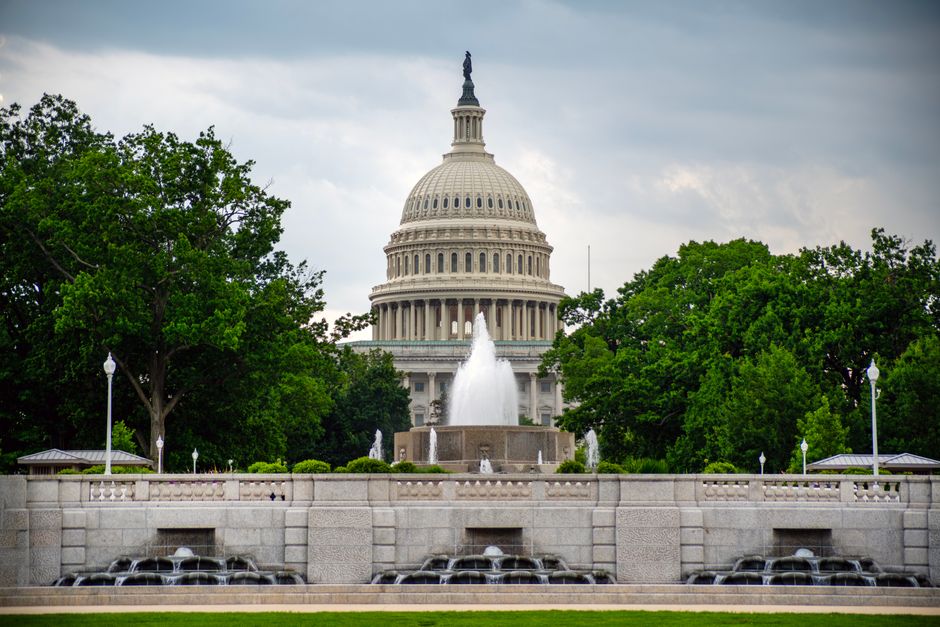
An executive order redefining congressional access to federal agency and contractor records puts the constitutional scope of oversight authority directly in dispute.
Bottom Line
Confirmed means supported by a primary source or strong independent sources; Disputed means credible sources conflict; Open means no solid primary source evidence either way.
- ConfirmedPresident Trump signed an executive order titled 'Protecting the Executive's Privileges and Enhancing Efficiencies in Federal Contracting,' which requires Congress to demonstrate a 'valid legislative purpose' before federal agencies or contractors must respond to information requests.
- ConfirmedThe order is a direct response to Democratic plans to conduct sweeping investigations of the administration following the 2026 midterm elections, according to reporting by The Hill.
- OpenWhether the order's 'valid legislative purpose' standard will survive judicial review under the constitutional separation of powers has not been determined by any court.
- OpenThe specific categories of agency and contractor information that the administration considers covered by the order have not been publicly defined in a detailed implementing guidance.
President Trump signed an executive order Friday that instructs federal agencies and their contractors not to provide information to Congress unless the requesting body demonstrates a 'valid legislative purpose,' according to The Hill. The order is titled 'Protecting the Executive's Privileges and Enhancing Efficiencies in Federal Contracting.'
This story separates documented fact from theory and opinion, with that separation stated here: the text of the executive order and the administration's stated rationale are documented fact; the legal durability of the order and its practical reach are open questions that no court or independent authority has yet settled.
Confirmed: The Hill reported that the order was signed on a Friday and was framed explicitly as a response to Democratic threats to open wide-ranging probes of the Trump administration once Democrats took control of Congress following the 2026 midterm elections. The 2026 midterms handed Democrats Congress, making those investigative plans an immediate congressional-calendar question rather than a future hypothetical.
Confirmed: The order's title references both executive privilege and federal contracting efficiency. By including contractors alongside agency employees, the order extends its reach beyond the federal workforce into private companies that hold government contracts. The contracting angle is material because congressional committees have historically used their oversight authority to compel records from contractors under the Federal Acquisition Regulation and committee subpoena power.
Open: Whether the phrase 'valid legislative purpose' as used in the order tracks the legal standard set by the Supreme Court is unresolved. The Court recognized in McGrain v. Daugherty (1927) that Congress holds broad investigative powers inherent to its legislative function, and in Watkins v. United States (1957) it noted those powers are not unlimited but did not define a precise threshold test. No court has yet applied those precedents to this specific order.
Open: The order does not publicly specify which categories of agency records or contractor data would require a valid legislative purpose demonstration before disclosure, and no implementing guidance had been published in the Federal Register as of the date of this report, according to The Hill. The absence of that guidance leaves agencies and contractors without a defined compliance standard.
Analysis: The order places the burden of justification on Congress rather than on the executive branch. Under traditional practice, congressional committees issued requests or subpoenas and agencies either complied, negotiated, or asserted executive privilege on a document-by-document basis. This order, if enforced uniformly, would shift that process by requiring committees to meet a threshold test before the information-gathering stage begins.
Confirmed: Democrats had telegraphed plans for more than 300 corporate and administration targets for congressional investigation, according to prior Congressional Times reporting citing Democratic leadership communications. The scope of that announced investigative agenda is what the administration cited as the context for the order, per The Hill.
Open: Whether the order applies to standing committee oversight requests, subpoenas, or both is not specified in the available text summarized by The Hill. The distinction matters because a subpoena backed by a full committee vote carries different legal weight than a letter request from a minority member, and courts have treated the two differently in prior separation-of-powers disputes.
Open: How individual federal agencies and contractors will interpret and implement the order in practice has not been established. Agencies could apply it broadly to all congressional correspondence or narrowly to specific categories of sensitive procurement or personnel records. No agency has issued a public directive as of November 21, 2026.
Confirmed: The order adds a new front to ongoing separation-of-powers tensions between the executive and legislative branches at the opening of the new Congress. Committee chairs have the authority to issue subpoenas without full chamber approval in many cases, and those chairs are now expected to test the order's boundaries in early 2027 oversight sessions, according to The Hill's reporting on Democratic leadership statements.
The constitutional question at the center of this dispute is whether the executive branch can condition congressional access to information through a generalized executive order rather than through case-by-case assertion of executive privilege. That question would be settled by a federal court ruling on a challenge brought by a congressional committee or a private party with standing, or by a formal Office of Legal Counsel opinion made public, neither of which had occurred as of the date of this report.
Sources Named in This Story
Still Open
- Whether the 'valid legislative purpose' standard in the order survives judicial review under McGrain v. Daugherty and Watkins v. United States
What would settle it: - Which specific categories of agency records and contractor data are covered by the order
What would settle it: - Whether the order applies to full committee subpoenas, informal requests, or both
What would settle it: - How individual agencies and contractors will apply the order in practice
What would settle it: