Trump Nominates Budget Office Deputy to Lead GAO Watchdog
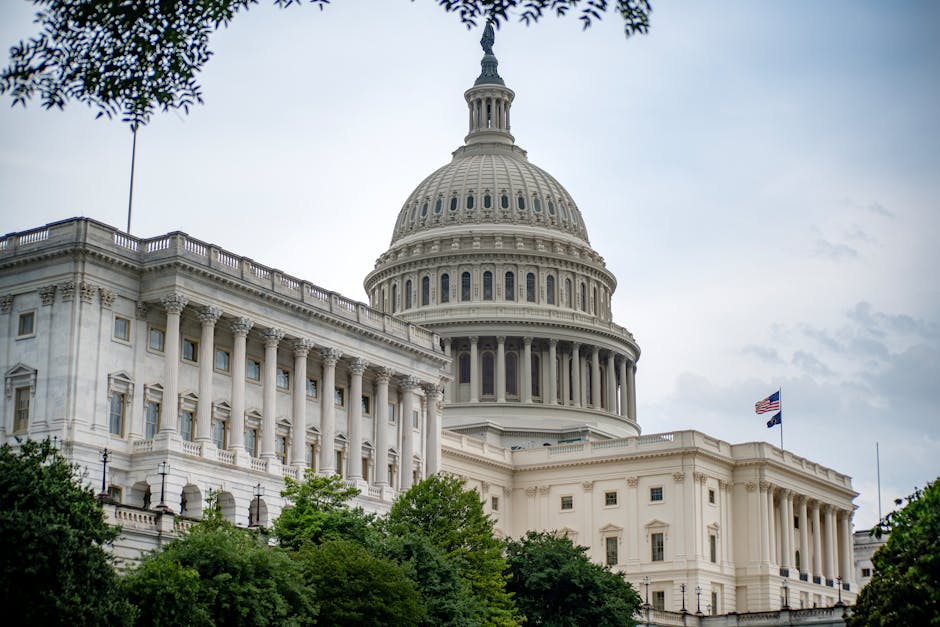
A political appointee heading an agency designed to provide independent oversight of the executive branch would mark a structural shift in how GAO operates relative to the administration it monitors.
President Trump on Monday nominated Eric M. Ueland, a deputy at the White House Office of Management and Budget, to serve as comptroller general of the United States, according to a report by The New York Times. The comptroller general leads the Government Accountability Office, the nonpartisan federal agency responsible for auditing federal spending, identifying government waste, and ensuring executive branch compliance with congressional mandates.
Ueland's current role is at OMB, an office within the executive branch that develops and oversees the president's budget proposals. His nomination places a senior administration official in line to lead an agency whose core function includes scrutinizing that same executive branch.
The GAO is a legislative branch agency, operating under the authority of Congress rather than the president. Its independence from executive branch influence is a structural feature established by the Budget and Accounting Act of 1921, which created the office, and reinforced through subsequent statutes. The comptroller general serves a single, nonrenewable 15-year term, a design intended to insulate the officeholder from political pressure.
Confirmation of a comptroller general requires a Senate vote. The nominee is selected from a list of candidates submitted by a congressional commission that includes the majority and minority leaders of both chambers, as well as the chairs and ranking members of the House Committee on Government Operations and the Senate Committee on Governmental Affairs. Whether that commission process was followed in Ueland's case, or whether Trump moved to nominate him outside that process, was not specified in the source reporting available as of November 16, 2026. The document that would clarify this is any formal communication between the White House and the congressional commission.
Ueland has a career that spans both legislative and executive branch roles. He previously served as a senior policy adviser on the Senate Finance Committee and as a staff director for the Senate Health, Education, Labor, and Pensions Committee, according to public congressional records. He joined OMB in a senior capacity during the current Trump administration.
The GAO currently operates under Acting Comptroller General Robert Goldenkoff, who has held that position on an interim basis. The last confirmed comptroller general was Gene Dodaro, who retired after serving since 2010. The length of the vacancy and the circumstances of Goldenkoff's appointment are on record with the GAO's public administrative history.
Critics of the nomination, including Democratic members of Congress, have raised concerns about placing a current administration official in charge of the agency that audits the administration. Supporters of the nomination, as represented in coverage reviewed for this story, have not yet offered public statements on the record as of the publication date.
The GAO issues several hundred reports per year covering federal programs across all agencies. In fiscal year 2025, the agency reported financial benefits of approximately $175 billion from its recommendations, according to the GAO's own annual performance report. The agency employs roughly 3,000 staff.
The nomination arrives during a period of heightened congressional attention to executive branch spending practices. Republican leadership in the Senate has not yet announced a timeline for confirmation hearings. Committee jurisdiction over the nomination would fall to the Senate Rules and Administration Committee, though referral decisions are made by Senate leadership and are not yet public.
What remains unknown is whether Ueland, if confirmed, would recuse himself from any GAO reviews directly involving OMB or other offices where he held responsibility. No public statement from Ueland or the White House addresses this question as of November 16, 2026. A recusal policy, if one exists, would be disclosed through Senate confirmation hearing testimony or through a written ethics agreement filed with the Office of Government Ethics.