FAA Shutdown Strands Travelers Abroad as Service Disruption Continues
A personal account from the Bahamas illustrates the real-world travel consequences of the ongoing FAA shutdown, which has yet to produce a congressional resolution.
A U.S. Traveler reported being stranded at a Bahamian airport for the second time due to the ongoing FAA shutdown, according to a first-person account published November 16, 2026, by the New York Post. The account describes a parent and toddler unable to depart as scheduled, citing the FAA disruption as the cause of repeated delays.
The FAA, the Federal Aviation Administration, operates under the authority of the U.S. Department of Transportation and is responsible for the regulation and oversight of civil aviation in the United States. Its operations are funded through congressional appropriations. Any shutdown or significant service disruption at the agency directly affects air traffic control staffing, flight certification processes, and coordination with international aviation bodies.
The New York Post report does not specify the precise operational mechanism causing the stranding, whether air traffic control staffing shortfalls, grounded aircraft certification, or coordination failures with international airports. The document that would clarify the specific operational cause would be an official FAA operational status report or a Department of Transportation press release, neither of which had been publicly issued as of the time of this writing.
FAA funding and staffing have been subjects of congressional debate across multiple appropriations cycles. In prior years, the FAA Authorization Act governed the agency's operational budget and staffing mandates. The most recent FAA reauthorization, the FAA Reauthorization Act of 2024, was signed into law in May 2024 (Public Law 118-63) and authorized FAA operations through fiscal year 2028. Whether the current shutdown is a result of a lapse in a separate continuing resolution or an appropriations gap is not confirmed by available source material.
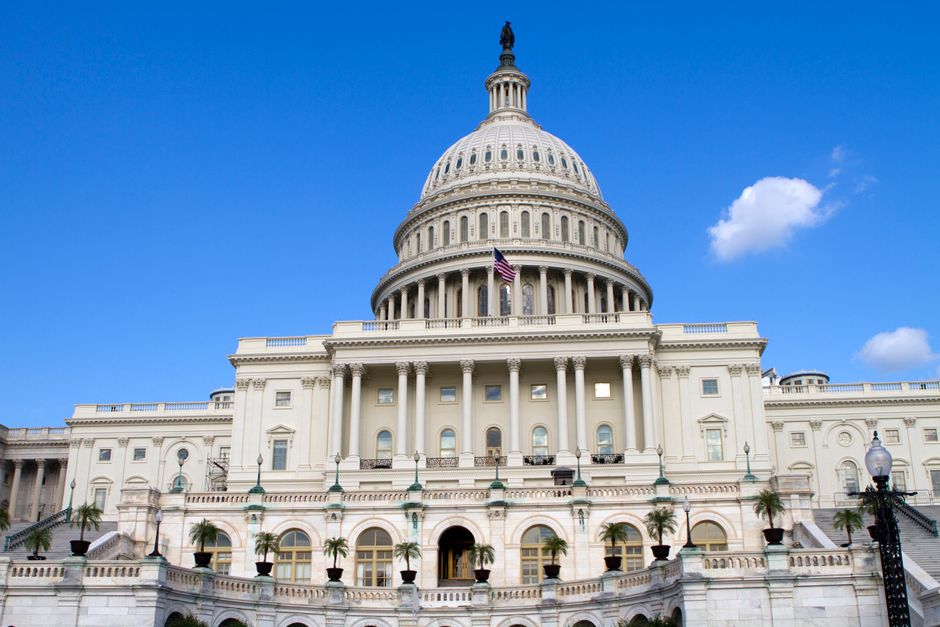
Congressional responsibility for FAA funding sits with the Senate Committee on Commerce, Science, and Transportation and the House Committee on Transportation and Infrastructure, as well as the relevant appropriations subcommittees in both chambers. As of November 16, 2026, no congressional vote resolving the disruption has been identified in the public congressional record.
The practical consequences of FAA disruptions extend beyond domestic travel. U.S. Citizens traveling internationally depend on FAA coordination with foreign civil aviation authorities. When FAA operations are curtailed, flight routing, clearances, and airline operational approvals can be delayed across international routes, affecting travelers in locations including the Bahamas, which routes significant air traffic through U.S.-controlled airspace and U.S. Hub airports.
Amtrak separately halted all train service around Washington, D.C., on the afternoon of November 16, 2026, after a person was struck on the tracks near 57th Avenue and Tuxedo Road in Prince George's County, Maryland, according to a report by the New York Post. Prince George's County police confirmed they were actively investigating the incident following a 1:15 p.m. Report. The Amtrak disruption is an unrelated operational event and does not share a cause with the FAA shutdown.
Amtrak, the National Railroad Passenger Corporation, is a federally chartered corporation that receives annual federal funding through congressional appropriations. Its Northeast Corridor operations, which include the Washington, D.C., hub, serve tens of thousands of daily passengers and connect the capital to Philadelphia, New York, and Boston.
The compound effect of simultaneous disruptions at two federally funded transportation systems, the FAA and Amtrak, on the same day raises questions about federal infrastructure resilience, though the two events have no confirmed operational connection. The Trump administration's concurrent activity on AI chip export controls, which affects Nvidia and U.S. Technology policy, is drawing White House attention at the same time as these transportation disruptions, according to Bloomberg.
What remains unknown is the specific congressional or executive action, or lack thereof, that produced the FAA shutdown. The public records that would answer this are: a White House Office of Management and Budget apportionment notice, a continuing resolution vote in the congressional record, or an official FAA operational status declaration from the Department of Transportation. None of those documents had been publicly cited in available source material as of November 16, 2026.