UN Warns of Rising Maritime Attacks in Hormuz and Red Sea
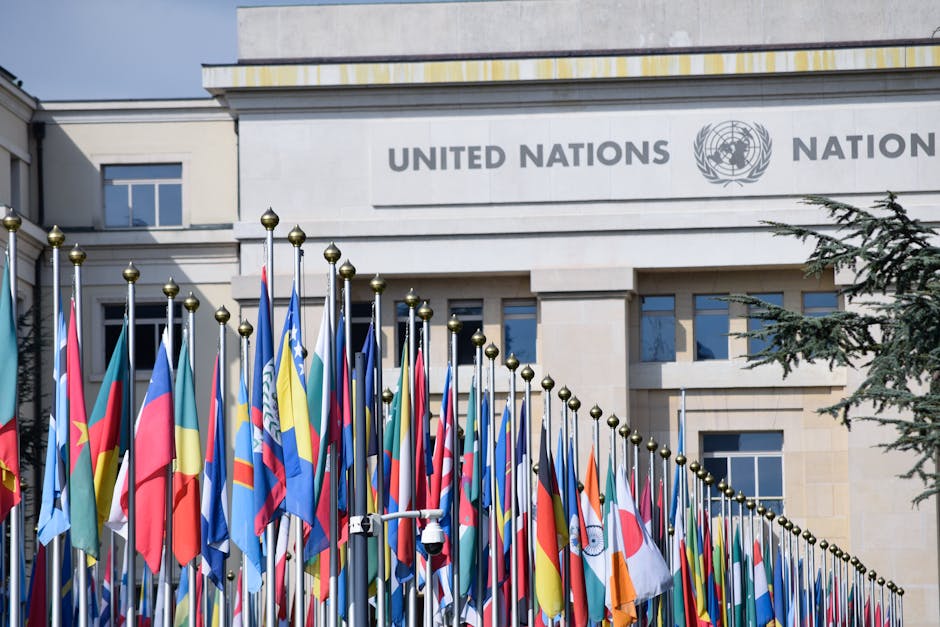
With two critical waterways facing sustained threats to commercial shipping, the UN's formal warning signals that diplomatic and security pressure on armed actors in the region has not yet...
The United Nations has issued a formal warning about rising maritime attacks in the Strait of Hormuz and the Red Sea, calling on all parties to restore safe navigation through both waterways. The alert, reported by Anadolu Agency, was delivered by the UN assistant secretary-general for the Middle East, Asia, and the Pacific.
The official statement included a direct warning that "civilian vessels and commercial shipping must not become targets," according to Anadolu Agency. The language signals an escalation in the UN's concern over the security of two of the world's most commercially significant maritime corridors.
The Strait of Hormuz connects the Persian Gulf to the Gulf of Oman and is the transit point for approximately 20 percent of global oil trade, according to the U.S. Energy Information Administration. Disruption to that corridor affects energy supply chains across Europe, Asia, and North America.
The Red Sea corridor, which feeds into the Suez Canal, carries an estimated 12 to 15 percent of global trade by volume, according to the United Nations Conference on Trade and Development. Attacks by Houthi forces based in Yemen have targeted commercial vessels in that corridor since late 2023, following the outbreak of conflict in Gaza.
The Houthi movement, which controls significant territory in northwestern Yemen, has stated publicly that its maritime operations are intended to pressure Israel and its allies over the situation in Gaza. The group has claimed responsibility for dozens of attacks on commercial shipping, including drone and missile strikes, since November 2023.
In response, the United States and the United Kingdom launched joint military strikes on Houthi infrastructure in Yemen beginning in January 2024, under a coalition effort named Operation Prosperity Guardian. Those operations continued into 2025 and 2026, though shipping disruptions in the Red Sea corridor have persisted, according to reporting by multiple international news outlets.
The Strait of Hormuz faces a separate but overlapping set of risks. Iran has periodically seized or harassed commercial vessels in the strait in recent years. The U.S. Naval Forces Central Command has documented multiple such incidents, including vessel seizures in 2023 and 2024.
Major shipping companies including Maersk and Hapag-Lloyd rerouted vessels around the Cape of Good Hope beginning in late 2023 to avoid the Red Sea corridor, adding significant time and cost to global supply chains. Industry analysts at Drewry Shipping Consultants documented a substantial increase in freight rates following the initial escalation of Houthi attacks.
The UN warning does not carry enforcement authority on its own, but it establishes a formal multilateral record of concern and may precede further Security Council deliberation. The body's ability to act through the Security Council remains constrained by the veto positions of its permanent members, a structural limitation that has shaped prior responses to maritime security crises.
Historically, the "Tanker War" phase of the Iran-Iraq conflict in the 1980s produced a comparable threat environment in the Persian Gulf. The United States responded then by reflagging Kuwaiti tankers and providing naval escorts, a policy that eventually led to direct naval engagements with Iranian forces in 1988.
What specific diplomatic or security measures the UN intends to pursue beyond the formal warning is not stated in available public records. A fuller picture of next steps would require either a Security Council resolution or a detailed follow-on statement from the secretary-general's office.
The FAA's simultaneous nationwide ground stop due to air traffic control communications issues, reported by NDTV and covered previously by The Congressional Times in FAA Issues Nationwide Ground Stop Citing Air Traffic Control Communications Failure, illustrates a broader pattern of infrastructure stress across global transportation systems on the same date, though the two events are not operationally connected.