ACLU of Washington Files Suit to Block State Voter-Approved Sports Initiative
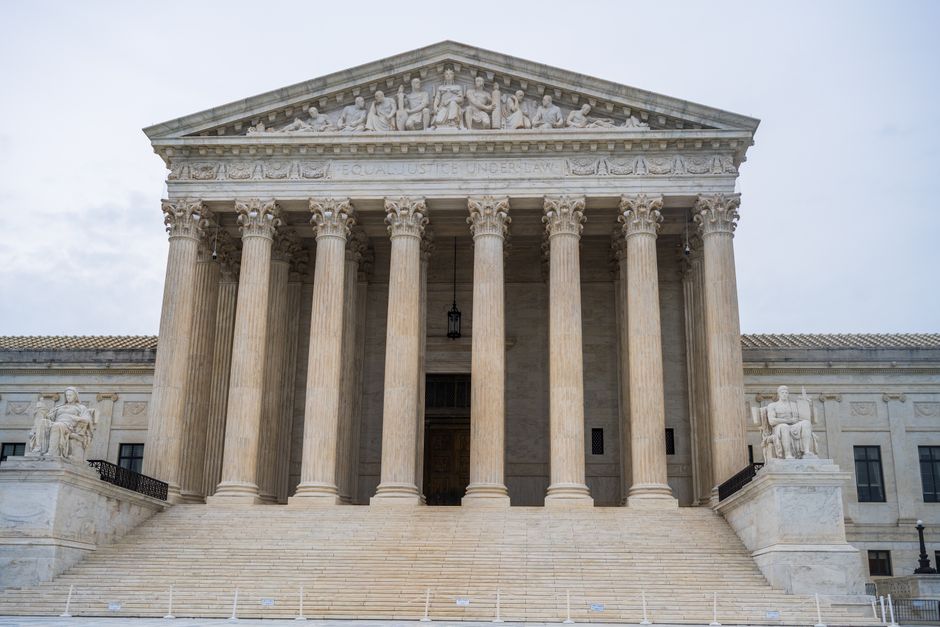
A legal challenge to a voter-passed initiative will test whether state antidiscrimination statutes supersede direct democratic outcomes on athletic eligibility rules.
The American Civil Liberties Union of Washington filed a lawsuit in state court to block Initiative 638, a ballot measure Washington voters approved that restricts participation in female-designated athletic competitions, before its scheduled effective date of December 3, 2026, according to a Fox News report published November 10, 2026.
The ACLU of Washington argues in its complaint that Initiative 638 violates the Washington Law Against Discrimination and state constitutional privacy protections. The specific court in which the complaint was filed, the full case number, and the named defendants were not confirmed in available source material at publication time. The text of the complaint itself, once docketed, would contain those details.
Initiative 638 was placed before Washington voters through the state's initiative process, under which citizens may propose legislation by collecting a threshold number of valid signatures. Washington state law requires sponsors to gather signatures equal to eight percent of votes cast in the most recent gubernatorial election. Once certified and approved by voters, an initiative carries the force of statute. The initiative's precise vote margin and total ballot count were not available in source material at publication time. Official Washington Secretary of State canvass records would contain those figures.
The lawsuit centers on a legal tension present in multiple states: when a voter-enacted statute conflicts with an existing antidiscrimination code, courts must determine which law controls and whether the newer enactment implicitly amends or repeals the older one. In Washington, the Washington Law Against Discrimination, codified at RCW 49.60, prohibits discrimination based on sexual orientation and gender identity in places of public accommodation, a category that state courts have at times applied to school activities.
The ACLU's complaint, as described in available source material, contends that applying Initiative 638's eligibility criteria would constitute discrimination on the basis of gender identity prohibited by that existing state law. Opponents of the suit argue that the initiative represents a lawful exercise of voter authority and that sex-based athletic categories are consistent with federal Title IX regulations, which the U.S. Department of Education revised in 2025 to permit schools to maintain separate athletic programs organized by biological sex.
Title IX, enacted in 1972 and codified at 20 U.S.C. Section 1681, prohibits sex discrimination in federally funded education programs. Regulatory guidance on its application to transgender athletes has shifted across administrations. The Department of Education's 2025 rule, published in the Federal Register, restored a framework allowing biological-sex-based athletic categories. That federal regulatory backdrop is likely to be cited by both sides in the Washington litigation.
At least 25 states have enacted statutes or constitutional amendments addressing sex-based athletic eligibility since 2020, according to the National Conference of State Legislatures tracking database. Legal challenges to those laws have produced inconsistent outcomes across federal and state courts, with some injunctions granted and others denied at the preliminary stage.
The December 3 effective date creates a compressed litigation schedule. If the ACLU seeks a preliminary injunction, a Washington Superior Court judge would need to evaluate whether the plaintiffs have demonstrated a likelihood of success on the merits, a risk of irreparable harm, that the balance of equities favors relief, and that an injunction serves the public interest. These are the standard four-factor criteria applied under Washington court rules.
Washington's Office of the Attorney General, as the entity that would typically defend a voter initiative in court, has not issued a public statement on whether it intends to defend Initiative 638. The Attorney General's litigation posture, which would be reflected in any notice of appearance or motion filed in the case, is unknown at publication time.
School districts, athletic associations, and individual student athletes are the parties most directly affected by the outcome. The Washington Interscholastic Activities Association, the body that governs high school sports in the state, has not issued a public statement about the litigation, according to available source material at publication time.
What remains unknown: the full docket number and presiding judge for the ACLU complaint, the precise vote totals for Initiative 638, and the Attorney General's decision on whether to defend the measure. The Washington Courts public access portal, the Secretary of State's certified election results, and the Attorney General's public docket would each answer one of those questions.