Trump Signs Executive Order Creating NIH Women's Health Division
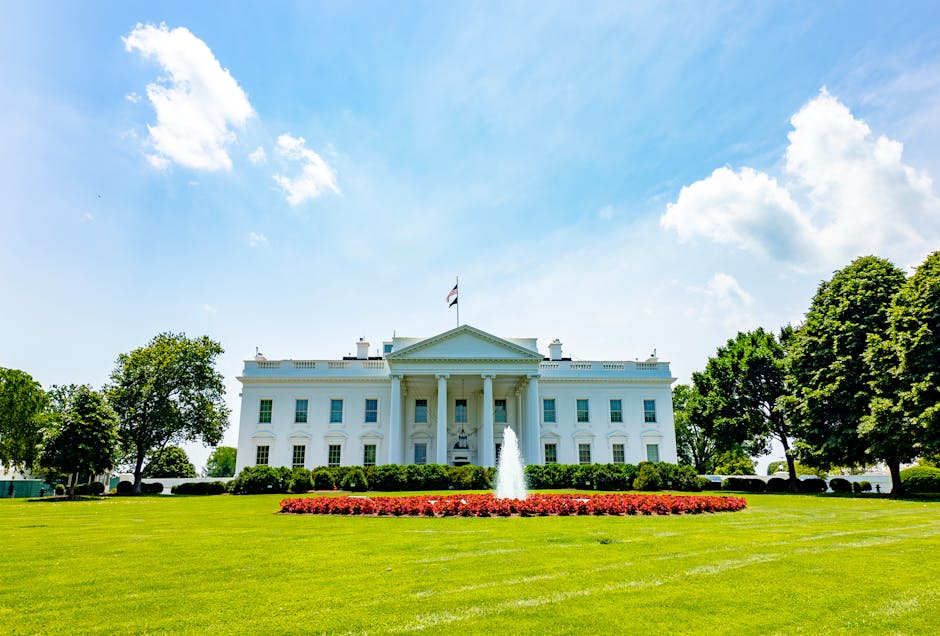
The order adds a new federal task force and a dedicated NIH research division, meaning both its budget and authority will require congressional appropriations to become fully operational.
President Donald Trump signed an executive order on October 19, 2026, establishing a federal task force on women's health and directing the creation of a new division within the National Institutes of Health focused on women's health research, according to reporting by the New York Post. First Lady Melania Trump participated in the signing ceremony, held in the Rose Garden at the White House.
The executive order, as described in reporting from the signing event, states the initiative will "improve outcomes in all phases of life" and establishes what the administration characterized as "a new standard for women's health in America." The full text of the executive order had not been published in the Federal Register as of the time of this article's publication. Once published, the Federal Register entry will constitute the authoritative public record of the order's specific mandates, timelines, and agency directives.
Executive orders directing the creation of new federal offices or task forces carry inherent structural limitations. Under the Appointments Clause of the U.S. Constitution and relevant appropriations law, any new NIH division requires Congress to authorize and appropriate dedicated funding before it can hire staff, conduct independent research, or issue grants. The executive order itself cannot compel congressional appropriations.
The NIH currently operates 27 institutes and centers, each established through legislation passed by Congress. The National Institute of Child Health and Human Development, for example, was established by statute in 1962 (Public Law 87-838). Whether the administration intends the new women's health entity to be a standalone institute requiring legislation, or an internal organizational division that can be created under existing NIH administrative authority, is not specified in available reporting. The NIH Office of Research on Women's Health, established in 1990 under a congressional mandate, already coordinates women's health research across NIH institutes.
The task force component of the order is similarly subject to the Federal Advisory Committee Act (FACA), which governs the composition, transparency, and operating procedures of federal advisory bodies. Task forces established by executive order must comply with FACA requirements for public notice and open meetings unless a specific exemption is granted.
The White House has not yet released a budget estimate for the new division or task force. The total NIH budget for fiscal year 2026 was $47.5 billion, according to the HHS congressional budget justification for that fiscal year. Any reallocation of existing NIH funds toward the new division would affect funding available to existing institutes.
Women's health research funding at the federal level has been a legislative priority across both parties in recent years. The bipartisan IMPROVE Act, introduced in the 118th Congress, sought to expand NIH research on conditions that disproportionately affect women. That legislation did not advance to a floor vote. Separately, the FLUSH Act and the Menopause Research and Equity Act were introduced in the 119th Congress, each targeting specific gaps in federally funded women's health research, according to congressional records available at congress.gov.
The administration has not announced a director or acting director for the new NIH division. Leadership appointments for positions within NIH typically require either Senate confirmation for institute director roles or internal agency appointment processes for sub-institute offices. The classification of the new division's leadership position will determine which process applies.
It is not yet known which specific disease categories, age cohorts, or research priorities the new NIH division will emphasize, nor whether it will operate as a grant-making body, a coordinating office, or a direct research entity. Those details would ordinarily appear in the full executive order text, implementing guidance issued by HHS, and any subsequent congressional authorization language.
What remains publicly unknown includes: the full text of the executive order as filed with the Federal Register; the proposed organizational structure and reporting chain of the new NIH division; the administration's requested appropriations for fiscal year 2027 to fund the initiative; and whether existing NIH Office of Research on Women's Health functions will be consolidated into or remain separate from the new entity. The Federal Register publication and the president's fiscal year 2027 budget request to Congress would answer each of those questions.