Supreme Court Opens Term With Climate, Guns, Religion, Elections on Docket
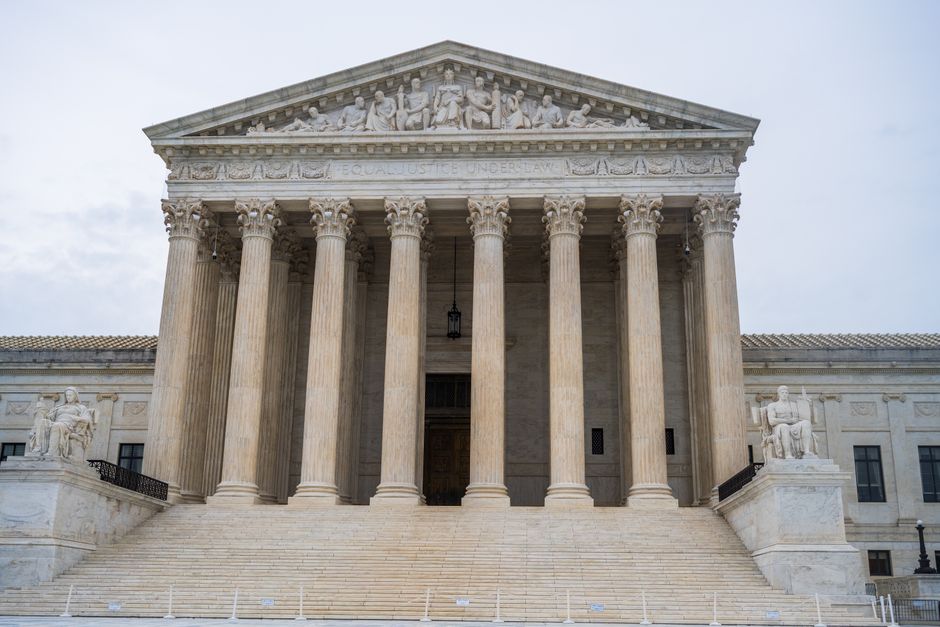
The breadth of the Court's 2026 term means that rulings on at least four major policy domains will arrive before the 2026 midterm election results are fully certified, creating a compressed legal...
The United States Supreme Court begins its October 2026 term with a docket that includes active cases touching climate liability litigation, religious liberty claims, Second Amendment scope, and election administration procedures, according to reporting by RealClearPolitics published October 1, 2026.
The Court's term formally opens on the first Monday of October each year, as established under 28 U.S.C. Section 2. The 2026 term opened October 5, placing the first round of oral arguments within weeks of the November 2026 midterm elections.
Climate liability cases before the Court generally involve questions of whether state tort law can be used to hold fossil fuel companies responsible for climate-related damages, or whether federal law preempts such claims. The specific cases accepted for the current term have not been identified by name in the source material reviewed for this article. The Supreme Court's official docket at supremecourt.gov would confirm the case names, docket numbers, and scheduled argument dates.
Religious liberty disputes have been a consistent presence on the Court's docket in recent terms. In the 2023 term, the Court ruled in 303 Creative LLC v. Elenis (600 U.S. 570, 2023) that a Colorado web designer could not be compelled under state anti-discrimination law to create content that violated her religious beliefs. The nature of the religious liberty cases in the current term is not specified in available source material. The Court's granted certiorari list, publicly available at supremecourt.gov, would identify the precise questions presented.
Second Amendment cases before the Court in this term follow a line of decisions beginning with District of Columbia v. Heller (554 U.S. 570, 2008) and extended in New York State Rifle and Pistol Association v. Bruen (597 U.S. 1, 2022), which established that firearms regulations must be consistent with the nation's historical tradition of firearm regulation. Lower federal courts have since produced conflicting rulings on the application of the Bruen standard to regulations including restrictions on assault-style weapons, high-capacity magazines, and firearms for certain categories of persons. Which specific question is before the Court in this term is not identified in available source material.
Election administration cases carry particular timing significance given the active 2026 midterm cycle. Federal election law cases before the Court have historically addressed questions including voter roll maintenance, absentee ballot rules, and the scope of the Elections Clause (Article I, Section 4) of the Constitution. The source material does not name the specific election administration case or cases accepted for this term. The Court's official case summaries would provide that detail.
The Court currently consists of six justices appointed by Republican presidents and three appointed by Democratic presidents. Chief Justice John Roberts was appointed by President George W. Bush in 2005. Justices Clarence Thomas, Samuel Alito, Neil Gorsuch, Brett Kavanaugh, and Amy Coney Barrett were appointed by Presidents George H.W. Bush, George W. Bush, and Donald Trump respectively. Justices Sonia Sotomayor, Elena Kagan, and Ketanji Brown Jackson were appointed by Presidents Barack Obama and Joe Biden respectively. These are matters of Senate confirmation records.
The compressed calendar between the term's opening and the November 4, 2026 midterm election means that oral arguments will occur while campaigns are in their final weeks. Decisions, however, are typically issued between January and late June of the following year, meaning rulings on this term's cases are unlikely to arrive before the election itself. The Court's opinion release schedule from prior terms, available in the Court's journal, confirms this historical pattern.
What remains unknown from available public records is the complete granted certiorari list for October Term 2026, the specific parties and lower court decisions under review in the climate, gun, and election cases referenced, and whether any emergency applications or stays are pending that could produce rulings before a final decision on the merits. The Supreme Court's publicly available docket at supremecourt.gov and the Court's official orders lists, released each Monday the Court is in session, would answer each of these questions.