Trump Cites AI as Governing Tool, Previews Superintelligence Plans
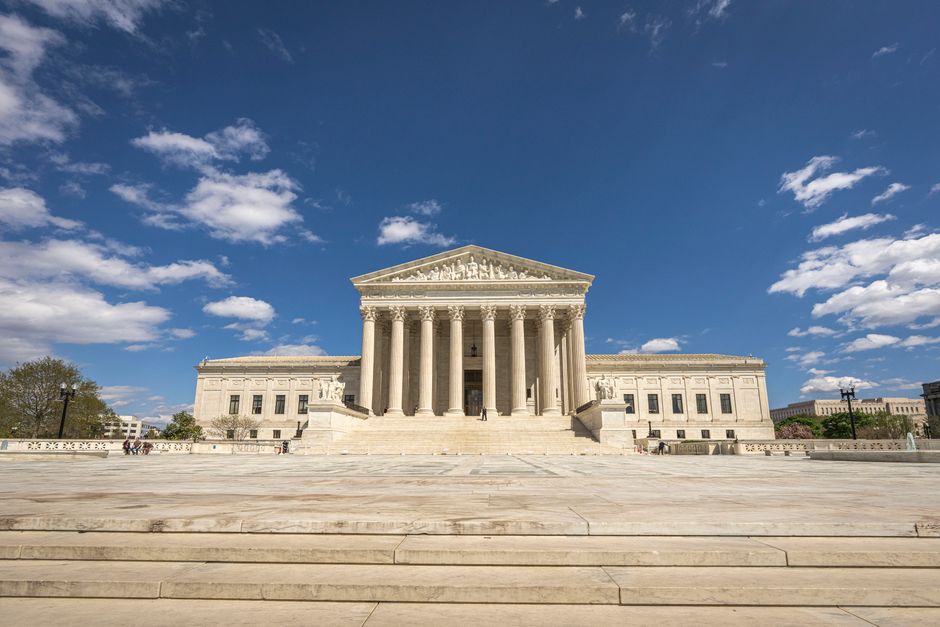
The administration's public embrace of artificial intelligence as a policy message signals that AI governance will be a central electoral and legislative theme heading into the 2026 midterm cycle.
President Donald Trump stated publicly on September 29, 2026, that artificial intelligence adoption in government represents "a preview of what is possible with super intelligence," according to a report by RealClearPolitics. The statement positions AI not only as an administrative tool but as a political message the White House intends to carry into the 2026 midterm elections.
The phrase "super intelligence" used by Trump refers to artificial general intelligence systems that exceed human-level cognitive performance across most domains. No administration official has defined in a public document what specific federal programs or agencies the term encompasses in this context. A White House Office of Science and Technology Policy report or a formal executive order would be the public record most likely to specify those details.
The administration has already taken concrete steps on AI policy. Executive Order 14179, signed January 23, 2025, revoked the Biden-era AI safety framework established under Executive Order 14110 and directed federal agencies to develop AI action plans prioritizing American competitiveness. That order is on file in the Federal Register at 90 FR 8741.
Congress has engaged the AI governance question through multiple channels in the current session. The Senate Commerce Committee held hearings in 2025 and 2026 examining AI liability, federal procurement of AI systems, and the role of the National Institute of Standards and Technology in setting safety benchmarks. No comprehensive federal AI statute has passed both chambers as of the publication date of this article.
The political calculation described in the RealClearPolitics report, that embracing AI is a "winning message," reflects polling conducted by various organizations. A Pew Research Center survey published in February 2025 found that 52 percent of Americans expressed more concern than enthusiasm about AI in daily life, while 36 percent expressed roughly equal measures of both. The gap between White House messaging and public ambivalence is a data point lawmakers in competitive districts will likely factor into their own positioning.
For Congress, the practical governance question involves appropriations. The fiscal year 2026 National Defense Authorization Act, passed in December 2025, included provisions directing the Department of Defense to accelerate AI adoption in logistics and intelligence analysis, with specific dollar figures to be determined through the annual appropriations process. The relevant line items appear in the defense subcommittee reports of both the House and Senate Appropriations Committees.
Civilian agency AI spending is tracked through USASpending.gov under contract award data. A search of that database for contracts referencing artificial intelligence awarded in fiscal year 2026 would provide a dollar figure for current federal AI procurement. That search had not been completed at the time of publication.
The administration's framing also intersects with ongoing legislative debates about AI and labor. The Congressional Budget Office released a preliminary analysis in mid-2025 estimating that widespread AI adoption in federal white-collar functions could affect between 150,000 and 400,000 civilian federal positions over a ten-year window, depending on adoption rate assumptions. CBO noted significant uncertainty in those projections.
On the regulatory side, the Federal Trade Commission and the Department of Justice Antitrust Division have both opened inquiries into AI market concentration. Those proceedings are public record and can be accessed through FTC.gov and Justice.gov respectively. Neither inquiry had produced a formal enforcement action as of September 30, 2026.
The AI Safety Group Sues OpenAI Over Autonomous System Access to Hugging Face case, reported previously by The Congressional Times, illustrates that federal courts are also becoming a venue for AI governance disputes, adding a judicial dimension to the legislative and executive activity.
What remains unknown is whether the White House plans to introduce specific legislation on AI or rely primarily on executive action. A formal legislative proposal submitted to Congress, a second executive order, or a revised OSTP national AI strategy document would be the records that answer that question.