China Announces New Diplomatic Principles After Xi-Trump Summit
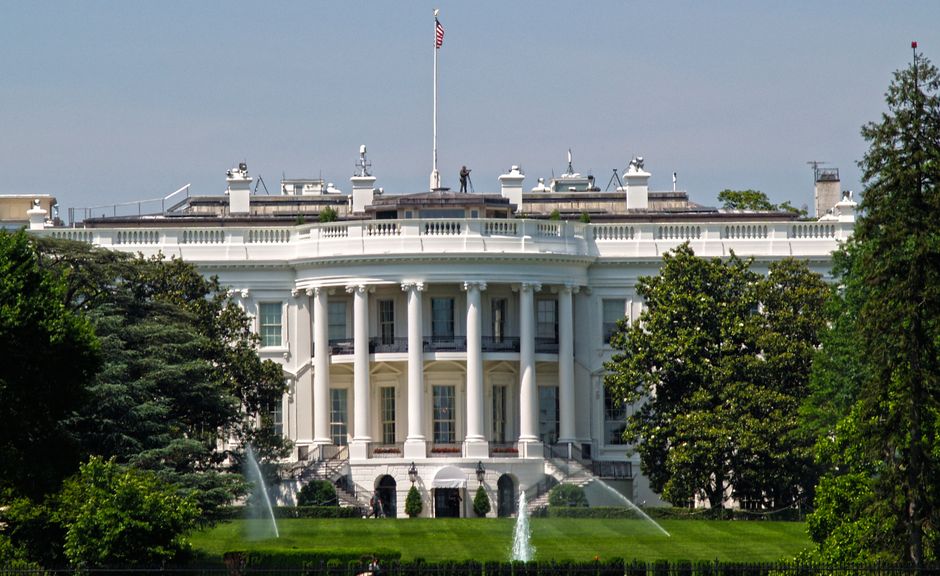
The addition of 'respect, fairness, and equality' to the framing of US-China relations signals that Beijing is seeking to codify bilateral norms at a moment when both governments are testing the...
China's government announced a set of diplomatic outcomes following a state visit by President Xi Jinping to the United States, adding the principles of 'respect, fairness, and equality' to the official framing of the US-China relationship, according to a report published September 26, 2026 by Hani Korea, citing China's official summit readout.
The visit included a private meeting between Xi and US President Donald Trump in the White House Red Room, where Trump commented on the speed of Xi's flight from China, according to the South China Morning Post. Trump was quoted in footage restored after a court ruling as saying of Xi's aircraft: 'It's a very fast plane, the fastest plane.' The SCMP reported that Xi's flight path to the US was several hours shorter than Trump's flight to China in May 2026.
The three principles announced by Beijing, respect, fairness, and equality, represent an addition to the existing diplomatic vocabulary used by China in official statements about the bilateral relationship. Their inclusion in a formal summit readout gives them the status of agreed or at least proposed relational terms, though whether the US side has explicitly endorsed the same language was not confirmed in available public records as of this reporting.
China's Ministry of Foreign Affairs has historically used the language of 'mutual respect and equality' in its diplomatic frameworks, particularly in contexts involving major-power relations. The specific pairing of all three terms in a joint or unilateral summit outcome document is a formulation that Chinese officials can cite in future negotiations to establish precedent for how disputes should be framed.
The summit took place amid a broader context of managed competition between Washington and Beijing across trade, technology, and military domains. The two governments have alternated between confrontational postures and structured diplomatic contact since Trump's return to office, with tariffs, semiconductor export restrictions, and Taiwan policy remaining active points of tension, based on publicly available US and Chinese government statements from 2025 and 2026.
No full joint communique text was available in the sources reviewed. The precise scope of what China characterized as summit 'outcomes' beyond the three principles, including any agreements on trade volumes, military communication channels, or technology transfer, was not detailed in the Hani Korea report and would require review of the complete Chinese foreign ministry readout to assess.
Separately, Iran's president stated on September 26, 2026 that Supreme Leader Ali Khamenei backs a new plan to reopen the Strait of Hormuz to normal navigation, according to Vanguard Nigeria. The president was quoted as saying: 'If the US accepts it and fulfils its obligations, we will do the same, and there will be no issue in this regard.' The Hormuz statement was made independently of the US-China summit but shares the broader diplomatic environment in which both Washington and its interlocutors are engaged in concurrent multilateral signaling.
The Strait of Hormuz is a critical transit point for roughly 20 percent of global oil trade, according to the US Energy Information Administration. Any agreement affecting its operational status would carry direct consequences for global energy markets and US naval posture in the Persian Gulf region.
The Iranian offer, as reported, is conditional on US compliance with unspecified obligations. What those obligations are, and whether any formal or informal US response has been issued, was not confirmed in available public records as of publication. A full accounting of the proposed terms would require access to Iranian government documents or a direct US government response.
The convergence of the US-China summit and the Iranian Hormuz overture on the same date reflects a period of active diplomatic activity across multiple theaters simultaneously. How these tracks interact, particularly whether US-China coordination influences American flexibility toward Tehran, is not established by current source material and would require direct reporting from negotiating parties to confirm.