House Democrats Block GOP Constitutional Amendment on Supreme Court Size
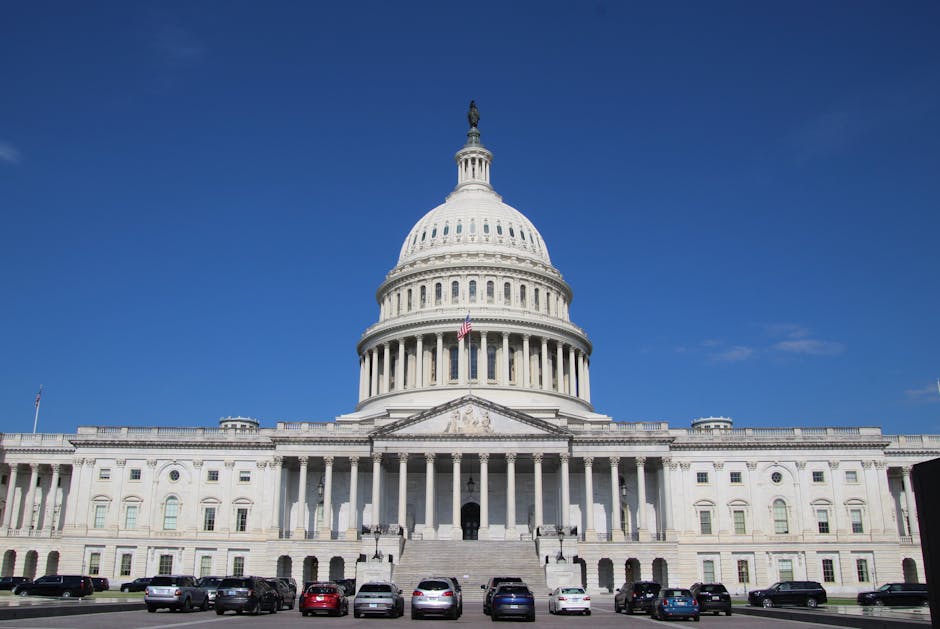
The 212-206 vote reveals a near-party-line divide on court expansion, a debate that has grown since Democrats began formally discussing adding justices during the Biden era.
House Democrats on Wednesday voted to block a Republican-sponsored resolution that would have amended the Constitution to fix the number of Supreme Court justices, with the measure failing 212 to 206, according to reporting by the Washington Examiner.
Constitutional amendments require a two-thirds majority in both chambers of Congress before proceeding to state ratification under Article V of the Constitution. The resolution did not approach that threshold, falling more than 70 votes short in the House alone.
One Democrat crossed party lines to support the measure: Rep. Don Davis of North Carolina. Every Republican present voted in favor, according to the same report. No Republican voted against the resolution.
The vote was cast on the resolution as a standalone measure, not as part of a broader legislative package. Because it failed at the House stage, it will not proceed to the Senate or to the states for ratification under the current congressional session.
Republican Party officials characterized the outcome as a political messaging opportunity, framing the Democratic opposition as support for court expansion, according to the Washington Examiner report. Democrats who opposed the resolution have not, as a caucus, endorsed a specific number of additional justices, and no court-expansion bill has passed either chamber in recent congressional sessions.
The question of Supreme Court composition has circulated in Democratic policy circles since at least 2021, when President Biden convened a Presidential Commission on the Supreme Court of the United States. That commission, which released its final report in December 2021, examined arguments for and against expansion but did not issue a formal recommendation for or against adding justices.
The current Supreme Court has nine justices, a number set by Congress through statute rather than the Constitution itself. Congress has changed the size of the Court multiple times historically, most recently in 1869 when it was fixed at nine members under 28 U.S.C. Section 1. Because the number is set by statute and not the Constitution, a simple majority in Congress and a presidential signature could, in theory, alter it without a constitutional amendment.
This structural point is central to the Republican argument for a constitutional amendment: proponents contend that a statutory fix is insufficiently durable, while opponents argue that the amendment process imposes too rigid a constraint on a co-equal branch of government.
The resolution's failure does not prevent Republicans from reintroducing it in the next Congress, and the party's public messaging on the vote suggests it intends to use the outcome in campaign contexts ahead of the 2026 midterm elections, which fall on November 3, 2026.
What remains unknown is whether any House Democrat co-sponsored or formally introduced a competing court-expansion bill in the current Congress. A search of the congressional record at Congress.gov would identify any such legislation by sponsor, co-sponsor, and committee referral. It is also not yet public whether Democratic leadership issued formal whip guidance directing members to vote against the Republican resolution.