AI Lobby Spent $230,000 Daily While Congress Passed Zero Regulations
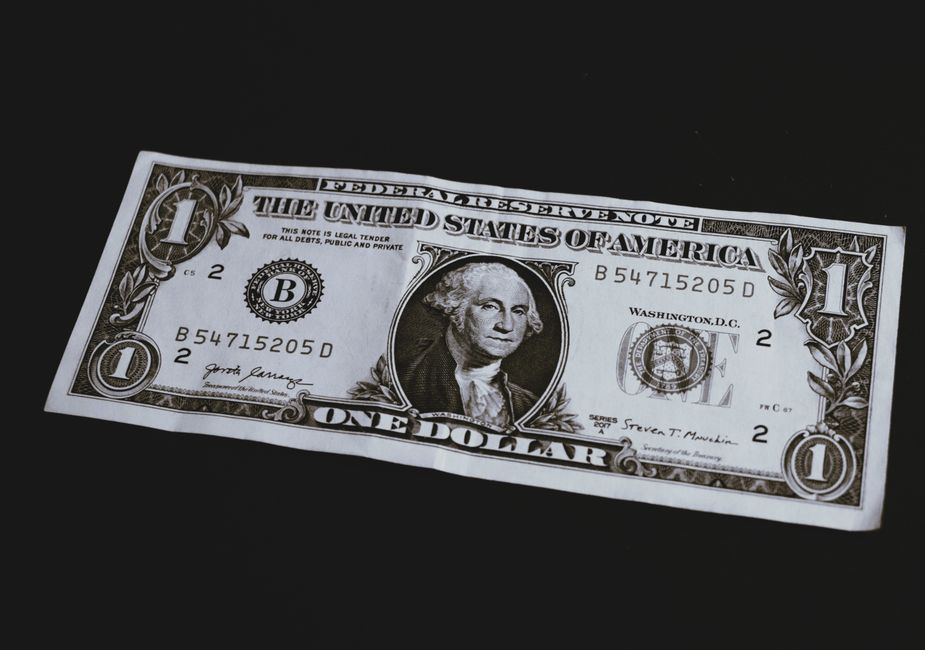
Eleven tech and AI companies paid more than $41.8 million in six months to lobbying firms — and the records show exactly what they bought: nothing.
The single most documented fact in AI policy is a null. As of mid-2025, no major federal artificial intelligence regulation has passed Congress. That outcome did not happen by accident. According to Issue One's analysis of federally filed Lobbying Disclosure Act reports, eleven of the largest technology, social media, and AI companies plus their leading trade associations spent a combined $41.8 million on federal lobbying in just the first six months of 2025 — a pace exceeding $230,000 every single calendar day. The year-over-year increase from the same period in 2024 was $3.7 million, a 10 percent jump. The money and the silence are not coincidental. Lawmakers and lobbyists told AP News directly that the industry campaign 'has been successful,' explicitly citing 'the lack of movement on any legislation designed to regulate AI.'
The speed of the buildup is as striking as the scale. In 2021, three of the most consequential AI companies in the world — OpenAI, Anthropic, and Nvidia — had zero registered federal lobbyists between them, according to Issue One's review of LDA filings. By 2023, the number of organizations lobbying on AI issues had reached 460, a 191 percent increase over the 2022 baseline of roughly 158, according to OpenSecrets data cited by AP News. Each of these organizations files quarterly disclosures with the Senate Office of Public Records under the Lobbying Disclosure Act of 1995 as amended by the Honest Leadership and Open Government Act of 2007. Those filings are public record. The trajectory they show is unmistakable: an industry that had no Washington infrastructure converted itself, in roughly 30 months, into one of the most formidable lobbying forces in the capital.
The individual actors tell their own stories through their filings. OpenAI, which by its own history was a nonprofit research lab with no government affairs function in 2021, hired Chris Lehane — a former Clinton White House official and veteran Democratic political operative — as Chief Global Affairs Officer in 2024. CEO Sam Altman testified before Senate AI Insight Forums in 2023. OpenAI participated in Biden White House voluntary AI safety commitments in July 2023 and engaged with the Trump administration transition team in 2024 and 2025. Voluntary commitments, by definition, carry no enforcement mechanism and impose no binding constraint. Microsoft, which has reported a $13 billion investment in OpenAI, has maintained one of Washington's largest tech lobbying operations for decades, with AI now listed as a primary issue area in its LDA filings. Google, Meta, Amazon, Apple, and Nvidia round out the top-tier spenders identified in Issue One's analysis of the eight largest direct company spenders, who collectively logged $36 million in the first half of 2025 alone — approximately $320,000 for every day Congress was in session.
The most concrete legislative episode in the record involves a provision inserted into the budget reconciliation package informally called the 'Big Beautiful Bill.' The provision, as documented in congressional records and reported by multiple outlets, would have imposed a decade-long moratorium on state-level AI regulations — precisely the policy outcome major AI companies had sought through their lobbying operations. Federal preemption of state AI laws appears as an explicit policy position in the publicly stated agendas of Microsoft, Google, Meta, Amazon, and their trade associations including the Computer and Communications Industry Association and the Information Technology Industry Council, all of which file LDA disclosures. The provision advanced through the legislative process before being stripped under bipartisan political pressure and civil society opposition. The attempt itself, and its specific alignment with industry lobbying objectives, is documented in the public record.
Beyond direct lobbying, the legal architecture amplifying AI industry political power was constructed decades before the technology existed. The Supreme Court's 1976 ruling in Buckley v. Valeo established that campaign spending constitutes protected First Amendment speech, gutting FECA's expenditure limits. Citizens United v. FEC in 2010 extended that logic to permit corporations to spend unlimited sums on independent political expenditures, enabling the Super PAC and 501(c)(4) structures that technology executives now utilize. The U.S. Chamber of Commerce, which lobbied on behalf of tech industry interests on AI preemption provisions, spent over $60 million on federal lobbying across all issues in 2023 alone, according to its own LDA filings — making it one of the single highest-spending lobbying entities in Washington. RAND Corporation's published analysis of AI policy influence identifies regulatory capture as a documented risk in this sector, describing an industry that controls information flows, provides expert testimony, funds research framing AI risks as manageable through voluntary measures, and places personnel in key oversight positions.
The revolving door dimension of this story remains the least documented in the public record but the most consequential analytically. RAND's framework identifies three primary mechanisms of industry influence: agenda-setting through information control, direct advocacy, and revolving door placement. The first two are traceable through LDA and FEC filings. The third — the movement of individuals between AI companies and the federal agencies charged with overseeing them — exists in fragments across Office of Government Ethics filings, congressional staff directories, and press reporting, but has not been systematically catalogued for AI-specific positions. Similarly, the Lobbying Disclosure Act explicitly does not capture strategic consulting not formally registered as lobbying, lobbying by foreign subsidiaries of AI companies, think tank funding, academic grants, or coalition front groups. Issue One and RAND both flag these as live gaps. The Chamber of Commerce's AI-specific spend within its $60 million total lobbying budget, and the AI-specific spend within each major company's aggregate LDA filing, require filing-level disaggregation that this investigation has flagged but not completed.
The public interest cost of the documented regulatory vacuum is not abstract. The Congressional Research Service confirmed in 2023 that no federal statute or regulation specifically addresses artificial intelligence in political campaigns, including AI-generated deepfakes. No federal liability framework governs AI-caused harms to consumers, workers, or democratic processes. Federal agencies charged with technology oversight — including those at the FTC and NIST — have been restructured and in some cases defunded during the same period that lobbying intensity reached its peak. State-level efforts to fill the vacuum, including legislation in California and other states, faced the explicit preemption effort documented in the reconciliation bill. The FECA framework that governs campaign finance contains no provisions addressing AI-assisted political micro-targeting. Each of these gaps represents a decision — or the absence of one — that occurred while $41.8 million in lobbying expenditure was being deployed in a single six-month window.
What remains hidden is, in several respects, more important than what is known. The full scope of AI industry influence requires four instruments to reveal completely. First, a systematic review of every quarterly LDA filing under 'OpenAI,' 'Anthropic,' 'Nvidia,' 'Google LLC,' 'Alphabet Inc.,' 'Meta Platforms,' 'Amazon.com Inc.,' 'Microsoft Corporation,' and 'Apple Inc.' at lobbying.senate.gov, disaggregating AI-specific expenditures from general technology lobbying. Second, a complete FEC filing review matching executive-level personal donations and corporate PAC contributions to the specific congressional offices that received them and the AI-relevant votes or inactions that followed. Third, a systematic Office of Government Ethics and congressional staff disclosure review documenting the movement of individuals between AI companies, their investors, and federal agencies with AI oversight authority since 2019. Fourth, and most resistant to existing disclosure law, a mapping of think tank grants, university research funding, and coalition support payments from AI companies — none of which is currently required to be disclosed under any federal statute. Until those four datasets are assembled and cross-referenced, the full architecture of AI industry influence on federal regulatory decisions will remain, by design, partially invisible.