Defense Millions Flowed to War Committee Chairs Before Iran Strikes Began
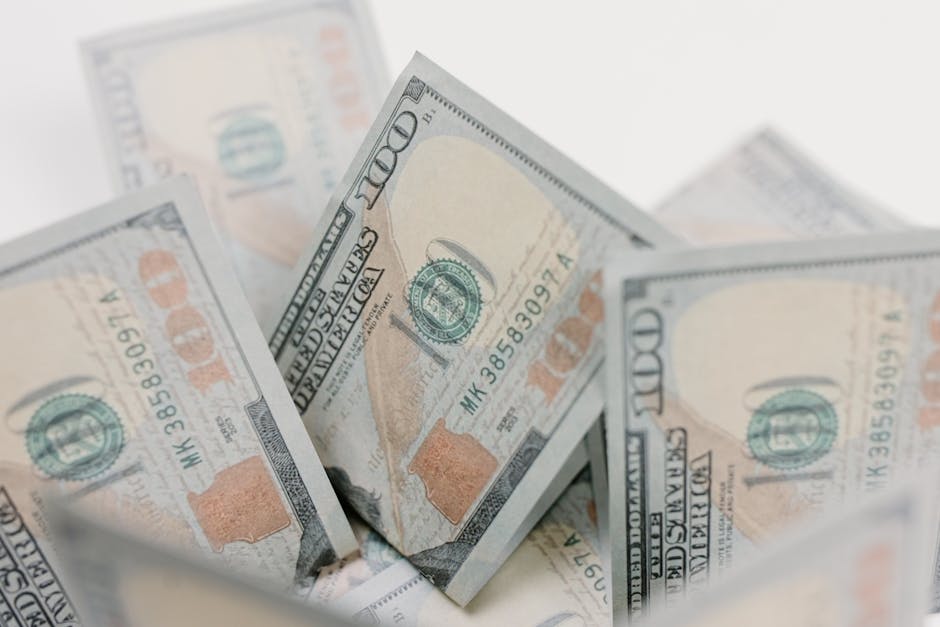
Public FEC records show defense contractors concentrated more than $100,000 on the Senate Appropriations chair and nearly $500,000 on the House Armed Services vice chair in the same cycle that...
The single most documented fact in this investigation is also the most structurally precise: Sen. Susan Collins (R-ME), chair of the Senate Appropriations Committee — the committee with gating authority over every federal spending bill including defense supplementals — received more than $100,000 from defense contractors in the first quarter of 2026 alone, according to a NOTUS analysis of FEC filings cited by Defense News on May 12, 2026. That window, January through March 2026, ended just weeks after U.S. and Israeli forces launched military strikes against Iran on February 28, 2026. The money is public record. The timeline is public record. The connection between those two facts is what this investigation examines.
The contributions to Collins are not anomalous. They are part of a documented sector-wide pattern. According to OpenSecrets data for the 2023–2024 cycle, the defense industry's top three non-presidential congressional recipients all sit on the specific committees that write, authorize, and fund Pentagon spending: Rep. Ken Calvert (R-CA), a member of the House Appropriations Committee's Defense Subcommittee, received $835,198; Rep. Mike D. Rogers (R-AL), chair of the House Armed Services Committee, received $535,000; and Rep. Rob Wittman (R-VA), vice chairman of the same committee, received $499,876. The Quincy Institute for Responsible Statecraft, citing OpenSecrets data, has described this concentration as deliberate industry strategy: defense contractors 'favor incumbents, and concentrate much of their giving to members of the armed services committees and defense appropriations subcommittees.'
The legislative outcomes these committee members shaped are substantial. In July 2026, the House passed a $1.15 trillion FY2027 National Defense Authorization Act, the largest combined defense authorization package in recent history, alongside a $95 billion emergency supplemental that included approximately $60 billion earmarked for Pentagon operations directly linked to the Iran conflict, according to congressional reporting cited in this record dated July 23, 2026. The NDAA sets procurement authorizations — the specific contracts through which defense revenue flows — while the supplemental funds the operational consumption of munitions, logistics systems, and air defense platforms that contractors supply. The members who received the most defense money in the prior cycle held the committee positions most directly responsible for both bills.
The lobbying infrastructure behind these contributions is equally documented. The defense industry spent $139 million on lobbying in 2023 alone — equivalent to approximately $381,260 per day — deploying between 904 and 950 registered lobbyists, a figure that has grown by 220 since 2020, according to Taxpayers for Common Sense citing OpenSecrets data. Over the decade preceding this conflict, the industry spent nearly $1.3 billion on lobbying by the same accounting. The sector's 2024 lobbying broke down across three sub-sectors: miscellaneous defense at $80.1 million, defense aerospace at $61.5 million, and defense electronics at $17.9 million, per OpenSecrets. These are not influence operations hidden from public view — every dollar is disclosed under the Lobbying Disclosure Act. What is not disclosed is which specific conversations, in which offices, produced which amendments to which bills.
AIPAC's role in the pre-conflict legislative environment adds a parallel lobbying track. The organization filed an amended Q4 2025 lobbying disclosure on September 25, 2026, covering activity from October through December 2025 — the three months immediately preceding the February 28, 2026, strikes. That disclosure, cited by Legis1 on September 29, 2026, lists active lobbying on Iran sanctions legislation, State Department appropriations, defense authorization, and specifically H.R. 4779, the National Security, Department of State, and Related Programs Appropriations bill. AIPAC's lobbying preceded the conflict's formal commencement by roughly two to three months. Legis1's own language notes the strikes came 'roughly seven months' after the lobbying activity, implying this was not the first round of military action — a fact that itself remains undocumented in available public records.
Rep. Wittman's campaign spokesperson, identified as Dieterich in the Virginia Mercury on October 28, 2026, stated that Wittman's national security decisions 'are not made based on personal financial interests,' and that all contributions are publicly disclosed and legal. The Virginia Mercury itself noted that 'neither the campaign donations nor the disclosed investments establish wrongdoing or show that donors influenced Wittman's votes.' That caveat applies equally across this entire investigation. No available public record establishes a quid pro quo between any specific contribution and any specific vote. What the records establish is structural: the people who controlled the legislation also received the most money from the industry that benefited from the legislation, in the cycle immediately preceding the conflict that the legislation funded.
The sector donated nearly $5 million to members of Congress in just the first half of 2026, according to the same NOTUS analysis of FEC documents. That figure covers only January through May 2026 — before the July NDAA and supplemental votes. Full-cycle 2026 contribution totals will not appear in final FEC filings until early 2027. Collins is currently seeking reelection against Democratic challenger Graham Platner; Wittman is seeking the House Armed Services Committee chairmanship pending the November 2026 House results. Both races will determine whether the committee positions that attracted these contributions remain in the same hands.
What remains hidden is substantial. The specific procurement line items in the $1.15 trillion NDAA — which determine which contractors receive which contracts — have not been fully disclosed in available public sources. The $60 billion in Iran operational funding has not been itemized by contractor beneficiary. The legal authority under which the February 28, 2026, strikes were conducted — whether a new AUMF, an existing authorization dating to 2001 or 2002, or Article II executive power — has not been publicly established, meaning the full set of legislators who voted for or against the conflict's authorization cannot yet be mapped against their contribution records. The instrument that would reveal most of this is straightforward: a full release of the FY2027 NDAA's classified annexes and procurement schedules, cross-referenced against the FEC's contribution database at FEC.gov and the Senate and House lobbying disclosure archives at lda.senate.gov. Until those records are public and cross-referenced, the most consequential spending decisions of this conflict remain only partially visible.