Defense Dollars Cycle From U.S. Treasury to Contractors to Congress
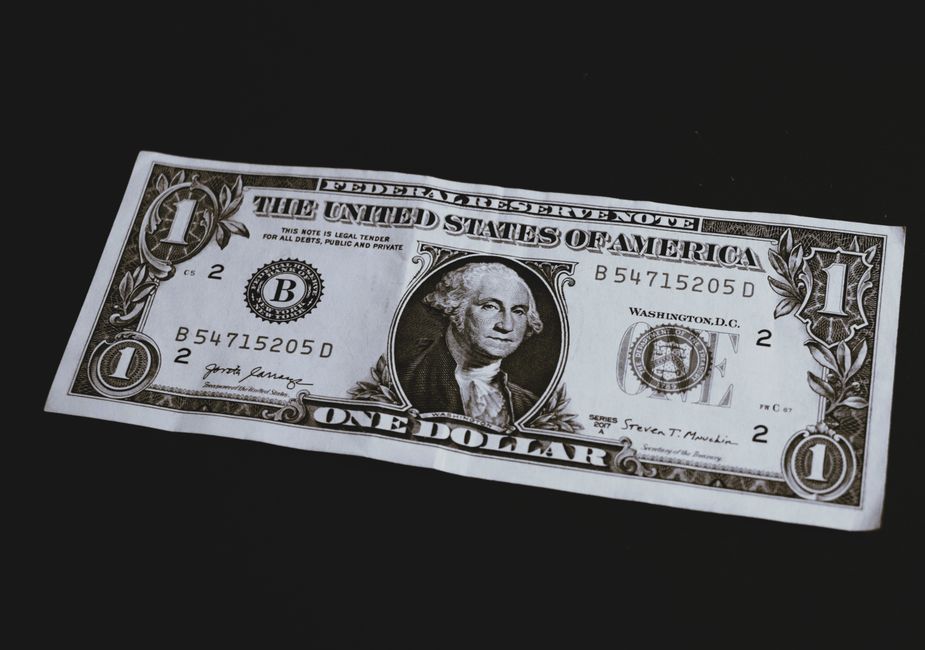
Public records show $3.8 billion in annual military aid to Israel flows back to U.S. defense firms, whose lobbying and campaign spending then protects the appropriation.
The single most consequential documented fact in this money trail is also the least discussed: when Congress appropriates $3.8 billion annually in Foreign Military Financing for Israel — the baseline established in the 2016 Memorandum of Understanding running through 2028, per Congressional Research Service Report RL33222 — roughly 75 percent of that sum, or approximately $2.85 billion per year, is contractually required to return to U.S. defense contractors. The aid is simultaneously a foreign policy instrument and a domestic industrial subsidy, and the architecture that sustains it is bipartisan, legal, and extensively documented in public filings.
The structural loop works as follows, per CRS RL33222 and Defense Security Cooperation Agency public notifications: Israel receives its entire annual FMF allocation in a lump sum at the start of the fiscal year — a privilege extended to no other recipient nation — then redeems those funds by purchasing weapons systems from U.S. producers. The primary beneficiaries are Boeing (F-15 aircraft and Joint Direct Attack Munition kits), Lockheed Martin (F-35I fighter jets at approximately $80–100 million per unit), RTX Corporation, formerly Raytheon (Patriot systems, AIM-120 missiles, Iron Dome interceptor components), General Dynamics (M109 howitzers and 155mm artillery shells), and Northrop Grumman (electronic warfare systems). The remaining 25 percent of annual FMF — approximately $950 million — flows under a legislated carve-out to Israeli defense firms including state-owned Israel Aerospace Industries, state-owned Rafael Advanced Defense Systems, and NASDAQ-listed Elbit Systems (ticker: ESLT), which itself has U.S. subsidiaries and U.S. institutional shareholders, further entangling American financial interests in Israeli defense production.
The contractor tier of this system spent $149 million on lobbying and made $43 million in campaign contributions across the defense sector in 2024, according to Common Dreams citing defense sector aggregates. These figures cover the full defense lobbying universe, not Israel-specific advocacy exclusively, but CRS and SIPRI data confirm Israel is the single largest recipient of U.S. military aid in absolute dollar terms and the channel through which a substantial share of Foreign Military Sales revenue flows. The lobbying targets are the appropriators and authorizers who vote on the State, Foreign Operations Appropriations Bill each cycle — the same members whose committee assignments make them the decisive nodes in whether the $3.8 billion baseline holds, expands, or contracts.
On the domestic political influence side, public records show a parallel track operating through AIPAC-affiliated political action committees. AIPAC itself is registered as a domestic 501(c)(4) lobbying organization — not as a foreign agent under the Foreign Agents Registration Act — and does not make direct campaign contributions. However, affiliated entities including the United Democracy Project super PAC and the AIPAC PAC spent approximately $13.5 million on campaign contributions in 2022 alone, per DAWN citing FEC filings. Post-October 7, 2023, available reporting indicates AIPAC's United Democracy Project dramatically escalated its electoral intervention, with figures cited in press accounts exceeding $100 million in the 2024 cycle targeting congressional primaries; those figures require direct verification against FEC disbursement records, which are publicly available but not fully disaggregated in the source materials underlying this report. Former Representative Brian Baird (D-WA, 1999–2011) is documented in public statements as describing the implicit electoral consequence calculus that governs how members weigh AIPAC's positions, per Wikipedia's AIPAC entry.
The foreign influence dimension adds a separate layer documented under FARA. CRS RL33222 and the Quincy Institute's report titled 'The Eighth Front' document that Israel spent approximately $185 million on U.S. influence operations reflected in FARA registrations between 2016 and 2023, with the Quincy Institute estimating Israel's total post-October 7 U.S. influence campaign budget at approximately $1 billion. FARA registrations are public record at the Department of Justice, but they capture only agents who have self-registered; the gray zone of unregistered activity that may qualify for FARA disclosure is, by definition, not in the public record. AIPAC's domestic registration status — rather than foreign agent status — means its activities are not captured in FARA filings at all, a legal distinction with significant transparency consequences.
The April 2024 national security supplemental, H.R. 815, included approximately $26.4 billion in Israel-related security assistance beyond the annual $3.8 billion baseline, per CRS RL33222 references to ongoing post-October 7 developments. Contract-level breakdowns of how that supplemental translated into specific procurement awards to named defense contractors are not fully disaggregated in publicly available reporting as of this writing. DSCA posts individual Foreign Military Sale notifications publicly, but the connection between supplemental appropriation line items and specific contractor awards requires cross-referencing those notifications with congressional budget justification documents — a step that has not been systematically performed in available open-source analysis.
What the public record does not yet show — and what would require specific disclosure instruments to surface — includes: the cumulative interest earnings Israel has collected by investing lump-sum FMF disbursements before expenditure, which at $3.8 billion invested at even 2 to 3 percent annually represents tens of millions of dollars in undisclosed benefit not captured in the nominal aid figure; the disaggregated lobbying expenditures by Boeing, Lockheed Martin, RTX, and General Dynamics specifically attributable to Israel-related contract lines versus their broader federal advocacy portfolios, which OpenSecrets lobbying filings break down by issue area but which have not been systematically mapped to Israel-specific appropriations votes; the full 2024 cycle disbursement records for AIPAC's United Democracy Project, which are filed with the FEC and publicly searchable but not yet synthesized against the voting records of the members those expenditures targeted; and the U.S. institutional investor exposure to Elbit Systems through index funds and managed portfolios, which would reveal a secondary financial interest layer entirely absent from the current public debate. The instrument that would most illuminate the remaining gaps is a mandatory disaggregation requirement in DSCA contract notifications linking each Foreign Military Sale award to the specific FMF appropriation line that funded it, combined with a Government Accountability Office audit of lump-sum FMF interest earnings since the provision's inception — neither of which currently exists.