India's $45 Billion Arms Queue Runs Through Washington's Revolving Door
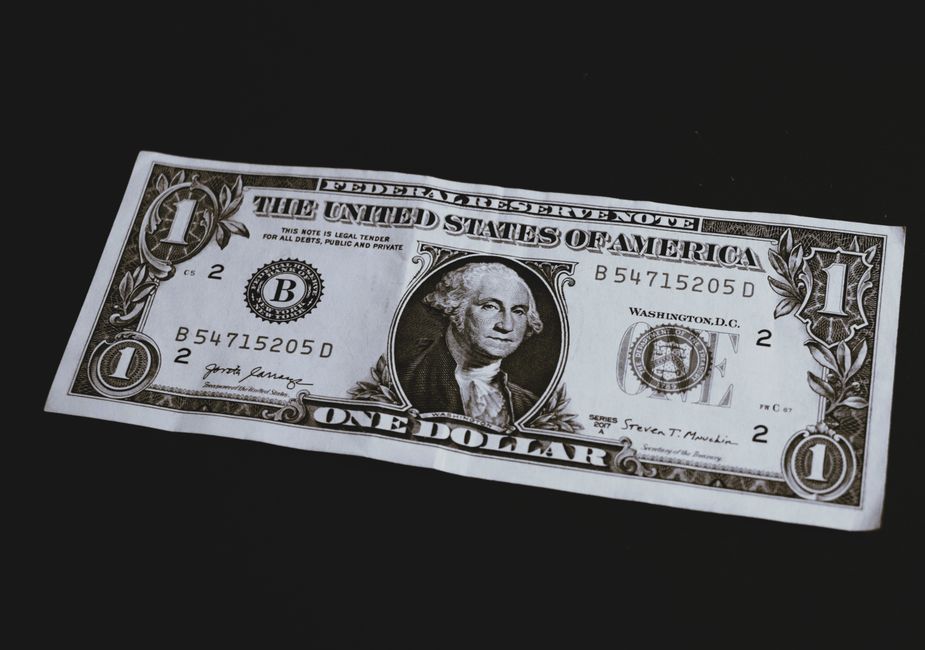
Defense contractors spent $2.5 billion lobbying Congress over two decades and received up to $175 back for every dollar — now India's post-Sindoor rearmament is the next transaction in the pipeline.
The single most documented fact in the public record of American defense influence: Lockheed Martin received $175 in federal contracts and benefits for every $1 it spent on lobbying, according to Transparency International Defence & Security's analysis of Aerospace Industries Association-linked data. Boeing's return was $142 per dollar. These are not estimates of coincidence. They are the documented arithmetic of a system in which $2.5 billion in lobbying expenditures — recorded in Senate Office of Public Records disclosures compiled by OpenSecrets across roughly two decades through 2021 — produced a traceable, repeatable cascade of procurement decisions, export authorizations, and Foreign Military Sales approvals.
India now sits at the front of that cascade. The Stockholm International Peace Research Institute identifies India as the world's largest arms importer, accounting for 11 percent of global arms purchases. In the aftermath of Operation Sindoor — India's May 2025 cross-border strikes into Pakistani territory — New Delhi has signaled an accelerated procurement agenda spanning advanced fighter aircraft, missile defense systems, maritime patrol assets, and precision munitions. Every one of those platforms has a U.S. manufacturer, a registered lobbyist, and a campaign contribution record attached to it. The pipeline from Indian defense ministry to American factory floor runs through Washington, and Washington's gatekeepers have been comprehensively cultivated.
The mechanics of that cultivation are public record. In the 2023–2024 election cycle alone, the defense sector directed $835,198 to Rep. Ken Calvert (R-CA), who sits on the House Appropriations Committee's Defense Subcommittee — the precise body that sets annual defense budget authority and shapes the terms of Foreign Military Sales financing, according to OpenSecrets' Defense Sector Summary. Rep. Mike D. Rogers (R-AL), Chair of the House Armed Services Committee and the principal author of the National Defense Authorization Act under which all major FMS policy is legislated, received $535,000 from the same sector in the same cycle. Rep. Rob Wittman (R-VA), also on the Armed Services Committee, received $499,876. Presidential candidates were not exempt: Kamala Harris received $3,613,612 in defense sector contributions, and Donald Trump received $1,604,162, per the same OpenSecrets compilation. The sector does not donate ideologically. OpenSecrets' party-split data across every cycle from 1990 to 2024 shows contributions tracking committee chairmanship and executive branch control — a rational access investment, not a partisan one.
The Foreign Military Sales mechanism itself is structured to ensure that the financial interests of U.S. contractors are inseparable from the foreign policy decisions authorizing each sale. When a foreign government requests U.S. weapons, the State Department and Defense Security Cooperation Agency must approve the transaction. Payment from the foreign government flows through the U.S. Treasury to the American manufacturer. DAWN — Democracy for the Arab World Now — documents this structure explicitly, noting that annual foreign military financing to partner nations overwhelmingly represents direct cash transfers from the U.S. government to U.S. defense companies. The average annual FMS volume runs approximately $45 billion, per DAWN's analysis. India's accelerated post-Sindoor procurement, if it follows historical patterns, would represent a multi-year addition to that figure measured in the tens of billions.
The revolving door is the system's load-bearing wall. OpenSecrets' Capitalizing on Conflict report, published February 25, 2021, identifies more than 200 lobbyists working for the defense industry who previously held positions inside the government agencies and legislative bodies that regulate and fund the same industry. These individuals convert institutional knowledge, security clearances, personal relationships with active officials, and access to classified procurement roadmaps into lobbying effectiveness that no outside actor can replicate. The Quincy Institute for Responsible Statecraft's 2024 analysis of foreign lobbying documents that FARA regulations — the legal framework requiring foreign government lobbying agents to register publicly — have not been updated in more than 15 years, leaving structural gaps in transparency precisely as the volume of foreign arms-related lobbying has grown. Former senior U.S. officials, including former committee members, appear in FARA filings as registered agents for governments seeking FMS approvals.
The Aerospace Industries Association functions as a force multiplier for all of this, according to Transparency International Defence & Security's analysis. Individual contractor money is pooled through the AIA and directed toward industry-wide lobbying and campaign finance goals, allowing member companies to contribute to collective influence efforts that do not appear in individual company disclosures. This architecture means the $159 million in defense sector lobbying recorded by OpenSecrets for 2024 alone — broken down as $80.1 million in miscellaneous defense, $61.5 million in defense aerospace, and $17.9 million in defense electronics — systematically undercounts actual industry influence spending by excluding trade association dues spent on advocacy, grassroots lobbying campaigns, issue advertising, and state and local lobbying expenditures. State and local lobbying produces geographic dependencies — defense plant construction, local tax relief deals, employment concentrations — that then generate congressional support for specific programs regardless of strategic merit, as the TI Defence analysis documents.
What the public record does not yet show is equally significant. The contractor-by-contractor breakdown of who specifically funded the $835,198 delivered to Rep. Calvert — whether the dominant contributors were Lockheed Martin, Northrop Grumman, or Raytheon — is not aggregated in publicly available OpenSecrets summaries and requires granular contributor-level analysis of each candidate's FEC filings. The specific FMS authorization documents for India-bound weapons systems approved in the 2024–2026 period are not fully public under current DSCA notification rules, which require congressional notification only above certain dollar thresholds and after the fact. The AIA's internal allocation of member company dues to specific lobbying and campaign finance efforts is not visible in LDA filings and would require IRS Form 990 review combined with cross-referencing of member company disclosures. The full identity of FARA-registered agents lobbying on behalf of the Indian government or Indian defense ministry-linked entities in the current procurement cycle is available only through the FARA database at the Department of Justice — a database that researchers consistently flag as under-enforced and incompletely filed. What would reveal the complete picture: a simultaneous FARA database audit for India-related registrations post-May 2025, granular FEC contributor analysis for every member of the House Armed Services Committee and the Senate Armed Services Committee, and a Government Accountability Office review of DSCA's FMS notification compliance for all India-bound sales authorized since the Sindoor strikes.