Cancer Care, Medicare Cuts, and the $4.4 Billion Lobbying Machine Behind Them
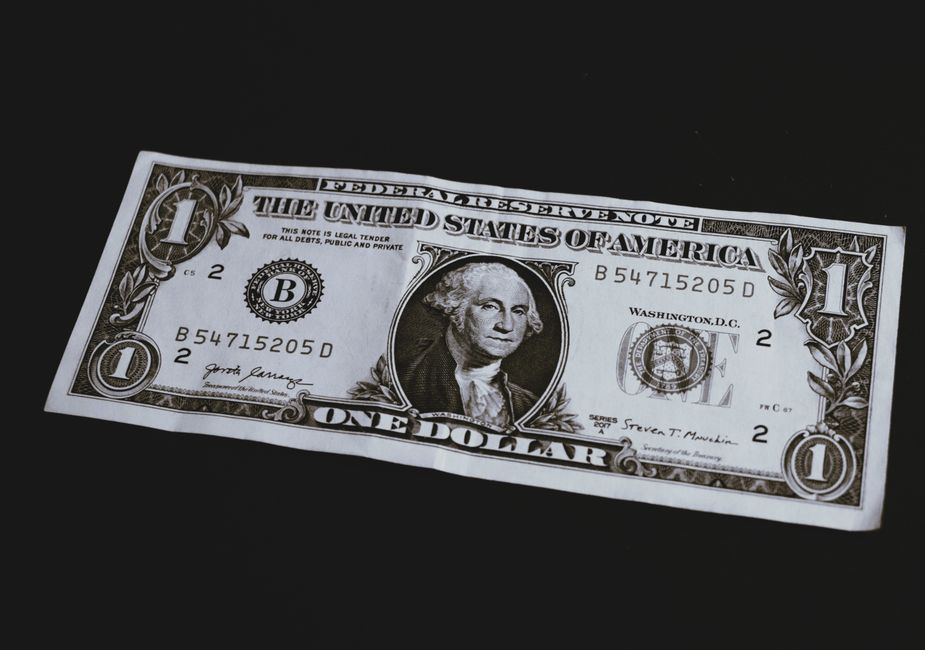
While healthcare industry lobbyists spent $4.4 billion over seven years shaping Medicare reimbursement rules, the patients those rules govern had no seat at the table.
Start with the single most clarifying number in American health policy: $16 billion. That is the additional sum the Centers for Medicare and Medicaid Services directed to Medicare Advantage insurers in 2025 alone, a 3.7 percent rate increase confirmed in the agency's final payment notice. In the same legislative cycle, Congress was weighing reimbursement reductions that independent oncology practices say would push cancer treatment out of reach for patients in non-hospital settings. Those two facts — a $16 billion windfall for insurers, a proposed cut for physician-administered cancer drugs — did not emerge from neutral actuarial calculation. They emerged from a lobbying ecosystem that, by the tally maintained at OpenLobby.us, has spent $4.4 billion influencing federal health policy since 2018, the single largest sustained lobbying investment of any industry in Washington.
The architecture of that spending is not random. It flows through five distinct subsectors, each defending its own slice of the approximately $1 trillion the federal government spends on Medicare annually. A 2017 National Bureau of Economic Research working paper (NBER Working Paper w23748) established the scale in stark comparative terms: hospital, health service, and health professional lobbying totaled $257.9 million in 2015 alone, against $74.6 million for the entire defense sector that same year — a 3.46-to-1 ratio. The NBER paper's core empirical finding was that political connections between hospital districts and congressional committee membership measurably influence Medicare spending patterns, providing the first rigorous academic confirmation that lobbying dollars translate into payment-rate outcomes.
The hospital industry's primary vehicle is the American Hospital Association, which disclosed $7.03 million in lobbying expenditures for the first quarter of 2025 alone, according to filings reported by Legis1.com. That pace — an annualized rate approaching $28 million — was followed by what a study published in PMC/NCBI described as a record third quarter, when the AHA mobilized hundreds of hospital executives for direct congressional lobbying against Medicaid provider tax restrictions in the legislation informally known as the One Big Beautiful Bill. The PMC study documents a split outcome: the House declined to cut existing provider tax arrangements, an industry win; the Senate advanced more restrictive language, a partial loss. The provider tax mechanism at stake is worth tens of billions of dollars annually to hospitals nationally. The lobbying investment to protect it, while record-setting, is a fraction of the revenue at risk.
On the insurer side, America's Health Insurance Plans — AHIP, the primary trade association for companies operating Medicare Advantage plans — spent $13.3 million on lobbying in 2022, a figure OpenSecrets identified as the organization's highest ever recorded. The Hill reported in documented detail that this lobbying campaign led directly to weaker Medicare Advantage oversight reforms, with CMS and congressional negotiators pulling back from more aggressive prior authorization, risk adjustment audit, and marketing restriction proposals. The arithmetic of that outcome is straightforward: a $13.3 million lobbying investment helped protect access to a payment stream that CMS set at $16 billion in additional funding for 2025. That is a sector-level return-on-investment ratio exceeding 1,200-to-1. AHIP's spend, however, represents only the trade association layer. UnitedHealth Group, Humana, CVS Health/Aetna, Centene, and Elevance Health each maintain direct lobbying operations whose Medicare Advantage-specific expenditures are filed with the Senate Office of Public Records but were not fully aggregated in the source material underlying this report.
For pharmaceutical manufacturers, the OpenLobby.us investigations database documents more than $452 million in lobbying expenditure for the tracked period, with the Pharmaceutical Research and Manufacturers of America — PhRMA — serving as the primary trade association voice alongside direct lobbying by Johnson and Johnson, Pfizer, AbbVie, Amgen, Eli Lilly, Merck, Bristol Myers Squibb, and Novartis. Their central Medicare battleground has been Part D drug price negotiation under the Inflation Reduction Act and the Medicare Part B payment formula, which sets reimbursement for physician-administered drugs — including chemotherapy agents — at Average Sales Price plus six percent. Any legislative adjustment to that formula directly affects what oncologists and infusion centers are paid to administer cancer drugs, and therefore which patients can access those treatments in community settings versus hospital outpatient departments, which are reimbursed at different rates.
This is where the op-ed's title finds its grounding in the documented record. When Medicare reimbursement rates for physician-administered drugs are reduced — whether through formula changes, sequestration, or conversion factor adjustments to the Medicare physician fee schedule — independent oncology practices operating on thin margins face a documented dilemma: absorb the loss, refer patients to higher-cost hospital settings, or close. A Foundation for Research on Equal Opportunity whitepaper notes that if hospitals are profitable on Medicaid reimbursement, they are certainly profitable on Medicare rates — a characterization that FREOPP, a market-oriented research organization, applies to argue that hospital lobbying resists price competition. The public interest consequence, regardless of one's policy orientation, is that reimbursement rate design determines where Americans receive cancer care and what they pay for it, and that design process is conducted inside a $4.4 billion lobbying environment in which patient advocacy organizations represent a negligible fraction of spending.
What is still hidden matters as much as what is documented. The Senate Office of Public Records quarterly lobbying disclosures — available at lda.senate.gov — contain the specific bills each lobbying firm was retained to influence and the specific federal agencies contacted, but they do not require disclosure of which individual legislators were lobbied or what commitments, if any, were sought. The AHA's record third-quarter 2025 lobbying expenditure was referenced in the PMC/NCBI study but had not been published in final form in available filings as of this report's compilation; that figure, when disclosed, will be the definitive measure of what the hospital industry spent to shape Medicaid financing in the One Big Beautiful Bill. CMS's Healthcare Cost Report Information System — HCRIS — contains hospital-level cost and revenue data that would allow independent verification of industry profitability claims, but that data has not been systematically cross-referenced against lobbying expenditure records in any publicly available analysis. The instrument that would close these gaps is a combination of: timely SOPR disclosure enforcement, mandatory itemization of issue-specific lobbying spend broken out by federal program, and routine CMS publication of cross-tabulated HCRIS and payment-rate data — none of which currently exists in accessible, machine-readable form.