Rybolovlev's $95 Million Check Bought a Property He Demolished
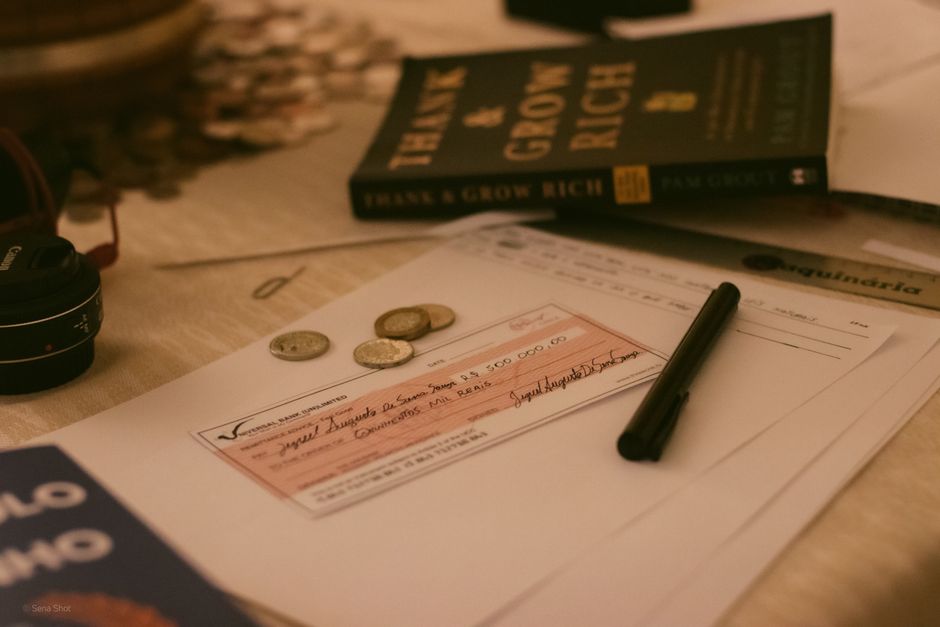
Palm Beach County property records show a Russian fertilizer billionaire paid Donald Trump $54 million above market during a real estate collapse — and then tore the house down.
The single most consequential documented number in the public record of Trump family foreign financial entanglements is not a campaign contribution, an inauguration donation, or a licensing fee. It is a deed recorded in Palm Beach County, Florida, showing that Russian billionaire Dmitry Rybolovlev paid Donald J. Trump $95,000,000 for a Palm Beach mansion in 2008 — approximately $53.65 million more than Trump had paid for it four years earlier, during a period when Palm Beach real estate values were falling between 20 and 40 percent. Rybolovlev subsequently demolished the property and never occupied it. That transaction stands, uncontested and unrebutted in any legal proceeding, as the single most profitable real estate deal in Trump's disclosed financial history.
No investigation has established that the Rybolovlev transaction was anything other than a legal sale. No charges were filed. Rybolovlev has stated publicly that he purchased the property as an investment. What the public record does not contain is a market-based explanation for why a sophisticated billionaire would pay a 130 percent premium over acquisition cost for a property he would demolish, in a declining market, at the precise moment Trump's political ambitions were beginning to solidify. That gap — between what the deed shows and what any appraisal could justify — remains open in the public record as of this writing.
The Rybolovlev transaction does not stand alone. It sits inside a documented pattern. A 2018 BuzzFeed News investigation, based on analysis of property records across all Trump-branded U.S. properties, found that at least 1,300 Trump condominiums had been sold to buyers using limited liability companies — a structure that, under rules in effect at the time, did not require disclosure of beneficial ownership. In Trump Sunny Isles Beach and Trump Hollywood, Russian-speaking buyers accounted for a disproportionate share of all-cash purchases. Sergei Millian, identified by the Senate Intelligence Committee as a link between Russian intelligence networks and the 2016 Trump campaign, purchased a Trump Hollywood condominium. These are property records. They are public. The question of who, ultimately, provided the cash behind the LLCs is not public and, for most of those transactions, has never been formally investigated.
The financial architecture connecting Trump to Russian-linked capital did not run only through real estate. Court records in U.S. v. Michael Cohen (SDNY, November 29, 2018) establish that the Trump Organization signed a Letter of Intent on October 13, 2015 — with Donald Trump's signature — for a Trump Tower Moscow project that would have paid Trump a $4 million upfront fee plus $1 million per month in management fees. Felix Sater, a Trump Tower-based developer with a 1998 felony conviction tied to a Mafia-linked securities fraud scheme, emailed Cohen on October 28, 2015: 'Our boy can become President of the USA and we can engineer it. I will get all of Putin's team to buy in on this.' Cohen's guilty plea established that he lied to Congress to conceal that active negotiations on this project continued through June 2016 — while Trump publicly denied having any business dealings in Russia. Both facts are in the court record.
The commercial relationship that produced the June 9, 2016 Trump Tower meeting — attended by Donald Trump Jr., then-campaign chairman Paul Manafort, and Jared Kushner — was itself financed. Rob Goldstone, the intermediary who arranged the meeting, worked for the Agalarov family, Russian real estate billionaires who had paid Trump approximately $14 million in reported fees (per New Yorker reporting, 2017; the precise contractual figure has not been fully disclosed in public filings) to host the 2013 Miss Universe pageant in Moscow through their Crocus Group entity. The June 3, 2016 email from Goldstone to Trump Jr. — 'This is obviously very high level and sensitive information but is part of Russia and its government's support for Mr. Trump' — exists in the public record because it was released by Trump Jr. himself in July 2017. The Mueller investigation found insufficient evidence to establish a criminal campaign finance violation, in part because the meeting did not produce the promised material. What the meeting did produce — the communication architecture that connected a U.S. presidential campaign to Russian state-linked actors — was built on a commercial foundation paid for by Miss Universe licensing fees.
Paul Manafort, who served as Trump's campaign chairman from June 20 to August 19, 2016, represents the most extensively documented case of a foreign oligarch financial conduit operating inside that campaign. Federal indictments in the Eastern District of Virginia and the District of Columbia established that Manafort received more than $60 million from Ukrainian political figures — principally from the political operation of Viktor Yanukovych, the Kremlin-aligned former president of Ukraine — through a network of offshore shell companies and Cypriot bank accounts. Manafort worked on the Trump campaign without salary during this period. He shared internal campaign polling data with Konstantin Kilimnik, who has been assessed by the Senate Intelligence Committee as having ties to Russian military intelligence. These are findings of federal courts and Senate investigators, not allegations.
What remains hidden is, in several respects, more significant than what has been disclosed. The beneficial ownership of the LLC buyers in Trump's condo portfolio has never been systematically established in a public proceeding. The full financial terms of the Bayrock Group's capitalization — the firm that co-developed Trump SoHo and operated from Trump Tower — were sealed when a 2018 whistleblower lawsuit settlement was reached. The Moscow Tower project's projected total profit to Trump, had it been completed with VTB Bank financing (a sanctioned Russian state bank), has never been calculated in a public document because the deal collapsed before financing was arranged. Shell company disclosure rules that existed at the time of most of these transactions permitted the concealment of beneficial ownership that would be impermissible under the Corporate Transparency Act passed in 2021 — though enforcement of that Act has itself been subject to legal challenge. The instrument that would resolve the central remaining questions is a combination of three things: full beneficial ownership disclosure for all LLC purchasers in Trump-branded properties, unredacted FinCEN suspicious activity reports filed on Trump Organization-affiliated transactions, and the unredacted financial documents obtained by the House Ways and Means Committee from Mazars USA but never fully published. As of September 2026, none of those three disclosure sets is complete in the public domain.