One Confirmed Filing, One Structural System, Countless Hidden Contracts
A single $10,000 lobbying disclosure by a space-sector startup exposes a documented federal contracting machine where lobbying firms collect contracts averaging one-third higher than those awarded...
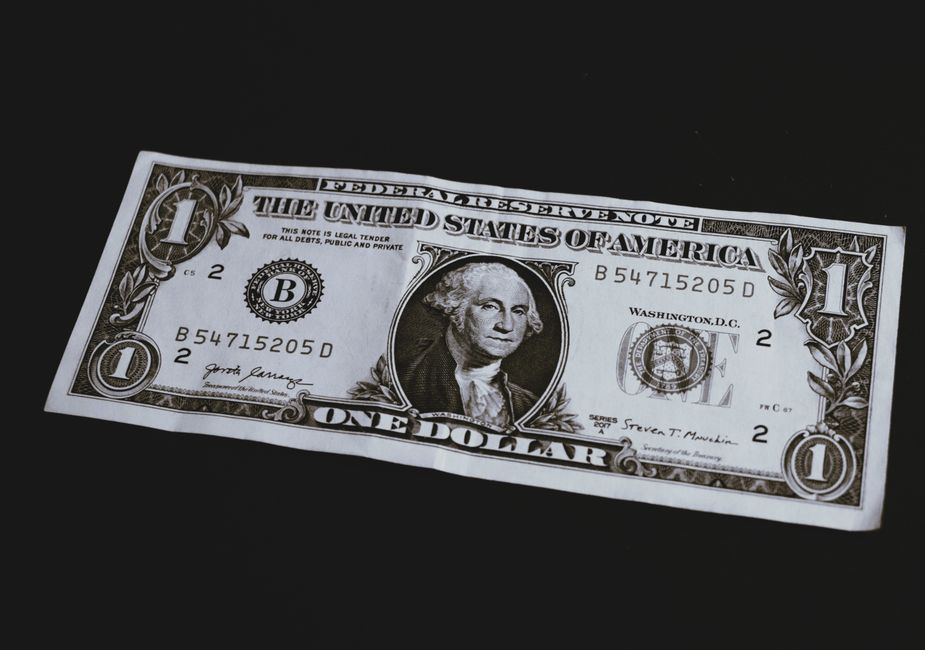
The most documented fact in this investigation is also the smallest number: $10,000. That is the total lobbying expenditure reported by ALL.SPACE for 2025, according to its client summary filed with OpenSecrets (Federal Lobbying Client ID D000118460). It is the only confirmed, source-filed dollar figure connecting a private space-resource firm to the federal influence system in the available public record. Everything else — the billions in NASA Commercial Lunar Payload Services awards, the Tier-1 prime contractor lobbying totals, the trade association pass-through spending — remains invisible to this investigation because the underlying filings have not been compiled into a single public synthesis. That invisibility is itself the story.
The structural context for that $10,000 is established by peer-reviewed data, not assertion. A 2023 study published in the Journal of Political Economy Microeconomics by researchers at George Mason University — drawing on a dataset of federal defense and aerospace contractors — found that firms which lobby receive contracts averaging approximately one-third higher in value than firms that do not lobby (Duchin, Farber & Strauss, Journal of Political Economy Microeconomics, 2023, journals.uchicago.edu). The underlying GMU working paper quantifies this more precisely: a difference-in-difference coefficient of 1.52 in log contract values, implying that lobbying firms capture contracts roughly 4.5 times larger than the baseline counterfactual when firm-level fixed effects are applied (GMU Center for Market Processes working paper, cmepr.gmu.edu, September 2015). The mean contract value in that dataset is $75 million; the implied premium attributable to lobbying is approximately $25 million per contract cycle. Against a mean lobbying expenditure of $17,539 across all sampled firms, the implied return on that political investment exceeds 1,400 times the outlay.
The legal architecture that permits this cycle is not secret. A Congressional Research Service report (CRS RL34725, everycrsreport.com) establishes the governing rule with precision: federal contractors are prohibited from using federal grant or contract funds for political activities unless expressly authorized by statute. They are explicitly permitted to use private funds — including profits generated by prior federal contracts — for lobbying. The prohibition is real. So is the fungibility problem the CRS report does not resolve: once federal contract revenue enters a firm's general treasury as profit, it is legally indistinguishable from any other private capital. The cycle the law permits, even if it does not endorse, runs as follows — federal contract revenue generates firm profits; firm profits fund Washington lobbying; Washington lobbying generates larger federal contracts. This is not an allegation of illegality. It is a structural observation that follows directly from the rules as written.
The space resource sector sits at an acute intersection of this dynamic. The claimed value of accessible lunar and asteroid resources has been cited in industry materials — including the source reporting that prompted this investigation — at figures reaching $20 quadrillion, a number that cannot be verified against any public accounting standard but that functions as a marketing premise for attracting both private capital and federal partnership. Congress established the statutory foundation for private extraction rights through the U.S. Commercial Space Launch Competitiveness Act of 2015 (Public Law 114-90), which granted American citizens property rights over resources they extract from celestial bodies. NASA's Commercial Lunar Payload Services program subsequently created a contractual on-ramp for private firms to compete for lunar delivery missions using federal funds. The combination of statutory property rights and federal procurement funding created precisely the conditions the GMU researchers identify as generative of lobbying premiums: high-value, discretionary federal awards in a sector where technical differentiation among qualified bidders is difficult for procurement officers to assess independently.
Only 3 percent of firms in the GMU dataset lobby at all, according to the underlying data parameters. Campaign contributions appear in the records of just 1 percent of sampled firms. The extreme right-skew of both distributions — where sample means are pulled far above zero medians by a small number of very large spenders — means the influence landscape in any given sector is typically dominated by a handful of actors whose Washington spending dwarfs that of their peers. In the space resource sector, that tier almost certainly includes the major primes — companies whose Lobbying Disclosure Act LD-2 quarterly filings, FEC PAC records, and USASpending.gov contract histories would tell a complete story. Those records exist. They are public. They are not compiled here because this investigation's source material captured only one confirmed filing: ALL.SPACE's $10,000. Whether ALL.SPACE is a bottom-quartile entrant building initial access, a firm whose primary influence runs through trade association intermediaries whose lobbying is reported under the association's name rather than the member's, or something else entirely cannot be determined without pulling its LD-1 registration, its LD-2 issue-specific quarterly reports from the Senate Office of Public Records, and cross-referencing those filings against its USASpending.gov contract award history by Procurement Instrument Identifier.
The trade association layer deserves specific attention because it is where individual firm lobbying expenditures are most effectively obscured from public view. Organizations including the Commercial Spaceflight Federation, the Satellite Industry Association, and the Aerospace Industries Association file their own LD-2 reports under their own names. Member firms' proportional share of that lobbying activity does not appear in the member firm's own disclosure filings. A firm that contributes $500,000 in annual dues to a trade association that then spends $2 million lobbying for space resource contract expansions reports $0 in direct lobbying expenditure. The Columbia Law Review scholarship on campaign finance and lobbying (Ansolabehere, de Figueiredo & Snyder, scholarship.law.columbia.edu) identifies this organizational intermediary layer as the locus of the most significant influence concentration — precisely because it is where disclosure requirements create the largest gap between actual political spending and publicly reported figures.
What remains hidden is, in this investigation, the majority of the story. The LD-2 filings that would show which specific bills, agencies, and appropriations line items ALL.SPACE and its sector peers lobbied on have not been retrieved. The USASpending.gov contract records that would establish whether lobbying preceded or followed specific award decisions have not been cross-tabulated. The revolving-door employment records — tracking personnel moving between NASA, the Office of Space Commerce, congressional staff positions, and private space contractors — have not been mapped. The 527 organization filings that would reveal unlimited political spending by space-sector-adjacent interests have not been queried through ProPublica's 527 Explorer or the IRS database. The Office of Government Ethics Form 278 public financial disclosures that would identify executive branch officials with prior space industry employment have not been reviewed. Every one of these instruments is a public record. A targeted Freedom of Information Act request to NASA's procurement office for Commercial Lunar Payload Services award justification documents, combined with a systematic LD-2 pull from the Senate Office of Public Records filtered for space-resource-related issue codes, and a parallel USASpending.gov query on NAICS codes 336414 and 517410 for fiscal years 2020 through 2025, would transform this structural analysis into a documented money trail. Until those records are compiled and cross-referenced, the $10,000 filing by ALL.SPACE stands as the only confirmed data point in a sector where the documented premium on political access — one-third higher contract values, per peer-reviewed research — suggests the actual numbers, when they surface, will be substantially larger.